This blog covers everything related to self defense including but not limited to training, techniques, principles, martial arts, hand to hand combat systems, weapons, various scenarios, tips, sparring, psychology of combat, the list goes on. It is not restricted to just one fighting art but welcomes every reader regardless of experience to gain knowledge on self defense.
This self defense guide will teach you what to do in a hostage situation. Let's suppose that your in a bank or store when suddenly, an armed attacker or attackers take you hostage. It's very important that you have an idea of what to do in those scenarios as many things could go wrong.
* Disarm - If you are the only one taken hostage then you apply the same principles as you would if you were disarming a gunman or knifeman (see "how to disarm a gunman" http://everythingselfdefense.blogspot.com/2016/11/self-defense-against-gunman.html and "self defense against a knifeman" http://everythingselfdefense.blogspot.com/2016/11/self-defense-against-knife.html). If you and your attacker are surrounded by police then you have the advantage. Distract him or her before you attack. If possible, try to get the attacker to direct the weapon away from you. As soon as you sense an opportunity then strike with explosive speed. Control the weapon, redirect the line of attack, take your attacker down, and disarm. This video explains which techniques don't work and which one is more effective in a hostage scenario.
* Comply - If you and other people are taken hostage by multiple attackers then comply. Do whatever the armed attackers ask of you and get into a non-threatening posture. Doesn't matter how much self defense you know, it's safer to comply in these situations. You don't want to risk any innocent people getting hurt or killed. You and others also face the risk of getting accidentally shot by the police.
* Gather and leak information - As you comply, gather as much information as you can on your attackers. Are they mentally ill? Are they committing an armed robbery? Are they terrorists with a political agenda? What demands are they making? Who are they making the demands to? Do they intend on killing the hostages eventually? Where are they located? Where are the hostages located? Is there only one attacker or multiple? What kind of environment are you in? When you've gathered enough information on who your hostage takers are then you ought to find a way to leak it to the police. You could leave a door unlocked, a window open, create an opening in an area of the building, messages, etc. so the police can gather intelligence. If you can't then don't worry about it. Your safety should be your first priority. The information you get also lets you know what the proper response is.
* Escape - If you have an opportunity to escape without your attackers noticing then do so. Give other hostages the opportunity to escape undetected if possible. Otherwise, lay low and comply with your hostage takers.
* Empathize with your hostage takers - Try to get them to see you and others as human beings. Figure out why they are taking you hostage and what they want. This allows you to get a glimpse of the kind of people they are.
* Plan your moves - Complying isn't enough, you should already have a plan A and plan B then a plan C. Plan A should be comply. Plan B should be to leak info. or escape. Your last plan should be to fight. Don't just lay or sit there waiting for the police to rescue you. Hoping that they'll come in and save you while you remain completely unharmed is unrealistic. By the time they come in, you might already be dead. In the meantime, you need to be proactive and use your time wisely.
* Have a plan of attack - As soon as the hostage takers intend on killing or torturing their hostages and the police haven't arrived yet then you need to act quickly. You should've collaborated with the other hostages in taking out the hostage takers at some point. Use the environment to your advantage. Use whatever weapons and methods of distraction are available. Remember when faced with multiple hostage takers, the best way to deal with them is dealing with one at a time. You will need to take out at least one armed hostage taker as quickly and as silently as possible then disarm him or her without alerting the others. Even if it's not possible, you just need enough time to get the weapon and attack. In these types of situations, the use of deadlier force might be necessary than in a normal self defense situation. You might need to kill as many as you can with your bare hands or the weapon. As soon as the police enter or the hostage takers are eliminated, you need to comply with the police. Get down on the ground with your hands above your head and drop your weapons to communicate the police that you are not a threat.
In this particular situation, notice how the gunman pointed his gun at a man and the man responded by attempting a disarm. Immediately, the others rushed in to tackle the gunman and disarmed him. If you are trained in dealing with weapons and these types of situations then you have to take the initiative. By taking the initiative, you inspire others to take action.
Practice these tips with multiple sparring partners in various scenarios. If you enjoyed this post, subscribe to my blog for updates, more advice, and exclusive content in the near future. I'm proud and excited to offer a FREE sample chapter of my E-book "Jeet Kune Do: How to build your own fighting system for self defense!" It's essentially a step-by-step guide on how to make your own self defense system suited to fit your own needs using Jeet Kune Do. If you would love to receive your FREE chapter of my e-book, click on the link below and share a post via. social media then it's yours for FREE! Be sure to also fill out the survey on the right and provide feedback on my blog. Leave questions, comments, and suggestions below.
Active shootings have become more common and have taken many lives so it's of critical importance that you learn what to do before active shootings take place. If you don't have a plan beforehand, you will probably freeze when an active shooter starts firing rounds. This self defense guide teaches you some of the basic and most fundamental keys in dealing with active shootings with a few helpful videos:
1) Situational awareness - Studies show that active shootings are usually planned in advance. Active shooters have some emotional and psychological issues before they go out to commit horrendous acts (see link below.) They also have access to weapons. It's important you keep track of those around you and their body language. Signs such as pulling shirts down, wearing unusual clothing, or leaving bags in certain areas are key to spotting active shooters. Knowing where the exits are and where your attention needs to be are also key elements in situational awareness. If you suspect an active shooting is about to take place, you need to take action.
2) Escape - As soon as you sense shots being fired or smoke grenades being tossed in, you need to escape through the nearest exit as soon as possible. Some active shooters will use smoke to conceal themselves before they shoot civilians. If you have a gun, you don't want to try and engage in a gunfight with an active shooter. This is because if you get killed in the process, you won't be able to effectively help others. You may also be mistaken for the active shooter by the police and killed by accident. If you can land accurate shots as you make your escape then do so but ultimately you will want to get to safety and call for help. Make sure that you run in unpredictable patterns only if the shooter is firing at you. Other than that, run as fast as you can in a straight line to an exit. Be sure to alert others of the danger to prevent them from entering.
3) Hide - If you are stuck inside a building then you need to hide. Before you do, you will need to get as many people following you as possible if they want to survive an active shooting. Get inside a room and lock the doors. Turn off all lights and barricade the doors. Turn off your cellphones and be as quiet as possible. Get down as low as you can in a far corner of the room to avoid gunfire. If the active shooter sees that he or she cannot access the room quickly enough, the shooter might believe there's no one there or not bother trying to break in.
4) Fight - If you are caught in a situation where you absolutely must fight as a last resort then you need a strategy and end the threat by any means necessary. If you have an ally such as a cop or civilian trained in firearms then you need to protect him or her at all costs. If that person dies, you lose a huge advantage over the active shooter. If you are with a group of people then you have a numbers advantage against the active shooter. If you are trained in gun disarming then you need to take the initiative and take out the gunman yourself. Since there's only active shooter, he or she cannot defend against every attacker. Perhaps you could have someone serve as bait to distract the gunman while you take the gunman down and attack until you disarm him or her. Once the gunman is down, you could have the other survivors use weapons or hold the shooter down then disarm him or her. You will need to be resourceful and use cover, concealment, distractions, improvised weapons, among environmental factors when fighting an active shooter.
Practice defending yourself against an active shooter in various scenarios with a partner using a fake gun.
If you enjoyed this post, subscribe to my blog for updates, more advice, and exclusive content in the near future. I'm proud and excited to offer a FREE sample chapter of my E-book "Jeet Kune Do: How to build your own fighting system for self defense!" It's essentially a step-by-step guide on how to make your own self defense system suited to fit your own needs using Jeet Kune Do. If you would love to receive your FREE chapter of my e-book, click on the link below and share a post via. social media then it's yours for FREE! Be sure to also fill out the survey on the right and provide feedback on my blog. Leave questions, comments, and suggestions below.
In this self defense guide, i will teach you how to defend yourself against an attacker wielding pepper spray. When defending against pepper spray, you apply almost the same principles as you would when dealing with a gun (see "self defense against a gunman" http://everythingselfdefense.blogspot.com/2016/11/self-defense-against-gunman.html.)
1) Get out of range and line of fire - Pepper sprays have limited range so you can avoid getting sprayed by moving quickly away from your attacker. You also need to move out of the line of fire and into a better position to attack.
2) Take cover - As soon as someone tries to attack you with pepper spray, take cover behind an object or barrier. If none is present, block the pepper spray as you turn your body to the side and close your eyes tightly. This is to prevent the pepper spray from getting into your eyes and affecting you.
3) Attack - The reason why you'll want to block the pepper spray as you would punches is to avoid getting the spray into your eyes but also to avoid any incoming attacks. As soon as you have the opportunity, land your attacks on the person. Even if you get sprayed in the eyes, it will take a few seconds for the pepper spray to take effect. This gives you plenty of time to eliminate the threat quickly. You could grab the arm controlling the pepper spray and break it or takedown your attacker then disarm him or her. When the threat is over, wash the pepper spray out with cold running water and other means.
Practice these principles with a partner using a safe substitute for pepper spray. If you enjoyed this post, subscribe to my blog for updates, more advice, and exclusive content in the near future. I'm proud and excited to offer a FREE sample chapter of my E-book "Jeet Kune Do: How to build your own fighting system for self defense!" It's essentially a step-by-step guide on how to make your own self defense system suited to fit your own needs using Jeet Kune Do. If you would love to receive your FREE chapter of my e-book, click on the link below and share a post via. social media then it's yours for FREE! Be sure to also fill out the survey on the right and provide feedback on my blog. Leave questions, comments, and suggestions below.
Krav Maga is a fighting system developed for the Israelidefense forces. Krav Maga is not a traditional martial art as some make it out to be. There's no katas involved for one. Krav Maga is a modern system combining techniques taken from boxing, Aikido, wrestling, Judo, and other martial arts strictly for self defense. This is a self defense guide on how to apply the most fundamental principles of Krav Maga to your training. I don't believe the Krav Maga schools in the U.S accurately represent the essence of Krav Maga so this guide will help you understand what Krav Maga is about.
* The spirit of Krav Maga - The essence of Krav Maga is to never stop fighting. Doesn't matter if you are bleeding profusely, suffered broken bones, a severed limb, the list goes on - never surrender. The fight doesn't end until you survive or your completely dead. When you train, you must train with this mindset in order to capture the spirit of Krav Maga.
* Build your techniques on natural instinct - What makes Krav Maga different from other martial arts training is the reliance on your body's natural movement to form techniques. For example, if my natural reaction to wild punches is to guard my head then i can base my Krav Maga techniques on that natural reaction. It's much easier because it's already in my instincts as opposed to relearning how to walk and fight in other martial arts.
* Ending the threat as quickly as possible - In Krav Maga, we deal with the most immediate threat first as quickly as possible. We don't spend too much time on dealing with one opponent. We end the threat quickly as we look for the next possible threat. Some Krav Maga schools introduce an MMA setting or rules during sparring. This isn't authentic Krav Maga. When your in a sparring session, your goal is to end the end the threat as quickly and efficiently as possible. Moving around and waiting until you see an opening to attack isn't adhering to Krav Maga principles. Krav Maga is focused on aggression and going "all in" at full force until your enemy is on the ground.
* Efficiency - Krav Maga stresses efficiency in movement and ending the threat as quickly as possible. If it takes you years to perfect one technique then that's not efficiency. If it takes you a tremendous of practice to perfect one attack then that's not efficiency. If you continue attacking an opponent even after he or she is down then that's not efficiency. While your doing that, someone else could sneak up from behind and hit you. Attacks in Krav Maga should be simple, take little energy, and very easy to learn. You should have already learned the basic skills to defend yourself by the end of the first class.
* Simultaneous attack and defense - In Krav Maga much like Wing Chun, you attack and defend at the same time. If someone throws a straight punch at you, your response should be to parry and counter-attack with a punch in one swift motion. Blocking and then throwing a punch of your own takes too much time.
* Retzev or continuous motion - In Krav Maga, you should be in continuous motion when attacking and constantly attack your enemy's unguarded areas. As soon as your opponent guards the upper body with his or her arms, you attack the lower body with kicks and other strikes. When your opponent lowers the arms to defend the lower body, you repeatedly strike the upper body.
* Targeting the body's vital areas - In Krav Maga, you must make every hit count by attacking the body's vital areas. This includes the eyes, groin, knees, shins, feet, throat, neck, eyes, sternum, temples, nose, face, etc. It would take longer for you to end the threat by hitting anywhere other than those areas.
* Realistic fight training - When training, you need to fight against a moving resistant opponent and engage in various intense scenarios. It's important that you learn how to apply techniques in sparring as opposed to demos. with a compliant partner. You might see traditional Krav Maga instructors teaching you that when faced with a gunman, you should grab the barrel or slide and repeatedly punch your attacker. This is unrealistic training because it doesn't address possible resistance. The gunman could move back and redirect the line of fire then shoot you. The gunman might also be quicker than you and move back to avoid your hand grab then shoot you. Krav Maga focuses on fighting in hand-to-hand combat, weapon disarms, hostage situations, multiple attackers, active shooters, distractions such as smoke to simulate fog, ambushes, the list goes on. Since an attack can happen at any time or place, you need to learn how to fight in any position - standing, lying on the ground, or sitting. Stress is also a must. If your not stressed under pressure in Krav Maga training then you won't perform at your best when you are faced with a real street confrontation. Krav Maga training also puts emphasis on intense cardio work outs and pad-work. This video demonstrates how accurate Krav Maga training is more or less conducted.
* Use improvised weapons - In Krav Maga, your aim is to use whatever weapons are at your disposal or the environment to end the threat quickly. It's a waste of time to engage your enemy in hand-to-hand combat when you have a baseball bat in your hand. You need to be aware of your surroundings and use whatever tools are there. When fighting armed attackers and you disarm one, pick up the weapon then start using it on the rest. You must train your mind to see everything as a weapon.
* Use what works - Krav Maga is different from other martial arts in that it uses what works even if it's not in your school's curriculum. If a weapon, technique, or attack is effective then use it.
* Quickly going from the defensive to offensive - In Krav Maga, you must learn how to quickly go from defending yourself to attacking your opponent. The longer you stay in the defensive, the more danger you are in. You need to create an opportunity to aggressively strike back against your enemy.
In conclusion, Krav Maga is about using a few solutions to answer various problems. Keep this in mind rather than look for countless Krav Maga techniques. Practice applying these principles in self defense training. If you enjoyed this post, subscribe to my blog for updates, more advice, and exclusive content in the near future. I'm proud and excited to offer a FREE sample chapter of my E-book "Jeet Kune Do: How to build your own fighting system for self defense!" It's essentially a step-by-step guide on how to make your own self defense system suited to fit your own needs using Jeet Kune Do. If you would love to receive your FREE chapter of my e-book, click on the link below and share a post via. social media then it's yours for FREE! Be sure to also fill out the survey on the right and provide feedback on my blog. Leave questions, comments, and suggestions below. http://www.paywithapost.de/pay?id=7b715806-c78b-4bfd-badf-4242da2bf8f2
If you ask many if not most people what they think when they hear self defense, they'll say "well martial arts of course!" Martial arts is one of the first things people new to self defense want to learn. Nonetheless, it begs the question "is martial arts effective for self defense?"
Yes and no. Yes because it all depends on how you use it. If you use it well then it's effective. No because martial arts is not the end all be all of self defense. As i mentioned in my other posts (http://everythingselfdefense.blogspot.com/2016/12/why-martial-arts-does-not-mean-self.html), there are several problems with assuming that martial arts means self defense. You cannot simply take a course on martial arts and then expect to defend yourself in every situation in the street. There are many different variables in self defense and violence on the streets such as psychology, fear, aggression, brutality, intimidation, weapons, ambushes, multiple attackers, criminal organizations, family, situational awareness, unresolved conflict, stress, strategy, tactics, the list goes on. For example, do you think you would be able to defend yourself against a group of armed gangsters who are far more aggressive and violent than your typical punks? What about an ambush involving guns? It's nearly impossible for you to learn how to deal with all of these variables in a dojo or local martial arts school. This video gives some good insights on martial arts.
Under what situations is martial arts effective? It depends on the martial arts you are practicing. Martial arts are used for various purposes contrary to popular belief. Can you distinguish martial arts used for sport from martial arts used for theatrical performances in Asian cultures and films? What about martial arts for health and fitness as opposed to self defense? Martial arts simply gives you the tools and knowledge needed for a particular purpose namely hand-to-hand combat. Martial arts as it is known today the total essence of combat.
Guru Dan Inosanto said "I think it's important to take the knowledge of the past and improve it." The ancients have made contributions to the knowledge for combat. It is now up to us to take the knowledge of the past and adapt it to the present so it can be applied effectively. Can you use your martial arts effectively against a gunman? A knifeman? Other martial arts styles? If not, how can you go beyond the limits of a particular system or style and find the answers needed in self defense? How can you apply the traditions of the past while making them work for the modern world?
Doesn't matter what martial arts you practice, it's how you can apply what you know effectively and wisely in modern combat. If you enjoyed this post, subscribe to my blog for updates, more advice, and exclusive content in the near future. I'm proud and excited to offer a FREE sample chapter of my E-book "Jeet Kune Do: How to build your own fighting system for self defense!" It's essentially a step-by-step guide on how to make your own self defense system suited to fit your own needs using Jeet Kune Do. If you would love to receive your FREE chapter of my e-book, click on the link below and share a post via. social media then it's yours for FREE! Be sure to also fill out the survey on the right and provide feedback on my blog. Leave questions, comments, and suggestions below. http://www.paywithapost.de/pay?id=7b715806-c78b-4bfd-badf-4242da2bf8f2
If you've read my post "how to fight multiple opponents" (http://everythingselfdefense.blogspot.com/2016/12/how-to-fight-multiple-opponents.html) then you should have a basic understanding on how to deal with multiple unarmed opponents. Now what if you are faced with multiple armed attackers? I will elaborate on the weapons aspect from my previous post. Assuming that your attackers have some melee weapons as opposed to all guns (i will deal with gunmen in the future), you will have to fight with quickness and efficiency. Some weapons training will be useful in these situations.
1) Understand the range of the weapons - By having a good understanding of each weapon's range, you are better able to utilize them effectively. For example, if you managed to disarm a swordsman then you can now keep a knifeman (close range weapon) at a distance with your sword (long range weapon.) If you have a knife, you need to time your intercepting moves against long range weapons and attack at close range.
2) Prioritize which weapons to disarm first - In order to be effective in fighting multiple armed attackers, you must be good at prioritizing which attackers to take out first. You must asses which weapons are the most deadly and focus on those. For example, you can keep a knifeman at bay because the weapon is for close quarters but you will likely get shot and killed by a gun. Therefore, you must focus on taking out the gun strategically.
3) Attack the closest attacker, disarm, and retrieve the weapon - If an attacker with a bat or knife comes charging at you, take him/her out as quickly as possible and disarm. You need an equalizer so don't just stay there empty handed - grab the weapon quickly and use it. If you already have a weapon of your own then use it. Any weapon improvised or not is better than no weapon.
4) Strategically move around - Like i outlined in my previous post, you will need to line up your attackers and fight only one a time. If you've already disarmed a knife, keep moving around keeping only one attacker in front of you as you close in and attack. Conserve your energy by striking at vital areas and take down your opponent's efficiently (kick to the knee caps, circle kicks, leg sweeps, etc.) If someone pulls out a gun in the middle of a fight, you'll need to use the other attackers as human shields (rear naked chokes, clinches, moving in front of them, etc.) Get close and push an attacker into the gunman as a distraction then quickly take control of the gun.
Practice these basic principles with good sparring partners using fake weapons. Make sure that you are aware of your surroundings and use improvised weapons or even the environment to defend yourself. If you enjoyed this post, subscribe to my blog for updates, more advice, and exclusive content in the near future. I'm proud and excited to offer a FREE sample chapter of my E-book "Jeet Kune Do: How to build your own fighting system for self defense!" It's essentially a step-by-step guide on how to make your own self defense system suited to fit your own needs using Jeet Kune Do. If you would love to receive your FREE chapter of my e-book, click on the link below and share a post via. social media then it's yours for FREE! Be sure to also fill out the survey on the right and provide feedback on my blog. Leave questions, comments, and suggestions below.
If you've read my posts on "self defense against a knifeman" (http://everythingselfdefense.blogspot.com/2016/11/self-defense-against-knife.html) and gun disarming then you'll notice that the same principles apply to knife disarming (ex. redirecting the line of attack, understanding distance, timing, etc.) When training, here are several tips on dealing with a knifeman along with some helpful videos.
Understand the warning signs of a potential attack - A person planning to use a knife will give away several cues through body language. Keep at a distance from a suspicious person. Be aware of your surroundings. You will find in several instances where a seemingly normal person suddenly draws a knife and starts stabbing away at his or her victim.
Use a long range weapon - If you have a bat or stick, use it against your knife wielding attacker to keep the distance while attacking. You could continue attacking or perform a disarm. This video demonstrates how this works.
Practice simple and effective techniques - The reason why many knife techniques don't work against a fully committed knife attacker is because they are too complex and work only against a cooperative partner. If the techniques don't address the possibility that the knifeman may disrupt your technique by moving or fighting back then they are ineffective. It's about quality over quantity techniques. The techniques you learn must address as well as include the line of attack, possible resistance, distance, isolation, timing, and be done with no wasted movement. Ideally, you will want to A) Stop the knifeman's attacking motion B) control the knife wielding arm with both hands C) Move to the side of the knifeman and isolate the arm from the body. D) Disarm. Why would i want to control the knife wielding arm with both hands? If i simply grab the wrist but not the elbow, the knifeman could pull back and stab me. Why would i want to move to the side of the knifeman or behind him or her as i control the arm? If i stay in front of my attacker, he/she could attack me with his or her free limbs (punches, kicks, headbutts, etc.)
Learn how to deal with a knife from behind - If someone holds you at knifepoint from behind, you distract the knifeman before you redirect the knife arm away from your body as you control it with both hands then go for a disarm. Let's suppose that someone grabs you with a rear naked choke from behind and puts a knife to your throat. You must trap the hand without the knifeman seeing, redirect the line of attack away from your body, turn the weapon arm, reposition it, and attack or disarm.
Learn how to deal with a knife on the ground - If you are in a position where the knifeman is ontop of you and is about to strike, you control the knifehand with both hands then buck over as you disarm. If the knife is at your throat, you trap the knife hand as you redirect it then buck and disarm. It's very important that you get out of the bottom position when on the ground because it's very dangerous for you to stay there.
Learn how to deal with slashing - Let's suppose that a knifeman comes charging in on you with fast aggressive slashes. Create distance via kicking legs and practice perfect timing. If the slashes are moving in a predictable pattern (left to right and vice versa) then you intercept the knife hand before or after the knife passes your centerline. If the knifeman is a bit more methodical in his or her approach, you drop down and explosively go for the leg at a reasonable close distance. The knifeman won't expect your movement and will thus not be able to change the direction of the knife attack in time to strike you.
Learn how to deal with ice pick grip attacks - Let's suppose the knifeman comes at you with an ice pick grip and stabs downwards. You could cross your arms into an "X" shape above your head to stop the arm then quickly grab the elbow, turn it, and control the arm as you move to the outside. You could also move to the outside as you redirect the arm away from you then grab the knifeman's elbow and wrist.
Practice stop hits - If someone came in stabbing you at full speed, you could perform a stop hit to briefly stop the knifeman's forward thrusting motion and allow you a split second to control the attacker's arm. A stop hit could be a double palm strike, a hammerfist,a chop, etc. You could also grab the knifeman's elbow and knock the knife out of the wielder's hand.
Avoid the leveraging hand - Some knife attackers will grab your shirt or put you in a rear naked choke that is half applied to use as leverage so they can better strike you with the other hand. Don't get so focused on the knife that you forget about this hand. Why is the leveraging hand dangerous? Because your attacker can control where you move and has a better position to strike you at full speed. It also makes it difficult for you to disarm the weapon. As soon as someone grabs your shirt or wraps his or her arm around your throat, you know it's bad news so you must act quickly. As soon as someone tries to grab you, move to the outside (behind the knifeman or to the side) and attack. If someone manages to grab your shirt, break the grip, and attack from the outside. If someone tries to apply a chokehold, start attacking with elbow strikes, headbutts, punches, etc. You could probably apply a Judo or Jiu Jitsu throw and attack your opponent from there. In this video, you will observe how knife attackers grab ahold of their victims with the free hand while attacking them with the knife.
Attack the knife wielder, not the weapon - Sometimes it's better if you attacked the person holding the knife rather than the knife itself. If someone charges in trying to stab you, move to the side and perform a side kick or trip your attacker over. Knock your attacker off balance before you perform a disarm.
Disrupt the knifeman's balance - By knocking your attacker off balance be it a sweep kick or otherwise and trapping him or her on the ground, you are in a better position to perform a disarm.
Distractions - Use verbal and non-verbal communication to distract your attacker. If you could throw something to block the attacker's vision (a shirt, a bag, keys, etc.), you give yourself a brief moment to go for an attack and a disarm.
Practice timing and controlling the distance - It doesn't matter how fast your knife attacker is, you can still disarm a knifeman with timing and distance control. It's much more efficient to time a stop hit against one out of a thousand quick thrusts than to try and grab the knife hand. Distance is also important but don't keep a distance for too long or your knife attacker will eventually hit you.
If you enjoyed this post, subscribe to my blog for updates, more advice, and exclusive content in the near future. I'm proud and excited to offer a FREE sample chapter of my E-book "Jeet Kune Do: How to build your own fighting system for self defense!" It's essentially a step-by-step guide on how to make your own self defense system suited to fit your own needs using Jeet Kune Do. If you would love to receive your FREE chapter of my e-book, click on the link below and share a post via. social media then it's yours for FREE! Be sure to also fill out the survey on the right and provide feedback on my blog. Leave questions, comments, and suggestions below. http://www.paywithapost.de/pay?id=7b715806-c78b-4bfd-badf-4242da2bf8f2
If you've read my blog post on "self defense against a gunman" (http://everythingselfdefense.blogspot.com/2016/11/self-defense-against-gunman.html) then you have a basic understanding on how to disarm a gunman. In this post, i will give you several tips that will greatly enhance your skills in gun disarming along with some helpful videos. They are as follows:
* Strike first - As long as a gunman hasn't shot you dead upon the 1st encounter, you have the opportunity to act. As soon as you see someone threatening your life as he/she reaches to grab something from his/her pockets, move in and strike first. It could be anything - a knife, a gun, or another weapon you are unaware of. By taking the initiative, you eliminate the threat before it even begins. Don't wait until the gun is drawn for you to act.
* Practice realistic gun disarm training - The problem with many gun disarms is they rely on a compliant partner using a rubber gun with no trigger to fire fake bullets. Why is this ineffective training? Because there's no way for you to test whether or not your disarming techniques work in a situation where the gunman is noncompliant. In a real gun situation, the gun can go off at any given moment. You'll want to determine if the bullets go past you or in you. When your training in gun disarms, you must train with a gun that can shoot bullets in order to mimic a real gunman scenario. That being said, get a practice gun that can shoot fake bullets. It could be an airsoft gun or any other tool as long as it mimics a real gun. By simulating a real gun as much as possible, you learn how to improve timing and judgement. Be sure to also allow your partner to freely resist a disarm and the option to pull the trigger at any moment. Recreate different types of scenarios such as robberies, active shooters, kidnappers, hostage situations, etc.
* Know your enemy - Assess the type of gunman your dealing with. Are you dealing with a murderer? An armed robber? A kidnapper? Active shooter? If it's an assassin,he/she will likely aim from a distance before firing. If it's an armed robber, he/she will approach you making demands. According to police reports, armed robbers rarely plan their moves out well so they most likely had no prior firearms training (1). If it's a kidnapper, he/she will try to subdue you into a vehicle for ransom or other crimes. By determining the kind of gunman you are dealing with, you can decide what the appropriate response will be.
* Communicate verbally and nonverbally - Verbal and non-verbal communication is so important in self defense against guns. When staring down the barrel of a gun, your body language will affect how well you can disarm a gunman. When someone comes up to you at close range making demands, put your hands up like your surrendering. Start talking to your attacker to find out more about him/her by asking "what do you want? Money? My wallet? I don't want trouble.." Communicate non-verbally and verbally that you are not a threat. Why? Because if the gunman sees you are unusually calm despite having a gun pointed at you, he/she may keep at a distance and tread cautiously. Get the gunman to lower his guard before you attempt a disarm. If the gunman is behind you, slowly move to a position where your facing a gunman at close range. If you are pinned to a wall, distract the gunman with your speech as you move away from it. Raise your hands at the gun's level and act like your surrendering so you can quickly redirect the gun away from you. This is all important because your body position will help you perform a successful gun disarm. Most likely, your attacker will not even notice your setting up for a disarm and thus will not take precautions to ensure his or her safety.
* Use distractions - By distracting the gunman, you are taking the focus away from the gun and towards what your saying or doing thus slowing down the gunman's reaction time. It's not a good idea to attempt a disarm right away because you don't know how the gunman will react and how fast. The gun will most likely go off and you may get shot. It's best to distract with gunman with words and actions. If you got money, throw it in front of your attacker as a distraction then disarm at lightning speed. Beg for mercy. Use something to divert the gunman's attention away from the gun before you go in for a gun disarm. It could be words, objects, or attacks.
* Target the gunman's vision, balance, and structure - Gunmen must have proper vision, balance, and structure in order to land accurate shots. Focus on obstructing their vision and disrupting their balance. You could trip him/her over or throw a shirt in the gunman's face before you disarm.
* Practice effective gun disarming techniques - I've seen many ineffective gun disarming techniques and few effective disarming techniques. Ineffective gun disarming techniques don't address redirecting the line of fire, evasion, speed, and firm control over the attacker's weapon arm. Instead you might see instructors teach you to grab the barrel of the gun as you slap the wrist or break the grip through pain compliance without moving out of the gun's line of fire. Realistically, you won't be able to grab the gun from gunman as he/she can simply move back and redirect the gun towards you or just shoot you all together. If the techniques you are learning aren't addressing all of these fundamentals then you ought to learn those that do. The best gun disarm techniques i've learned are simply a two handed grip on the wrist so the gunman can't easily redirect the gun as i move out of the line of the fire. If the gunman moves back, i follow. From there, i can either control the elbow then go into an armbreak from an outside position or quickly grab the gun with one hand then turn it inwards to break the grip. Once the grip is broken and possibly his/her finger, i quickly move back as i make my escape pointing the gun at my attacker. I would not advise moving closer to the attacker's free hand or you'll likely get hit. Ideally, you'll want to move to his/her outside where you'll have better control. You could strike and compromise your attacker's balance.
* Have a back up plan - Sometimes, you won't be able to successfully disarm a gunman and if you do then you'll have to address possible resistance. If you disarm a gunman, are you prepared to shoot? If not then you are better off using the gun as a melee weapon as you engage in hand-to-hand combat. Plus the gunman may have a back up weapon such as a knife. It may go from an attempted disarm to an all out fight for the weapon. Don't get so focused on the gun that you forget about the attacker's body. Focus on addressing both the weapon and the body via. immobilization but always have a back up plan in case your primary one fails.
* Adapt to the distance - If your in close range with no obstacles providing cover or concealment between you and the gunman, go for a disarm. If your far away and find cover/concealment, make a run for it. If your somewhere in between then you must decide how to close the distance. Why would you go for a disarm at close range instead of running from a gunman? Because as soon as you turn your back and run, you would've already been shot than if you rushed in to attack with a chance of surviving. The distance between you and the gunman will tell you how to respond. Practice good judgement and choose your moves wisely.
* Use cover and concealment - In some cases, you don't have to fully engage a gunman when cover and concealment is available. As soon as you see someone pull out a gun from a distance and there's cover or concealment, rush behind it then escape. Cover and concealment provide you with many options (surprise attacks, evasion, protection, etc.)
* When under fire, run in an unpredictable pattern - If you have to close the distance between you and a gunman or evade the gun entirely, run in an unpredictable pattern. Don't run in a straight line because that's a predictable moving pattern. Don't run in a zig-zag motion either because that's also a predictable moving pattern. Use a combination of straight lines, zig zags, head and body evasion, rolls to cover or concealment,etc. at unpredictable patterns. Change the speed of your movements. Slow down before you explosively move out of the line of fire and rush in or out. This makes you a much harder target to hit even for a trained gunman. Timing is very critical so you can only stay moving in one position for about a second or two before the gunman fires an accurate shot. Sometimes moving in a straight line as you run as fast as possible to an escape route or behind cover and concealment is ideal in some situations. This video demonstrates running in a straight line vs. running in a zig zag pattern.
* Know the different lines of fire and how to respond to each one - A gunman will point his/her gun high (at head level), to the middle (around your upper back area, neck, or sides), or low (in your lower back). If the gun is pointed at head level, you evade with head movements and turn to strike as you disarm. If the gun is pointed at your upper back area, sides, neck, or lower back then you would use your shoulders and arms to attack while you control the weapon arm.
* Learn how to deal with a gun to the back - If a gunman puts a gun to your back, you'll want to feel the gun so you can perform the same principles in gun disarming. If you don't feel the gun against your back then you'll have to either back up or at the very least look over your shoulder slightly to see where the gun is if possible. Once you know where the gun is, you apply the same principles you would when the gun is pointed in front of you.
* Learn how to deal with a gun from the ground - If the gunman asks you to get on the ground, you put your hands up but keep his balance in mind. If you turn around with your hands up, strike at the back of the knee with your legs as you control the arm with the gun using your other hand then compromise his/her balance and disarm.
* Learn how to deal with a leveraging hand - Sometimes a gunman will use a free hand to control you by grabbing your shirt with the other hand pointing the gun at you. Your first priority should be the free hand instead of the gun because it's the closest target to you. As soon as you see the gunman try to grab you with the free hand, move out of the line of fire as you grab the leveraging hand then throw your attacker to the ground or use it to slam him/her against a wall. From there, you have excellent control over the gun.
* Use gunman's pressure against him/her - Depending on how much pressure the gunman is exerting, you will want to go with the flow of energy. If the gunman is pushing forwards, move forwards and move out of the line of fire.
* Don't telegraph your moves - If you make it obvious that you are planning a disarm when the gun is jammed into you, the gunman will shoot. Don't give away your intentions such as making eye contact with the gunman. Your pupils can give away your intentions (2). Don't rotate your body when the gun is pushed against you as the gunmen will feel your movements. Make your movements look as natural as possible while appearing submissive. Everything must be done swiftly and without warning.
* Know when to strike and when not to - If you want to perform a successful gun disarm, you must know when to strike and when not to. Don't just assume the role of the victim because there's a gun involved. Are there multiple gunmen? Is the gunman's gun drawn? Is it lowered? Is he/she distracted? Is the safety on? Did the gun jam? Are you in the proper distance and position to disarm the gun? If the gunman gives you a command that compromises your ability to disarm the gun successfully, that's a critical time to strike because you may not get another chance. There are many different variables you must taken into account. If the risks are too great, comply but be patient and optimistic. You have no idea what a gunman or gunmen will do to you once you are no longer useful. As soon as the opportunity presents itself such as the gunman's focus is lost or the gun jams, do not hesitate for a split second. Strike at full force and disarm if possible.
* Use noncomplementary behavior - A woman and her family when confronted with an armed robber, disarmed him by offering a glass of wine. Why does this work? People follow behavioral scripts based on expected outcomes. Criminals (robbers, murderers, etc.) expect you to do two things - comply or fight back. When you do something out of the ordinary expectations, what's the result? Confusion ultimately leading to diffusion. Even if the effects are temporary, noncomplementary behavior gives you a split second to launch an attack of your own.
Gun disarms against long guns:
* Control the gun and use it as leverage to disarm - Long guns such as shotguns are easier to disarm than handguns because they provide great leverage. By repositioning the gun with one hand on the barrel and the other on a handle near the trigger, you make the gunman's grip weaker due to the pressure and can force it out easier. Regardless of the position you are in, you apply almost the same principles as you would a handgun.
Gun disarms against executioners with guns:
* Make requests - People may think that once under an executioner armed with a gun, it's all over but this is far from the truth. From a psychological level, people are more likely to comply to bigger requests if you begin by making smaller ones. This is also known as the Ben Franklin effect (3). Make a small last dying request. Say something like "I'd like a last meal before i die." If your back is turned against your executioner, say something like "..please face me when your killing me..." If your executioner complies, that's when you strike. You can use an eating utensil or broken glass then start stabbing or striking away or rush in on the executioner. As long as you can make seemingly harmless demands, you still have some mental control over your enemy.
* Learn how to deal with the execution style position - If your in the execution style position then it's a sign your probably about to die. You will need to act quickly. From this position, it's better to trap the gun arm and disarm from the ground as you'll be in a better position to control your attacker as you create distance to shoot. If the gunman is behind you, know where the gun is located and move back into your attacker as you trap the gun arm then disarm.
* Use psychology - Not all executioners are necessarily heartless. Some feel guilt over their line of work. Some are forced into it. Interview your executioner. Figure out what kind of person he/she is by asking questions such as "how many times have you done this? Are you getting paid to kill? What do you hope to achieve? Does your family know you do this?" Use guilt trips, reverse psychology, empathy, demand eye contact - get inside your attacker's head. If you can somehow pry into his/her conscience and emotions, you can be a huge influence in whether or not the trigger is pulled. Maybe your executioner will hesitate or even let you go. If you can influence your executioner for a split second, that may give you an opportunity to attack.
If you enjoyed this post, subscribe to my blog for updates, more advice, and exclusive content in the near future. I'm proud and excited to offer a FREE sample chapter of my E-book "Jeet Kune Do: How to build your own fighting system for self defense!" It's essentially a step-by-step guide on how to make your own self defense system suited to fit your own needs using Jeet Kune Do. If you would love to receive your FREE chapter of my e-book, click on the link below and share a post via. social media then it's yours for FREE! Be sure to also fill out the survey on the right and provide feedback on my blog. Leave questions, comments, and suggestions below. http://www.paywithapost.de/pay?id=7b715806-c78b-4bfd-badf-4242da2bf8f2
1. http://www.popcenter.org/library/crimeprevention/volume_05/08_morrison.pdf
Tasers could potentially immobilize you completely and put you at the mercy of your attacker. Here are a few tips to avoid getting tased in self defense.
2) If tased, fight through the electrical currents and disarm - The reason why close range tasers are no longer used by police is because many criminals still managed to attack despite the pain. Tasers that rely on pain compliance rather than immobilization of the muscles and other vital components of the body will not take down a relentless criminal. Don't believe me? Here's one example. In this video, a man at McDonald's gets tased several times and still manages to flee. You can do your own research and see for yourself. With proper pain tolerance, you could still disarm your attacker. Because of this, a more advanced taser was made. This model could immobilize someone from a distance by firing probes and activating upon contact. This model however still has it's flaws.
There is a video of a man who managed to resist the taser and remove the probes off his body. The key? Willpower and intense concentration. If you could focus on getting the probes off of you, the taser is briefly rendered ineffective and gives you the opportunity to close the distance as you take your attacker down or escape.
If you enjoyed this post, subscribe to my blog for updates, more advice, and exclusive content in the near future. I'm proud and excited to offer a FREE sample chapter of my E-book "Jeet Kune Do: How to build your own fighting system for self defense!" It's essentially a step-by-step guide on how to make your own self defense system suited to fit your own needs using Jeet Kune Do. If you would love to receive your FREE chapter of my e-book, click on the link below and share a post via. social media then it's yours for FREE! Be sure to also fill out the survey on the right and provide feedback on my blog. Leave questions, comments, and suggestions below.
Self defense is the science of taking measures to protect one's own health and life. The problem with many self defense instructors is that they are too accustomed to teaching techniques and drills that are useless in the streets. You can practice techniques but if you fail to condition yourself to survive and adapt when they fail, you will get seriously hurt or killed. Effective self defense relies on fundamental principles more than techniques. That being said, i hope that my tips will help you in creating effective training.
* Learn unarmed combat - Whether it's martial arts or other unarmed combat systems, you will want to learn the fighting art that you are most comfortable with. To gain a better understanding of how armed combat works, it's helpful to understand how to defend yourself unarmed. There is no "one size fits all" to self defense. If you managed to throw a punch that your self defense instructor taught you and you ward off your attacker then good but what if you miss? By learning hand-to-hand combat, you will know how to deal with those situations.
* Work out with purpose - Don't just get muscular or physically fit, have a purpose for why you want to get physically fit and build muscles. Muscles may actually hinder your self defense training. Instead, focus on learning which muscles and physical abilities are useful in self defense. Learn which muscles are responsible for improving punching and kicking power then work those out. Work on balance, speed, agility, strength, stamina, and other essentials to self defense using various exercises.
* Choose quality practice over quantity - When i was a boy, i used to practice Karate high kicks but could never do them right because i didn't understand them. Don't just practice a technique without understanding. Understand what your practicing and why. Focus on using proper form and techniques as you incorporate it in your muscle memory rather than winning a sparring session. Push hard but not too hard. Train smarter not harder.
* Absorb what is useful and discard what isn't - As Bruce Lee said "absorb what is useful and discard what is useless. Add what is uniquely your own." There are many self defense "how to" guides teaching you how to defend yourself of a particular situation such as a gun disarm. While there are great techniques, there are also ones that are completely ineffective. There are many martial art techniques used in sports such as MMA which work well in those situations but when applied in self defense, they are useless. For example, using a Brazilian Jiu Jutsu armbar would work well in a competition but wouldn't work well in the street because you leave your whole body exposed to attack. As a student of self defense, you must have discernment. What techniques are best suited for self defense vs sport or training? You can pay a self defense instructor to teach you techniques but the questions you ought to be asking are - Is it simple? How simple? Are these techniques effective? How effective? Are they practical? How practical? Are they efficient? How efficient? Are they realistic? How realistic? Question the authority. Credentials won't mean much if you end up killed for using impractical techniques in a lethal circumstances. Therefore it is best to figure out for yourself as a fighter which techniques are practical and which aren't.
* Adapt to various situations - While you can learn techniques and practice sparring drills for many hours, you won't be able to apply them in self defense if you do not adapt. There are many variables that could alter the outcome of an attack on the street thus it's important to train in various situations without rehearsals. For example, if you've learned to disarm a gunman at close range then how would you respond to a gunman who pulled out his gun and fired from a longer distance? Adapting to every situation is crucial in self defense and you must be conditioned to it in training. If you practiced sparring with one partner then practice sparring with multiple attackers. Train sparring opponents with practice guns, knives, bats, etc. Spar with boxers and other types of fighters. Practice mock scenarios where you are forced to expect the unexpected and remember to keep certain principles in mind.
* Learn how to avoid conflict - Many self defense instructors teach the physical aspects of self defense but self defense can also be verbal, psychological, emotional, and mental. People will insult you and provoke you to attack so you must practice self control while not allowing your enemy to harm you with words. There are also cues and signs indicating a potential threat. Learning to diffuse a situation before it gets violent is more skilled than fighting itself.
I sure hope that these tips will greatly aid you in your training for self defense. If you enjoyed this post, subscribe to my blog for updates, more advice, and exclusive content in the near future. I'm proud and excited to offer a FREE sample chapter of my E-book "Jeet Kune Do: How to build your own fighting system for self defense!" It's essentially a step-by-step guide on how to make your own self defense system suited to fit your own needs using Jeet Kune Do. If you would love to receive your FREE chapter of my e-book, click on the link below and share a post via. social media then it's yours for FREE! Be sure to also fill out the survey on the right and provide feedback on my blog. Leave questions, comments, and suggestions below.
After looking at the concept of Gun Fu, i came to realize martial artists could potentially be skilled in the use of firearms when they applied their training. Many traditional martial artists believe that the use of guns would be nothing but dishonorable because after all, martial arts is rooted in using body and mind as one. The reality is that when you think of martial arts in terms of principles, the art of using any weapon is a martial art.
Contrary to popular belief, it takes quick reflexes and bodily discipline to be a skilled gunman. Stance, balance, body positioning, speed, quick reflexes, efficiency, situational awarness, strategy, deadly accuracy, and other factors determine how well a gunman performs in combat.
Should guns be used in Martial Arts? Absolutely. If martial arts is to survive, it must adapt to the modern world in order to be effectively used in self defense. It doesn't take much skill to shoot a gun or swing a sword but when you combine martial arts with the use of weapons, you become a more skilled fighter. Martial arts such as Hojutsu Ryu exemplifies this.
The use of guns is not a coward's weapon. It is simply a tool that ought to be used in the hands of a warrior who embraces the traditions of martial arts but is not bound by them. What do you think? Should guns be used in the world of martial arts? If you enjoyed this post, subscribe to my blog for updates, more advice, and exclusive content in the near future. I'm proud and excited to offer a FREE sample chapter of my E-book "Jeet Kune Do: How to build your own fighting system for self defense!" It's essentially a step-by-step guide on how to make your own self defense system suited to fit your own needs using Jeet Kune Do. If you would love to receive your FREE chapter of my e-book, click on the link below and share a post via. social media then it's yours for FREE! Be sure to also fill out the survey on the right and provide feedback on my blog. Leave questions, comments, and suggestions below. http://www.paywithapost.de/pay?id=7b715806-c78b-4bfd-badf-4242da2bf8f2
 This self defense guide will teach you what to do in a hostage situation. Let's suppose that your in a bank or store when suddenly, an armed attacker or attackers take you hostage. It's very important that you have an idea of what to do in those scenarios as many things could go wrong.
 * Comply - If you and other people are taken hostage by multiple attackers then comply. Do whatever the armed attackers ask of you and get into a non-threatening posture. Doesn't matter how much self defense you know, it's safer to comply in these situations. You don't want to risk any innocent people getting hurt or killed. You and others also face the risk of getting accidentally shot by the police.
 * Gather and leak information - As you comply, gather as much information as you can on your attackers. Are they mentally ill? Are they committing an armed robbery? Are they terrorists with a political agenda? What demands are they making? Who are they making the demands to? Do they intend on killing the hostages eventually? Where are they located? Where are the hostages located? Is there only one attacker or multiple? What kind of environment are you in? When you've gathered enough information on who your hostage takers are then you ought to find a way to leak it to the police. You could leave a door unlocked, a window open, create an opening in an area of the building, messages, etc. so the police can gather intelligence. If you can't then don't worry about it. Your safety should be your first priority. The information you get also lets you know what the proper response is.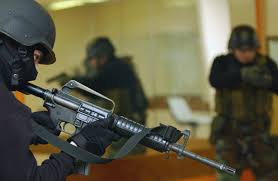
 Practice these tips with multiple sparring partners in various scenarios. If you enjoyed this post, subscribe to my blog for updates, more advice, and exclusive content in the near future. I'm proud and excited to offer a FREE sample chapter of my E-book "Jeet Kune Do: How to build your own fighting system for self defense!" It's essentially a step-by-step guide on how to make your own self defense system suited to fit your own needs using Jeet Kune Do. If you would love to receive your FREE chapter of my e-book, click on the link below and share a post via. social media then it's yours for FREE! Be sure to also fill out the survey on the right and provide feedback on my blog. Leave questions, comments, and suggestions below.


