This blog covers everything related to self defense including but not limited to training, techniques, principles, martial arts, hand to hand combat systems, weapons, various scenarios, tips, sparring, psychology of combat, the list goes on. It is not restricted to just one fighting art but welcomes every reader regardless of experience to gain knowledge on self defense.
A very common question I often see asked when it comes to self defense is "Does size matter in a fight?"
I often get bothered by this question because it makes seem as if size is the only determining factor in a fight for self defense. Does size really matter? It depends on you. Size is only one variable that will determine who survives. If you just assume that an attacker with superior strength and size will overpower you then you will have a hard time defending yourself.
Yes, size does matter but what matters more is your confidence, your skills, your ability to adapt, your skills, your intelligence, and your ability to use size to your advantage. In my blog post "how to skillfully use brute size and strength " (http://everythingselfdefense.blogspot.com/2017/01/how-to-skillfully-use-size-and-brute.html) I explain why muscular large people aren't necessarily skilled in fighting. If you land a well placed kick to a bodybuilder's groin, it's going to bring him or her down. Doesn't matter how muscular the person is. If I'm faced with a large attacker who knows a bit about grappling, now those muscles will serve as a disadvantage for me. If my attacker is slow and tires easily then I strike from a long range which is a disadvantage for my attacker.
In conclusion, size only matters when you understand how to use it to your advantage. Whether you are small, skinny or muscular, fast, strong, overweight, tall or short, you need to ask yourself " how can I use my size to my advantage? How can i use my opponent's size against him or her? How can I develop the confidence to face any attacker of any size?" I leave you with an inspirational quote by Mark Twain shown in this picture.
If you enjoyed this post, subscribe to my blog for updates, more advice, and exclusive content in the near future. I'm proud and excited to offer a FREE sample chapter of my E-book "Jeet Kune Do: How to build your own fighting system for self defense!" It's essentially a step-by-step guide on how to make your own self defense system suited to fit your own needs using Jeet Kune Do. If you would love to receive your FREE chapter of my e-book, click on the link below and share a post via. social media then it's yours for FREE! Be sure to also fill out the survey on the right and provide feedback on my blog. Leave questions, comments, and suggestions below.
Whether you are struggling or excelling in Wing Chun, there's always room for improvement. This guide will give you several tips on how to improve as a Wing Chun practitioner for self defense by applying Wing Chun principles.
* Strike first - A big mistake Wing Chun practitioners make is waiting for an attack to happen. If you wait for an attack to happen, you might not have time to respond and it puts you on the defensive. By striking first, you control the flow and pace of the fight as your opponent is on the defensive. Make the first hit count especially if you plan on using Wing Chun for self defense.
* Apply forward pressure - Another big mistake people make is not closing the gap and applying forward pressure. I've made this mistake myself where my sparring partner was throwing uppercuts, crosses, jabs, and realized Wing Chun's power comes from driving your body forward as you attack or defend. If you simply stand there deflecting and attacking your opponent without stepping forward, all your opponent has to do is either move forward to grapple you or back to avoid getting hit. Once you have the opportunity to attack, you keep stepping forward until your opponent is overwhelmed with attacks or falls over.
In this example (ignore the rest), notice how the Wing Chun chain punches the Muay Thai fighter while stepping forward to drive the fighter back into a mirror. This is the concept of applying forward pressure.
* Take your opponent off balance - Another common mistake is not taking your opponent off balance. As long as your opponent is still standing, you have not eliminated the threat effectively. Removing your opponent's balance is one of the principles in Wing Chun. If your opponent tries to do a kick, step forward to intercept it and cause your opponent to lose balance then deliver powerful blows to knock him or her over. If your opponent tries to do a high kick, tan sao or trap the leg and deliver a stomp kick to the side of the knee in the rear leg. The quicker you can take your opponent off balance, the quicker the fight will end.
* Keep your balance - The proper way to keep balancing is knowing how much pressure to apply to which foot. Improper application of energy leads to loss of balance. For example you should not put all of your weight in the rear foot and no power in your kicking foot. A solid structured alignment, footwork, and proper use of pressure are all essential in keeping your balance.
* Steal your opponent's balance - One effective method of keeping your balance is by taking your opponent's. For example, when you are about to fall over and your opponent throws a straight punch - you could trap the hand while delivering a front kick of your own.
* Don't mirror your opponent's centerline - If you mirror your opponent's centerline, you will have to face all of his or her limbs than if you fought on the outside. By moving to the outside or blindside, you will only have to deal with one arm and leg as you are in a better position to strike. If your opponent rushes in for a kick or punch for example, move in to the side and deliver a kick to the rear leg or trap the arm before you attack.
* Don't retreat - A mistake Wing Chun practitioners make is falling back from an attack. You might create distance but this doesn't give you an advantageous position. Rather than move back, step to the side in order for you to get a superior position to attack while avoiding the line of your opponent's attack. For example, i'd step to the side and deliver a counter-attack to a charging opponent rather than move back then face the possibility of falling over. You retreat only when necessary to create space and even if you do, you don't lose contact. If say an opponent advances to seize an opportunity to attack me, i move back but deliver a straight punch in the process to create distance before i apply forward pressure.
* Control your opponent - There are many Wing Chun practitioners who allow their opponents to control them rather than the other way around. They lose structure, balance, and technique before it turns into a grappling contest. Controlling your opponent is one of the most fundamental principles in Wing Chun. If you are within range for example, use fook sao to bring your opponent's head forward while delivering a strike to the face. Grab your opponent by the hair or clothing for leverage. Control the elbows to nullify your opponent's striking ability then throw him or her to the ground. Control your opponent, don't let your opponent control you.
* Go with the flow - Another fatal mistake Wing Chun practitioners make is fighting force with force. Wing Chun is about absorbing strength and using it against your opponent. If your opponent grabs your arm and pulls you forward, that's fine because he/she is bringing you into your attacking range quickly. If your opponent tries to pull back from your lap sao, help him or her fall over by letting go and delivering a kick to the groin.
* Watch your opponent's elbow and control it - The elbow moves slower than the fist. Therefore, keep your eyes on the elbow and you will predict what your opponent will do.
* Proper elbow alignment - Your hands should defend your upper body while your elbows should be aligned to defend your lower body. If your opponent tries to uppercut, you elbow strike the fists and cause them to break.
Practice these principles in your training and sparring sessions. If you enjoyed this post, subscribe to my blog for updates, more advice, and exclusive content in the near future. I'm proud and excited to offer a FREE sample chapter of my E-book "Jeet Kune Do: How to build your own fighting system for self defense!" It's essentially a step-by-step guide on how to make your own self defense system suited to fit your own needs using Jeet Kune Do. If you would love to receive your FREE chapter of my e-book, click on the link below and share a post via. social media then it's yours for FREE! Be sure to also fill out the survey on the right and provide feedback on my blog. Leave questions, comments, and suggestions below. http://www.paywithapost.de/pay?id=7b715806-c78b-4bfd-badf-4242da2bf8f2
Some critics of Wing Chun trapping (where a fighter immobilizes the arms to execute a counter-attack) have said that trapping is useless in a street fight. Their reasoning is you won't have enough time to trap your attacker's hands or hand and attack under stress. If you do, you will likely get hit with the other hand. Is trapping useless? Yes and no.
Yes because as i've mentioned in my blog post "ineffective Wing Chun training for self defense", i've outlined several flaws with how Wing Chun sifus teach trapping. If your training with a Wing Chun guy who is also trapping and no pressure is being used then of course trapping will be useless in a street fight! All your attacker has to do is apply forward pressure and topple you over. How do you make trapping work? Efficiency, fighting on the blindside, and forward pressure. Rather than trying to face your enemy's centerline and trap the hands, you move to the outside to trap only one elbow as you attack. This is consistent with the Wing Chun principles "control your enemy's elbow" and "fight on the blindside." It's also easier to do. Why struggle to trap both hands when you can trap the elbow which moves much slower with less wasted energy?
From my experience, this method of trapping has worked for me against untrained sparring partners in a no holds barred setting. Against one sparring partner, i simply stepped in to nullify his or her kicking range and trapped only one arm (holding the elbow in place). I pushed him against the wall to keep him from moving at all as i attacked. He swung, i trapped his arm and followed up with a pretend arm break along with other attacks. With another sparring partner, i intercepted his forward movement with a stop kick then closed the gap and trapped his elbow following up with hammerfists to the back. I found that Master Wong was very helpful in giving insight on how to apply trapping in self defense.
Remember that your goal is not to focus on trapping in self defense. Trapping should only be an instinctive response to your opponent's movements. Your primary aim should be simultaneous attack and defense. If the opportunity to trap presents itself, you feel your opponent's movements and respond accordingly. In conclusion, is trapping useless? It can be as useful or as useless as you make it.
Practice with a sparring partner with safety precautions.
If you enjoyed this post, subscribe to my blog for updates, more advice, and exclusive content in the near future. I'm proud and excited to offer a FREE sample chapter of my E-book "Jeet Kune Do: How to build your own fighting system for self defense!" It's essentially a step-by-step guide on how to make your own self defense system suited to fit your own needs using Jeet Kune Do. If you would love to receive your FREE chapter of my e-book, click on the link below and share a post via. social media then it's yours for FREE! Be sure to also fill out the survey on the right and provide feedback on my blog. Leave questions, comments, and suggestions below. http://www.paywithapost.de/pay?id=7b715806-c78b-4bfd-badf-4242da2bf8f2
Brass knuckles can be a very dangerous weapon in the wrong hands. One hit could mean death. Therefore if you want to defend yourself against an assailant wielding brass knuckles, you must abide by several principles.
1) Strike first - Don't wait until you see your attacker reaches into his/her pocket and pulls out a pair of brass knuckles. Soon as you see someone threatening you and reaching into his or her pockets, close the gap then bring your attacker to the ground.
2) Avoid getting hit with the brass knuckles - Brass knuckles could severely injure vital organs and break bone. Treat it as you would a knife (http://everythingselfdefense.blogspot.com/2016/11/self-defense-against-knife.html.) Block and redirect the incoming hits but make sure that your arms do not make direct contact with the weapon.
3) Control the arm and elbow - Grab hold of the wrist or elbow and then trap the entire arm. From there, you can trip your attacker or deliver a stomp kick to the side of one knee or in the back of knee.
4) Disarm - Once you've gotten control of the arm, you can break it by applying force on the elbow joint. Alternatively, you could put your attacker in a wrist lock as you force the brass knuckles out of his/her fingers. You could land a few strikes and make your escape.
If you enjoyed this post, subscribe to my blog for updates, more advice, and exclusive content in the near future. I'm proud and excited to offer a FREE sample chapter of my E-book "Jeet Kune Do: How to build your own fighting system for self defense!" It's essentially a step-by-step guide on how to make your own self defense system suited to fit your own needs using Jeet Kune Do. If you would love to receive your FREE chapter of my e-book, click on the link below and share a post via. social media then it's yours for FREE! Be sure to also fill out the survey on the right and provide feedback on my blog. Leave questions, comments, and suggestions below.
Unfortunately there are some MMA fighters who go around bullying those weaker than them out of self-centered entitlement. If you find yourself with an MMA fighter who is a bully, handle the situation without provoking him to fight. Report him to the police if need be and defend those around you. If things spiral out of control and you have no choice but to fight him, here are several tips on beating an MMA fighter.
There's no telling which styles an MMA fighter uses but generally, they train to be pro-efficient in these set of skills 1) Striking 2) Grappling 3) Ground-fighting. By being familiar with each one, you can devise the proper strategy to counter them all.
* Counter-attack the takedown - The takedown is one of the most crucial moves in ending the fight. If you get caught in the takedown, it's over. The MMA fighter can do what he/she wants once you are on the ground. To avoid it, simply widen your stance, lean your body forward, and stop the fighter with an attack to their upper body. You could palm strike the fighter in the neck as you hold it in place and grab the arm or elbow strike to the back of the head. From there, you could do all sorts of strikes. Ideally, you'd want to push the fighter to the ground and control his movements. If the fighter tries to grab your legs, you could trap his/her arms by bending your legs and lowering your stance. Once trapped, the MMA fighter is completely defenseless.
* Control the distance - The MMA fighter will usually have grappling skills in their arsenal of moves. Be cautious not to get grappled as he/she could easily go for an armbar or other submission hold. Use long ranged attacks and anti-grappling as you keep the distance.
* Counter-attack the Muay Thai clinch - Another attack that the MMA fighter may use is the Muay Thai clinch which would also be crucial in ending the fight. One knee to the ribs and it will result in a broken bone possibly organ damage. You could counter by chain punches to the centerline or preferably, sweep the fighter off balance as you attack him/her down to the ground then make your escape.
* Counter-attack high kicks - Another crucial attack in ending the fight are high kicks. If your opponent delivers a head kick, you could block or use tan sao to catch the leg as you kick the other leg (side of the knee) to get your opponent off balance. If the fighter's leg breaks, the fight is over.
* Counter-attack the running knee kick - Yet another attack that could potentially knock you off balance and end the fight is the running knee kick. When you see your opponent running towards you, it's likely he/she is setting up the kick. Move to the side and take advantage of the situation by kicking your opponent off balance or waiting until he/she lands before closing the gap to attack.
* Use your elbows - If you've read my other post "how to beat a boxer in Wing Chun" (http://everythingselfdefense.blogspot.com/2016/12/how-to-beat-boxer-in-wing-chun.html) then you know the use of your elbows to block and counter-attack would come in handy when facing an MMA fighter. If the MMA fighter uses elbow strikes on you, that's an ideal opportunity to quickly take control of fighter's elbows and end the fight by disrupting his/her balance.
* Counter-attack ground-fighting - Whatever you do, NEVER end up on the ground. Once you end up on the ground, you are put in a very dangerous position. If you ever find yourself on the ground due to a mistake, DO NOT let your guard down. Some Wing Chun teachers instruct that if your on the ground, you should simply get up quickly. This is bad advice especially when facing an MMA fighter. Soon as you try to get up, the MMA fighter will seize that opportunity and attack. Often overlooked, Wing Chun ground-fighting would increase your chances of recovering after being knocked down. You should learn some ground-fighting and how to counter-attack certain holds. What makes Wing Chun ground-fighting different from say Brazilian Jiu Jitsu? There's little to no grappling. You essentially apply the same principles and techniques as if you were standing up. If someone were to ground and pound you for instance, you still could simultaneously attack + defend. You also could knock your opponent off balance as well before quickly getting up and ending the fight.
* Fight dirty - The MMA fighter will likely see a street fight from a ring fighting sport mentality. In the UFC, there are several moves that are illegal in the Octagon but legal outside of it. This gives you an advantage. You could break his/her limbs, bite, hit the groin, use weapons, etc.
I hope this guide was helpful. Be sure to practice these techniques with a partner. If you enjoyed this post, subscribe to my blog for updates, more advice, and exclusive content in the near future. I'm proud and excited to offer a FREE sample chapter of my E-book "Jeet Kune Do: How to build your own fighting system for self defense!" It's essentially a step-by-step guide on how to make your own self defense system suited to fit your own needs using Jeet Kune Do. If you would love to receive your FREE chapter of my e-book, click on the link below and share a post via. social media then it's yours for FREE! Be sure to also fill out the survey on the right and provide feedback on my blog. Leave questions, comments, and suggestions below.
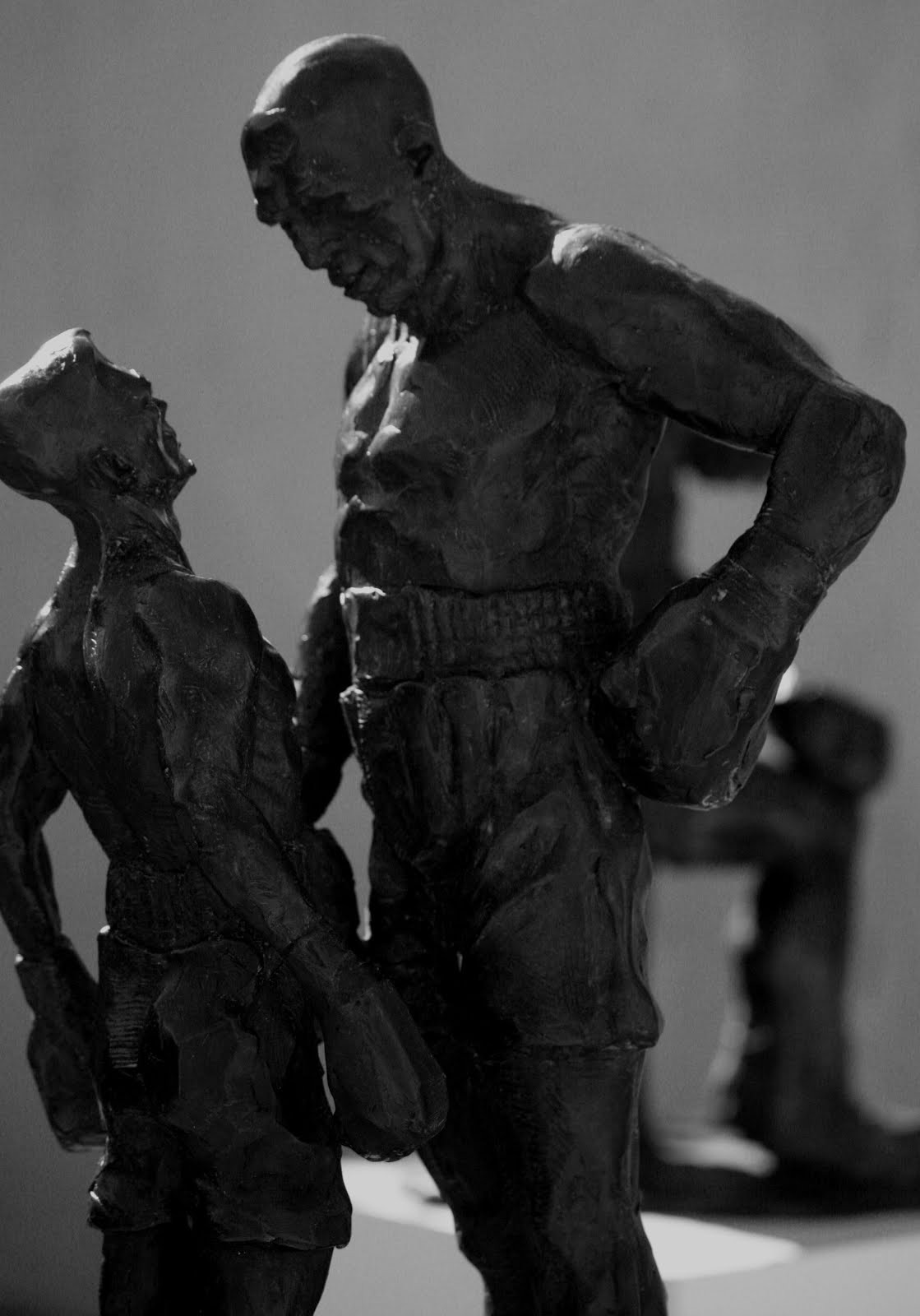 A very common question I often see asked when it comes to self defense is "Does size matter in a fight?"


