Pages

Showing posts with label punch. Show all posts

Friday, July 21, 2017

Is your school teaching self defense or just violence?


As a student of self defense, i understand the importance of combat. I understand the importance of training hard to memorize your techniques. I understand the importance of effective sparring.

Nevertheless, i kept having this nagging feeling that there was more to self defense than meets the eye. I had to take a long pause and reflect on the meaning of self defense as opposed to just fighting. I realized that while everything most self defense instructors were teaching had noble intent, the aim was in the wrong direction. I realized fighting was only half the equation. The other half of self defense and probably the most important is avoiding the threat. Unfortunately too much emphasis is put on the combat aspect of self defense and not enough on skills that matter most in the long run - defusing the threat, conflict resolution, situational awareness, etc. Without these essential skills, all that is being taught in self-defense schools is just street-fighting. 

That being said, my question to anyone teaching or learning self defense is this - is your school teaching self defense or just violence? Self-defense isn't just putting on a pair of gloves and practicing your punches. It's about developing the proper mindset, skills, and character to prevent or minimize conflict to preserve your life. It's this realization that caused me to rethink what i know and motivated me to search for essential skills to prevent conflict before it starts.

If you enjoyed this post, subscribe to my blog for updates, more advice, and exclusive content in the near future. I'm proud and excited to offer a FREE sample chapter of my E-book "Jeet Kune Do: How to build your own fighting system for self defense!" It's essentially a step-by-step guide on how to make your own self defense system suited to fit your own needs using Jeet Kune Do. If you would love to receive your FREE chapter of my e-book, click on the link below and share a post via. social media then it's yours for FREE! Be sure to also fill out the survey on the right and provide feedback on my blog. Leave questions, comments, and suggestions below.


Friday, March 17, 2017

Can one punch kill in a street fight?

We've all heard of the "one punch, one kill" phenomenon but can one punch kill in a street fight or is it just a myth?

Scientifically, yes one punch can kill someone. Many people get into street fights not realizing the brutality of what goes on internally. The impact of a punch can send the person's head on the concrete, create a brain hemorrhage, and death from blood loss. You could also tear a major artery at the base of the brain (AKA brain stem) as the head snaps back which leads to blood loss (see links below.)

National Geographic's "fight science" provides an explanation for the science behind a knock out punch. The impact of a punch can send someone's brain rippling in the skull and hits the back of the skull, causing trauma. It then hits the front of the skull, creating more brain trauma in a concussion. Neurotransmitters fire electrical circuits causing the loss of consciousness. Your body contains dissolved sodium, potassium, and calcium. Each time someone takes a hit to a nerve, potassium leaves and calcium rushes in which destabilizes the calcium balance. The brain tries to keep it all balanced but at the expense of energy. There comes a point when the brain tells the body to shut down to conserve energy and fix damaged neurons later.


Even if your attacker doesn't die, a punch can lead to permanent brain damage. Personality changes can occur and so can dementia among other changes. The brain isn't the only target that can cause death. A punch to any vital organ or bundle of nerves can cause death as well due to internal bleeding, blood loss, and irregular heartbeats. This video is just one case where one punch has killed a person.

This is exactly why you should not engage in any street fight unless it is for self defense! Even if it's sports fighting, you must be prepared to face the consequences it will have on your body.

www.oregonlive.com/portland/index.ssf/.../one-punch_killings_they_happen.html

www.popularmechanics.com/adventure/sports/.../boxing-knockout-sports-science/

If you enjoyed this post, subscribe to my blog for updates, more advice, and exclusive content in the near future. I'm proud and excited to offer a FREE sample chapter of my E-book "Jeet Kune Do: How to build your own fighting system for self defense!" It's essentially a step-by-step guide on how to make your own self defense system suited to fit your own needs using Jeet Kune Do. If you would love to receive your FREE chapter of my e-book, click on the link below and share a post via. social media then it's yours for FREE! Be sure to also fill out the survey on the right and provide feedback on my blog. Leave questions, comments, and suggestions below.

http://www.paywithapost.de/pay?id=7b715806-c78b-4bfd-badf-4242da2bf8f2

Thursday, January 26, 2017

How to end street fights FAST

If you ever find yourself in a situation where someone urges you to engage in a street fight, there are several things you need to do in order to defend yourself. Why is it important for you to end street fights as fast as possible? Because your attacker might have a weapon or friends waiting for an ambush. You don't know how skilled or violent your attacker might be. Doesn't matter how much martial arts or self defense you know, there's also a strong possibility that you might get seriously injured or killed by an untrained fighter. Here is my guide to ending street fights fast assuming that your enemy is facing you.

1) Diffuse and avoid the situation - Many street fights begin with verbal arguments or attacks. You need to understand how to diffuse the situation from getting more violent. Don't provoke your enemy with threatening and taunting language. Remain calm and be respectful. If you can, leave the situation immediately.


2) Keep your distance - The dangers of being too close to an attacker is the risk of getting headbutted in the face or hit with a hook punch outside of your peripheral vision. You need to be able to see your attacker's body in front of you and be aware of others around you. Controlling the distance is important because you have to assume he could pull out a weapon any moment.

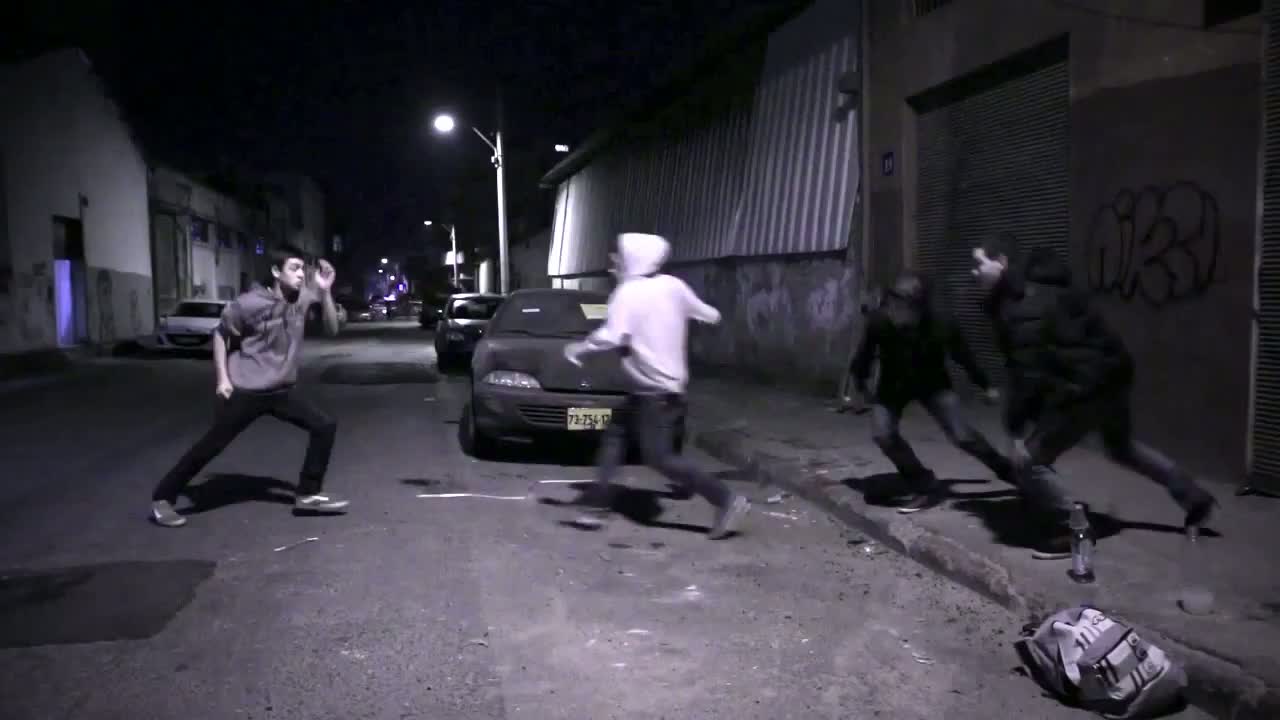
3) Strike first and without warning - I've noticed many martial arts schools and self defense instructors whether on social media, on the internet, or in schools teach you to get in your fighting stance if a street fight breaks then go into techniques or attacks. What are they missing? The element of surprise. Getting your opponent's guard down with distractions and body language. If you are near your opponent to land a surprise attack, why would you sacrifice that opportunity to get in a fighting stance as you move back? The longer you take to finish your opponent, the more dangerous it is for you. In order to end street fights fast, you need to change your mindset. It's not a sparring match or a sports fight. It's a matter of life and death.

How do you end street fights fast? Deception and using the element of surprise. Learn how to read your opponent's body language and get in a non-threatening posture. You will want to let your attacker know that you are not a threat but also put your hands up to defend yourself and reposition your legs to get into a fighting stance. This video gives a good illustration. As soon as you catch your attacker telegraphing his or her attack, you evade or block then BOOM! You land a direct hit.

4) Hit vital areas - Don't just blindly hit your attacker, make the 1st hit count and the 2nd hit count in case the 1st hit fails. If you hit someone hard enough in the jaw, temples, or sides of the neck then that's a guaranteed knock out. It doesn't matter how fast you are or how powerful you are in this situation. It's about how accurate your hits land on your opponent. Timing, accuracy, and proper response are critical to ending a street fight as fast as possible. Personally, i recommend hitting the side of the neck with a chop to knock out your opponent. This is safer than punching the jaw and risk breaking your hand in the process. If your opponent is dazed and still doesn't go down, you hit him or her again in a vital area to knock him or her out.


5) Have a back up plan - If you fail to end a street fight as quickly as possible with the first two hits then you need a back up plan. Kick your opponent in the sides of the knees and knock him or her off balance. The quicker you can end a fight either by knocking your enemy off balance, a knock out, or devastating blows to vital areas - the faster you can escape to safety.

In conclusion, this is a perfect demonstration of how to end a street fight fast. In this situation, an aggressive man approaches a street vendor looking for a fight. The street vendor is calm and keeps his distance not giving any intentions of fighting. The man throws a wild punch, the vendor moves back, closes the distance, and lands a knock out punch.If you enjoyed this post, subscribe to my blog for updates, more advice, and exclusive content in the near future. I'm proud and excited to offer a FREE sample chapter of my E-book "Jeet Kune Do: How to build your own fighting system for self defense!" It's essentially a step-by-step guide on how to make your own self defense system suited to fit your own needs using Jeet Kune Do. If you would love to receive your FREE chapter of my e-book, click on the link below and share a post via. social media then it's yours for FREE! Be sure to also fill out the survey on the right and provide feedback on my blog. Leave questions, comments, and suggestions below.

http://www.paywithapost.de/pay?id=7b715806-c78b-4bfd-badf-4242da2bf8f2

Saturday, January 21, 2017

How to skillfully use size and brute strength

You've probably heard martial artists or self defense instructors say "size doesn't matter..don't use brute force in a street fight.." This isn't true. Size and strength absolutely do matter! The strategy for dealing with a much larger and stronger attacker is different from dealing with someone who is your own size. If you are a large and built person but don't know what to make of your physical abilities in self defense, this guide is for you.

1) Know yourself - In order for you to put your strength and size to good use, you must understand who you are. What are you good at? Lifting weights? Taking a hit to give a hit? Packing a powerful punch? Grappling? What do your work outs consist of? What about nutrition? The more information you can glean from your body, the more you can put it in a self defense situation.

2) Understand the source of power - Many people have the misconception that strength equals power. Why is it that stronger and larger attackers lose to much smaller people? They don't know where their source of power comes from. In this example, a Jiu Jitsu black belt easily overpowered a body builder who was much stronger and larger than him. What's the catch? Redirecting the flow of energy. If you don't know where your source of power comes from and how to use strength to your advantage, you will lose a fight involving dangerous opponents. Where does your source of power come from? The ground, the core (center of mass around the torso area), and momentum. Simply lifting weights and building outer muscles won't make you fit to fight. To be a good striker for example, you must learn how body mechanics work and how to develop your inner muscles responsible for powerful hits (see helpful link below). All the muscles in the world will not help you in a street fight. Only when you understand your source of power do your muscles serve you well.

3) Develop your own fighting abilities - Some people like to think speed and skill is superior to strength. This isn't necessarily true. Two can play at that game including you. How do you develop your own fighting prowess for combat? Recognize your strengths and weaknesses. Are you fast? Slow? Do you have longer reach? Tire too easily? Some ideas i've come up with are training to time your accurate punches and pack alot of power in each one. If your size and strength makes you tire more, learn how to invest your energy wisely. You may want to use momentum, gravity, balance, and strength in your attack strategy. Learning wrestling or some striking art like boxing may be useful to you. It's also beneficial to understand your attacking range and your opponent's. Doesn't matter how fast or agile your attackers are, they will eventually have to get close to you and that gives you an opportunity to strike. You also have to be mindful of how your investing your energy. If you face a faster opponent, all you have to do is move just a little bit to where you won't get hit instead of trying to dodge every attack. One powerful punch combined with superior strength timed correctly can bring devastating consequences (broken bones, damaged organs, possibly death). You could also slam your attackers to the ground and nullify their attacking ability using momentum which also would cause damage. If someone tries to knock or throw you over, lower your center of gravity then attack. This video of a wrestler taking on multiple opponents is an inspiring example of how strength could be applied in combat.

If you enjoyed this post, subscribe to my blog for updates, more advice, and exclusive content in the near future. I'm proud and excited to offer a FREE sample chapter of my E-book "Jeet Kune Do: How to build your own fighting system for self defense!" It's essentially a step-by-step guide on how to make your own self defense system suited to fit your own needs using Jeet Kune Do. If you would love to receive your FREE chapter of my e-book, click on the link below and share a post via. social media then it's yours for FREE! Be sure to also fill out the survey on the right and provide feedback on my blog. Leave questions, comments, and suggestions below.
http://www.paywithapost.de/pay?id=7b715806-c78b-4bfd-badf-4242da2bf8f2

http://www.expertboxing.com/boxing-training/boxing-workouts/why-lifting-weights-wont-increase-punching-power

Friday, January 20, 2017

How to improve your Wing Chun


Whether you are struggling or excelling in Wing Chun, there's always room for improvement. This guide will give you several tips on how to improve as a Wing Chun practitioner for self defense by applying Wing Chun principles.

* Strike first - A big mistake Wing Chun practitioners make is waiting for an attack to happen. If you wait for an attack to happen, you might not have time to respond and it puts you on the defensive. By striking first, you control the flow and pace of the fight as your opponent is on the defensive. Make the first hit count especially if you plan on using Wing Chun for self defense. 

* Apply forward pressure - Another big mistake people make is not closing the gap and applying forward pressure. I've made this mistake myself where my sparring partner was throwing uppercuts, crosses, jabs, and realized Wing Chun's power comes from driving your body forward as you attack or defend. If you simply stand there deflecting and attacking your opponent without stepping forward, all your opponent has to do is either move forward to grapple you or back to avoid getting hit. Once you have the opportunity to attack, you keep stepping forward until your opponent is overwhelmed with attacks or falls over. 

In this example (ignore the rest), notice how the Wing Chun chain punches the Muay Thai fighter while stepping forward to drive the fighter back into a mirror. This is the concept of applying forward pressure.   


* Take your opponent off balance - Another common mistake is not taking your opponent off balance. As long as your opponent is still standing, you have not eliminated the threat effectively. Removing your opponent's balance is one of the principles in Wing Chun. If your opponent tries to do a kick, step forward to intercept it and cause your opponent to lose balance then deliver powerful blows to knock him or her over. If your opponent tries to do a high kick, tan sao or trap the leg and deliver a stomp kick to the side of the knee in the rear leg. The quicker you can take your opponent off balance, the quicker the fight will end.

* Keep your balance - The proper way to keep balancing is knowing how much pressure to apply to which foot. Improper application of energy leads to loss of balance. For example you should not put all of your weight in the rear foot and no power in your kicking foot. A solid structured alignment, footwork, and proper use of pressure are all essential in keeping your balance. 

* Steal your opponent's balance - One effective method of keeping your balance is by taking your opponent's. For example, when you are about to fall over and your opponent throws a straight punch - you could trap the hand while delivering a front kick of your own. 

* Don't mirror your opponent's centerline - If you mirror your opponent's centerline, you will have to face all of his or her limbs than if you fought on the outside. By moving to the outside or blindside, you will only have to deal with one arm and leg as you are in a better position to strike. If your opponent rushes in for a kick or punch for example, move in to the side and deliver a kick to the rear leg or trap the arm before you attack. 

* Don't retreat - A mistake Wing Chun practitioners make is falling back from an attack. You might create distance but this doesn't give you an advantageous position. Rather than move back, step to the side in order for you to get a superior position to attack while avoiding the line of your opponent's attack. For example, i'd step to the side and deliver a counter-attack to a charging opponent rather than move back then face the possibility of falling over. You retreat only when necessary to create space and even if you do, you don't lose contact. If say an opponent advances to seize an opportunity to attack me, i move back but deliver a straight punch in the process to create distance before i apply forward pressure.

* Control your opponent - There are many Wing Chun practitioners who allow their opponents to control them rather than the other way around. They lose structure, balance, and technique before it turns into a grappling contest. Controlling your opponent is one of the most fundamental principles in Wing Chun. If you are within range for example, use fook sao to bring your opponent's head forward while delivering a strike to the face. Grab your opponent by the hair or clothing for leverage. Control the elbows to nullify your opponent's striking ability then throw him or her to the ground. Control your opponent, don't let your opponent control you. 

* Go with the flow - Another fatal mistake Wing Chun practitioners make is fighting force with force. Wing Chun is about absorbing strength and using it against your opponent. If your opponent grabs your arm and pulls you forward, that's fine because he/she is bringing you into your attacking range quickly. If your opponent tries to pull back from your lap sao, help him or her fall over by letting go and delivering a kick to the groin.

* Watch your opponent's elbow and control it - The elbow moves slower than the fist. Therefore, keep your eyes on the elbow and you will predict what your opponent will do.

* Proper elbow alignment - Your hands should defend your upper body while your elbows should be aligned to defend your lower body. If your opponent tries to uppercut, you elbow strike the fists and cause them to break.

Practice these principles in your training and sparring sessions. If you enjoyed this post, subscribe to my blog for updates, more advice, and exclusive content in the near future. I'm proud and excited to offer a FREE sample chapter of my E-book "Jeet Kune Do: How to build your own fighting system for self defense!" It's essentially a step-by-step guide on how to make your own self defense system suited to fit your own needs using Jeet Kune Do. If you would love to receive your FREE chapter of my e-book, click on the link below and share a post via. social media then it's yours for FREE! Be sure to also fill out the survey on the right and provide feedback on my blog. Leave questions, comments, and suggestions below.

http://www.paywithapost.de/pay?id=7b715806-c78b-4bfd-badf-4242da2bf8f2

Monday, December 19, 2016

Fight strategies vs. techniques

There are many people going into self defense wondering "which techniques can i use to beat bigger and badder opponents...what's the most effective punch to beating someone in a street fight.." They go into martial arts schools trying to learn how to deal with many different types of attacks. They want to learn techniques, techniques, and more techniques.

The problem is that you won't ever be able to excel in self defense if you rely only on techniques. There are many martial arts and self defense schools that teach techniques but neglect the strategies of self defense. Strategies, principles, and concepts of self defense are far more important than techniques. If you always rely on techniques, you will never become a proficient fighter in self defense. That's why you'll rarely see me teaching you any techniques in my blog posts. Techniques are just the tools to help you achieve a certain goal but they are not the foundation of self defense. You can learn techniques on how to deal with a hook punch or a headlock but if you don't learn certain principles such as keeping distance, balance, when to attack, efficiency, etc. then techniques are worthless. Not all techniques can be applied to every situation so it's important to understand strategy. 

If you must learn techniques, which ones should you learn? The simplest ones. People will try to sell you flashy techniques that look good in demonstration but are impractical in a real street fight. You won't be able to recall everything under high levels of stress. Simplicity and efficiency are what determines whether or not a certain techniques are effective. If you perform a set of fancy techniques, someone can intercept with a simple punch and you'll be knocked out cold. The more simple a technique is, the faster you'll be able to recall it and respond. This applies to boxing, Karate, Wing Chun, Sambo, Krav Maga, Jiu Jitsu, or even basic punches and kicks. This video will help explain more in full detail. 

Why are strategies more important than techniques? Because strategies are the plans to accomplish a specific goal. If you fail to plan, you plan to fail. If you have no guidance in dealing with specific situations, you won't know how and when to apply techniques. If you don't know when and how to apply techniques, you won't be able to apply them at all. Learn strategies, concepts, and principles of self defense. Only then will you be truly wise and able to see many different violent situations more clearly.

I hope that this post gave you some insights into how to improve your training.

If you enjoyed this post, subscribe to my blog for updates, more advice, and exclusive content in the near future. I'm proud and excited to offer a FREE sample chapter of my E-book "Jeet Kune Do: How to build your own fighting system for self defense!" It's essentially a step-by-step guide on how to make your own self defense system suited to fit your own needs using Jeet Kune Do. If you would love to receive your FREE chapter of my e-book, click on the link below and share a post via. social media then it's yours for FREE! Be sure to also fill out the survey on the right and provide feedback on my blog. Leave questions, comments, and suggestions below.