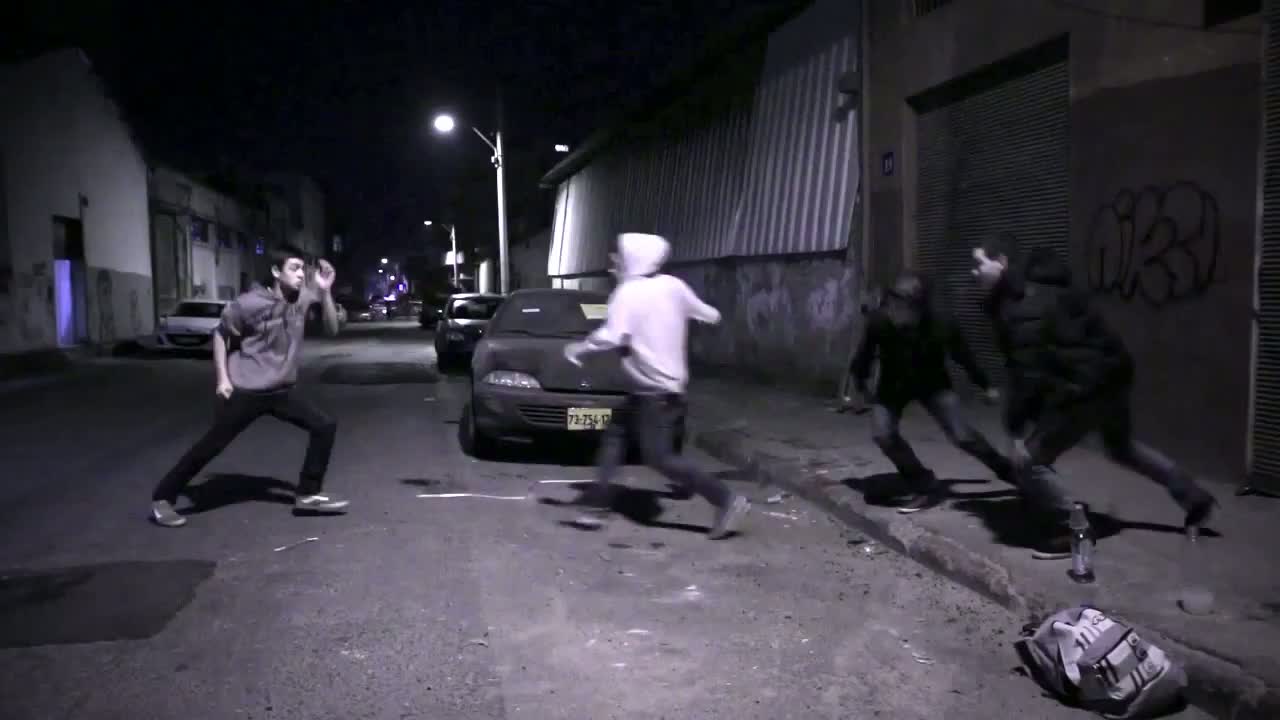
This blog covers everything related to self defense including but not limited to training, techniques, principles, martial arts, hand to hand combat systems, weapons, various scenarios, tips, sparring, psychology of combat, the list goes on. It is not restricted to just one fighting art but welcomes every reader regardless of experience to gain knowledge on self defense.
Iron body training is common among martial artists in Karate and Shaolin kung fu. Many practitioners break bricks, concrete blocks, boards, and other hard surfaces. The idea is that by hardening bone and muscles, you're able to withstand powerful blows while delivering them. Before we delve into Iron body training, let's examine the science of it. I'll only give a brief summary of the facts and leave extensive research to you.
According to Wolff's law, the bones of a healthy person will adapt to the loading placed on them. If the loading on a particular bone increases, the bone will become stronger over time by remodeling itself.
When martial art practitioners strike hard surfaces, microfractures occur in certain body parts. Osteoclasts remove damaged bone while Osteoblasts deposit minerals for bone remodeling. Osteoblasts will cover it with a honeycomb structure and the bone will become denser than before. The effects of bone structure depend on the length, level, and rate of the work load. It's been found that cyclic loading leads to bone formation. In other words, bone remodeling occurs overtime. There must be periods of rest for healing or Osteoblasts won't be able to repair damaged bones (1).
Iron body training can also harden muscle tissue. After an intense work-out, you may notice that your muscles hurt. This is because there's small micro tears in your muscle tissues. They heal over time as your body creates new muscle fibers. Your muscles become stronger and bigger as a result (2).
As we can see, Iron body training is scientifically verifiable and effective especially in combat. There are exceptions where it doesn't work. It would depend entirely on your genes and body to determine whether this type of training is suitable for you.
Why train in Iron body? For the following reasons:
* You can withstand powerful attacks - You'll be able to absorb powerful attacks in many areas of the body namely from melee weapons. Your attacker's limbs might end up injured or broken. This is because your attacker isn't accustomed to the sudden overwhelming force on the bones and muscles. Your attacker will have very limited targets available to him or her.
* You can deliver punishing blows - With proper technique and Iron body training, your attacks will be very devastating. The force in a punch could for example break bones and cause them to impale internal organs, killing the attacker.
* You prevent injuries in combat - Many martial artists like to wear gloves during training. This works in sport but not for self-defense. The average person's hands are fragile and break easily. Iron body training conditions your fists to prevent them from breaking easily. You can also target hard bones in other parts of the body without injuring your fists.
How can you practice Iron shirt training? Here's several tips.
1. Find proper materials - Depending on what body part you want to work on, you'll need to find proper materials. You don't want to use dangerous items that could potentially damage your body. Find materials for beginners and materials for more advanced stages. you could use your hands to start off light or purchase materials for iron body training. if you don't have a large budget then you need to improvise. You could use a wall, tree, or partner. You could also put a bunch of textbooks in a book bag. Soft material can be used for your fists to cushion them for knuckle push ups. Chinese medicine such as Dit Da Jow before and after training. This helps improve circulation, reduce swelling, pain, and heals injuries or wounds.
2. Start off light - Strike a body area such as your albs with open hand slaps 100 times.You must do it lightly but not too light to where you feel no force whatsoever. If it's with your fist, start by tensing it against a wall. Gradually push your bodyweight on it. Do this for a period of time until your hands or body area become tougher.
3. Gradually increase the work load - Once you notice considerable changes, replace the training equipment with more advanced tools. Gradually increase the force you exert on your body. You could start punching the wall harder as you progress. You could hit your albs with more force and items such as bricks. You could have a partner strike you to look for "soft spots."
4. Make a routine - NEVER try to go beyond your limits in Iron body training. You could injure yourself. Allow yourself time to heal for a day or however long it takes to recover. Develop a training regimen and stick to it.
5. Practice combat skills without protection - If you are to test and hone your Iron body conditioning for self-defense, you'll have to ditch protective gear eventually. This means for example punching heavy bags without gloves. This could also mean engaging in full-contact sparring without any gear.
Remember that it's your responsibility to take care of your own body. Practice these tips safely. If you enjoyed this post, subscribe to my blog for updates, more advice, and exclusive content in the near future. I'm proud and excited to offer a FREE sample chapter of my E-book "Jeet Kune Do: How to build your own fighting system for self defense!" It's essentially a step-by-step guide on how to make your own self defense system suited to fit your own needs using Jeet Kune Do. If you would love to receive your FREE chapter of my e-book, click on the link below and share a post via. social media then it's yours for FREE! Be sure to also fill out the survey on the right and provide feedback on my blog. Leave questions, comments, and suggestions below.
I'm going to be honest and say that almost all of the self defense systems you see out there are unreliable. Reason why i say that is because they haven't been tested by science. I have not seen one scientific study examining the effectiveness of a martial art or a "reality based self defense system." Of course you'll find some studies such as "Fight Science" (see video below) examining the nature of martial arts' legends but fighting is quite different from self defense.
Science is about making observations and testing out ideas. It's about establishing a controlled environment and eliminating possible biases that could affect the results. Science is about making measurements and applying what is scientifically known to the real world. Unfortunately, so many self defense instructors rely on experience or tradition to draw their own conclusions on what they deem is effective self defense.
For example some police officers teaching self defense will tell you something along the lines of "I've worked with many people using guns so in my experience the best way to deal with a gun is..." Easy for them to say because they are police officers. Their job isn't self defense. Their job is to subdue and prosecute criminals. Police officers rarely have to deal with gun disarming because they almost always make sure they carry loaded guns. Police officers have guns, batons, chemical sprays, tasers, back up, the list goes on. You don't on the other hand. There are so many different variables and factors in each violent situation. Do you really think it's a smart idea to base your self defense training on one cop's experience?
Too many people are looking for the ultimate fighting system for self defense that will protect them in every situation. The reality is there is none because almost none have been tested in a scientific setting. There are simply too many factors and safety concerns that it's nearly impossible to repeatedly test in a lab. Some martial arts masters have failed to live up to their training when it came to a completely different variable as shown in this video below. In the end, all we have are theories when it comes to techniques and combat. What happens is people learn combat in a certain school then end up not using it, using only some of it, or use it only to find it's useless in a real violent encounter. If we cannot scientifically test self defense combat systems or martial arts effectiveness in violence, we cannot expect to have reality-based self defense.
What's the best way to learn how to defend yourself? Use your head, not your fists. Study the human body and it's weaknesses. Study physics and it's relationship to the body. Study the proper force and speed needed to deliver a knock out or incapacitating blow. Study criminal behavior. Study how crimes occur and the warning signs of an impending attack. Study human behavior and human relationships. Study the environment that you are in. Listen, learn, and continue to have an open mind. Apply the knowledge that you've learned in self defense rather than relying on a system to do all the work for you.
If you enjoyed this post, subscribe to my blog for updates, more advice, and exclusive content in the near future. I'm proud and excited to offer a FREE sample chapter of my E-book "Jeet Kune Do: How to build your own fighting system for self defense!" It's essentially a step-by-step guide on how to make your own self defense system suited to fit your own needs using Jeet Kune Do. If you would love to receive your FREE chapter of my e-book, click on the link below and share a post via. social media then it's yours for FREE! Be sure to also fill out the survey on the right and provide feedback on my blog. Leave questions, comments, and suggestions below. http://www.paywithapost.de/pay?id=7b715806-c78b-4bfd-badf-4242da2bf8f2
Many people believe that sparring helps them to develop hand-to-hand combat skills for use in the real world. They believe that the more you spar, the better you will be at defending yourself. I'm here to tell you that sparring alone will not make you better at self defense. Don't misunderstand me, i'm not saying that you won't learn any skills that could be used for self defense. I'm simply giving you many variables and considerations to take into account. Here are my list of reasons why the way most teach sparring is ineffective for self defense:
* Sparring doesn't prepare you for the unexpected - Think about it. You have two people on the mat with head gear and a bunch of other safety equipment on. Both know that they are about to fight and consent to it. In the real world, you don't know 100% that you'll be attacked. Your attacker won't tell you if he or she is going to attack and how. I've tested this myself with a sparring partner on multiple occasions. Coincidentally, he hit me without letting me know we were sparring. If that happened on the streets, i probably would've been knocked out. Sparring does not teach you how to deal with those situations.
* Sparring teaches street fighting - Once you put on your headgear and other safety equipment for sparring then prepare yourself for hand-to-hand combat, you are training for street-fighting. Why is it street fighting and not self defense? For one, sparring doesn't teach you how to avoid a potentially violent situation or diffuse it. Another reason you have to consider is that your attacker may not do those Karate kicks or Judo throws that your partner used in class. If you expect your attacker to just exchange punches only to find out you've been hit from behind by one of his buddies or attacked with a lethal weapon, all of your sparring lessons were just rendered useless. The last reason is that you aren't learning to neutralize the threat quickly enough. The longer the fight goes on, the more danger you put yourself in. Unfortunately, you will find many people claiming "self defense" be it on youtube or in person when they were street fights in reality because they gave their consent.
* Sparring has rules - Many forms of sparring include no hits to vulnerable areas. Sparring conditions you to only strike anywhere but those areas. That's a great hindrance to you and an advantage for your attacker who intends on seriously injuring or killing you. Another common practice is instilling "point systems." This is where you execute certain attacks or techniques to score points. When you have enough points, your opponent is considered defeated. This type of training is instilling false confidence be it with your fists or weapons because it completely ignores adrenaline rushes and pain tolerance. You might be surprised to find that no matter how many times you hit your attacker in the real world, he or she still won't go down. As a result, your confidence will start to break and chances are, you will give up or get hit. Some sparring sessions include making an opponent tap out. In reality, your attacker will do everything in his or her power to attack you. Once you let go of your submission hold, there's nothing preventing your attacker from landing a fatal blow. This video depicts one example where a man was being assaulted before others followed.
* Sparring neglects everything else in violence - Combat is much more complex than what sparring classes teach. There are adrenaline rushes, fight or flight response, weapons, multiple attackers, drugs, alcohol, stress, morals, psychology, the list goes on. If you are being bullied to the brink of insanity and your self esteem is being drained, do you really think you will be able to use what you learned in sparring against the bully? No. The bully already has a psychological advantage against you. If you freeze because of insecurity, the bully will take advantage of that and beat you up. If you aren't mentally prepared to hurt or kill your attacker then you will get hurt or killed. Thee aftermath of a violent confrontation (injuries, PTSD, prison, etc.) is also something to think about.
* Sparring gives false security - It's easy to fight when your wearing headgear, gloves, and other safety gear along with knowing that your partner isn't trying to kill you. In real life, you won't have this luxury. Your attacker will try to hurt and kill you. Your fist might break the moment you make contact with your attacker's jaw or cheekbone. Will sparring teach you how to handle an attacker trying to intimidate you? Will sparring condition you to cause real injury to another human being? Will sparring teach you how to execute eye gouges and other dirty fighting tactics properly? No. This is why sparring gives false confidence.
In conclusion, nothing you learn in self defense schools is guaranteed to save your life and this includes what i teach. You'll have a percentage of people who've misused hand-to-hand combat intended for self defense to street fight. You'll have a percentage of instructors who teach hand-to-hand combat but never had to use all of them in self defense. You'll have those who used them but the results were far different than expected. There's too many variables that you cannot account for all of them in self defense training. What's the best advice i can give you? Don't get into a violent situation. Focus more on avoiding or diffusing conflict before it starts.
If you enjoyed this post, subscribe to my blog for updates, more advice, and exclusive content in the near future. I'm proud and excited to offer a FREE sample chapter of my E-book "Jeet Kune Do: How to build your own fighting system for self defense!" It's essentially a step-by-step guide on how to make your own self defense system suited to fit your own needs using Jeet Kune Do. If you would love to receive your FREE chapter of my e-book, click on the link below and share a post via. social media then it's yours for FREE! Be sure to also fill out the survey on the right and provide feedback on my blog. Leave questions, comments, and suggestions below.
When Bruce Lee founded Jeet Kune Do and developed Jun Fan Gung Fu, he wanted to express himself honestly. This is the freedom that Jeet Kune Do provides it's practitioners - the freedom to express yourself through bodily movements. There's no set way of dealing with a particular situation. There is only your own way of fighting.
When i went out looking for a style that suits me, i realized that each martial art confined me to a certain way of doing things. I thought that i connected well with one particular style until i realized - i didn't like it. I didn't like some of the approaches to combat. I didn't like some of the movements and footwork. Granted, i did agree with some of the philosophies but i didn't see the need to be what the art wanted me to be. I wasn't the kind of person the art expected of me.
When i learned and applied Jeet Kune Do to my martial arts training, i could feel the freedom in every movement. I could feel immense power and fluidity, no longer being confined to any set patterns. I realized who i am truly am. Deep within, i am an aggressive and enraged person. I realized for me, the best defense is a strong and brutal offense. I'm about destroying an attacker limb from limb, the whole body, the mind, and everything else. To me, Jeet Kune Do is about embracing the depths of the darkest parts of yourself along with the good and expressing the essence of who you are. I express who i am and my emotion of anger through the way i engage in combat. When you do that then you are able to unlock your potential as a martial artist and a human being. Sadly, i believe very few martial artists express themselves honestly. Instead, they seek to conform to set patterns of what others expect of them.
By freeing yourself from the expectations of others, you learn how to unlock your highest potential in combat. When applying Jeet Kune Do philosophy to martial arts training in self defense, your ultimate goal is to discover who you are. What kind of person are you? How do you prefer to end a conflict? What is your ultimate goal in life? What are your physical and mental abilities? What techniques and strategies work best for you? If you can attain knowledge of yourself then you will find a way to defend yourself effectively using Jeet Kune Do principles and philosophy.
If you enjoyed this post, subscribe to my blog for updates, more advice, and exclusive content in the near future. I'm proud and excited to offer a FREE sample chapter of my E-book "Jeet Kune Do: How to build your own fighting system for self defense!" It's essentially a step-by-step guide on how to make your own self defense system suited to fit your own needs using Jeet Kune Do. If you would love to receive your FREE chapter of my e-book, click on the link below and share a post via. social media then it's yours for FREE! Be sure to also fill out the survey on the right and provide feedback on my blog. Leave questions, comments, and suggestions below.
What makes the Jeet Kune Do philosophy so unique compared to other martial arts' philosophies is the emphasis on expression of freedom and creativity. Jeet Kune Do has no set form or pattern way of thinking. There are no belt systems or forms. Instead, Jeet Kune Do helps it's practitioners see only the beauty in movements rather than styles. The techniques and principles of combat are bent to the will of the practitioners, not the other way around.
When Bruce Lee was alive, he would study each individual movement and find flaws. He'd almost always wanted to know "why? Why do we do things a certain way?" He'd discard the traditional methods of using a particular type of attack or technique in favor of what worked for him. According to William Cheung, Bruce Lee criticized modified footwork and asked "look, why is it like that? Why do i have to do this?" (see link below.) That's when Bruce Lee realized the truth in combat existed in each individual, not a particular style or system. What works for one person may not work for another person. In this video, Dan Inosanto lists the differences between Jeet Kune Do and Wing Chun.
The freedom that is found in the JKD philosophy is the ability to fight in your own way. There's almost no rules in Jeet Kune Do. You do what works best for you. For example, conventional wisdom says "don't take the fight to the ground because of the possibility of weapons and multiple attackers.." Jeet Kune Do's answer is "can you make it work? How can you beat someone on the ground quickly addressing weapons and multiple attackers? What exceptions exist? What are the proper conditions for taking the fight to the ground?" Another saying people bring up in combat is to not kick high because you could lose your balance. Jeet Kune Do's answer is once again "can you make it work?" Perhaps you could steal your opponent's balance through trapping the hand as land a high kick to the head. When does kicking high work and when is it not applicable?
Jeet Kune Do isn't just about the freedom from principles or styles, it's also about making your ideas work. For example, i like to apply a bit of psychology and psychological warfare in combat because i find them useful in certain situations. I take inspiration from Sun Tzu, accounts of warfare from the Bible, and other sources. As long as what you use works in combat, the JKD philosophy is - use it. Can't find a useful technique for a particular situation? Invent your own.
That's the beauty of Jeet Kune Do and apart of being fluid. It's about not confining yourself to a predictable pattern or way of fighting. You are your own best master.If you enjoyed this post, subscribe to my blog for updates, more advice, and exclusive content in the near future. I'm proud and excited to offer a FREE sample chapter of my E-book "Jeet Kune Do: How to build your own fighting system for self defense!" It's essentially a step-by-step guide on how to make your own self defense system suited to fit your own needs using Jeet Kune Do. If you would love to receive your FREE chapter of my e-book, click on the link below and share a post via. social media then it's yours for FREE! Be sure to also fill out the survey on the right and provide feedback on my blog. Leave questions, comments, and suggestions below.
I'm going to be covering a controversial topic surrounding violence on men and women. The question i will address is "should men hit women in self defense?"
My answer is it depends on the circumstances. Your appropriate response should be determined by the amount of force being used against you. If the woman is insulting you,tells you that your violating her personal space, and pushes you then obviously punching her wouldn't be justified. If you can avoid the situation without fighting back then do so. If the woman is attacking you with a deadly weapon and deadly force then hitting a woman is justified. Grab the arm, break it, disarm the weapon, land a few hits to the face and knees, do whatever you need to do to survive.
Keep in mind that this also applies to men. If a man pushes you and you have the opportunity to leave then do so. There's no favoritism in self defense. You have every right to defend yourself regardless of the person's gender.
If you enjoyed this post, subscribe to my blog for updates, more advice, and exclusive content in the near future. I'm proud and excited to offer a FREE sample chapter of my E-book "Jeet Kune Do: How to build your own fighting system for self defense!" It's essentially a step-by-step guide on how to make your own self defense system suited to fit your own needs using Jeet Kune Do. If you would love to receive your FREE chapter of my e-book, click on the link below and share a post via. social media then it's yours for FREE! Be sure to also fill out the survey on the right and provide feedback on my blog. Leave questions, comments, and suggestions below. http://www.paywithapost.de/pay?id=7b715806-c78b-4bfd-badf-4242da2bf8f2
In this self defense guide, i will teach you several tips on becoming a better fighter. Keep in mind, i'm not training you for ring fighting or just beating the average punk on the street. I'm teaching you how to fight against people of any skill level be it average to highly trained attackers. Assuming that you've already trained in hand to hand combat, these are principles you need to keep in mind and you will become proficient in self defense.
* Be aware of your environment - If you aren't aware of your attackers or potential attackers and the environment you are in then you won't be able to properly defend yourself. You will be easily taken by surprise and lose opportunities to escape much less survive. Be mindful of your surroundings.
* Strike first - It's very important to beat your opponent to the punch quite literally. If you check out my post "how to end street fights FAST" (http://everythingselfdefense.blogspot.com/2017/01/how-to-end-street-fights-fast.html). By landing the 1st strike accurately and without warning, you could end the fight or at least severely injure your attacker and give you more opportunities to strike him or her down. Remember it's about quality more than quantity in violent situations. This video will give more insights.
* Strike in vital unguarded areas - You shouldn't blindly hit your opponent wherever. You should hit vital areas such as the eyes, nose, groin, jaw, neck, temples, solar plexus, ribs, sides of knee, thighs, shins, under the chin, back of the head, throat, knees, sternum, and so on. When you strike an attacker in one area, his or her reaction is to either defend or evade but this opens up an unguarded bodily area to attack. The same happens when your opponent attacks you and vice versa. Practice landing accurate quick shots in training so it will be second nature in combat.
* Use improvised weapons - If you have weapons and you know how to use them, use them. Don't hold anything back. Adapt to the level of violence. The more lethal force is being used against you, the deadlier the weapons you will need. Use guns, knives, bats, chairs, sticks, brass knuckles, tactical lights, stones, broken glass, the list goes on. Weapons are great equalizers especially against trained fighters. This video will explain further in detail.
* Use the environment as a weapon - There are many tools in your environment that you could use to your advantage such as barriers (fences, cars, or walls) and other objects. You could slam your attacker on concrete or into a car. You could also throw dirt or sand into your attacker's eyes to blind him or her temporarily as you strike at full force and full speed. If you want more, read my post "how to use the environment as a weapon" (http://everythingselfdefense.blogspot.com/2016/12/how-to-use-environment-as-weapon.html).
* End the threat quickly - The longer a fight goes on, the more danger you put yourself. You don't know if your attacker has a weapon or friends in waiting. Many people in martial arts learning self defense make the mistake of moving around like it's a fight. You need to put yourself in the mindset that if you don't end the threat as quickly as possible, there will be more threats coming your way. Be aggressive and constantly attack your opponent. Don't let your attacker breathe until the threat is over. Quickly shift from being on the defensive to the offensive or you might find yourself knocked out eventually.
* Don't step back - When you step back, you are giving your opponent a psychological advantage. You need to exert dominance over your attacker, not submissiveness. If you keep moving back when your attacker is striking you, fear might take over and eventually you will get hit. This video explains the mechanics behind stepping back.
* Get in superior positions - Avoid staying in front of the direction of attack and get in superior positions to attack your opponent. For example if your attacker came charging in at you, move to the side and deliver an attack of your own. By understanding how to get in superior positions of advantage will put your opponent at a disadvantage.
* Fight dirty - Remember that in the streets, there are no rules. Eye gouging, headbutts, biting, limb breaking, and other brutal tactics are useful in incapacitating an attacker.
* Pay attention to body language - One thing you should never do is give away your intention to attack. This is a common mistake i see people make. By tensing up your arms, clinching your fists, moving your fists around, and throwing jabs trying to figure out where to hit are giving away your moves. By doing this, your attacker can predict what you will do and he or she can counter-attack you. Here's a training tip i came up with to help you use body language to your advantage. Get in front of a mirror and practice striking without telegraphing your attacks. Make sure that your completely relaxed and your eyes aren't wandering around. Be sure to also have your hands completely still before you explosively strike quickly. Practice speed and timing. You could also trick your opponent into thinking you will hit him or her in one area only to hit in another area.
* Have a strategy - If you have no strategy then you will get hurt or killed. Without knowing your enemy first and foremost, you cannot develop an effective strategy to defeat him or her. In order to have an effective strategy, you must think and respond quickly. If your facing someone who is superior than you in hand-to-hand combat for example then you need an equalizer such as weapons and injure him or her.
* Adapt to every situation - This is probably the most important tip. If you don't know how to adapt to various situations, you won't survive. Adapting to the circumstances is one of the most fundamental keys to self defense. Adapting might require you to change your strategy of attack when the first did not succeed. What works in one set of situations will not work in a different set. Proper judgement will allow you to assess how to deal with them in self defense.
* Use distractions - If you can distract your enemy in combat be it through fake attacks or other objects then you allow an opportunity to land a fatal blow.
* Be in the present moment - Don't focus on the outcome of the fight. Don't focus on past failures in self defense. If you focus on either one, you will lose period. Be in the present moment of the fight. Respond to your opponent's movements and allow mindfulness to rule.
* Understand and control distance - By controlling the distance between you and your opponent, you are able to attack while avoiding your enemy's attacks. Learn how far your arms and legs can extend so you can use them effectively in combat.
* Change the patterns and rhythm of attack - Everyone has his or her own way or rhythm of fighting. In order to be a skilled fighter, you must learn to recognize patterns and rhythms then change your own to catch your opponent by surprise. For example, you may notice your attacker likes to bob and weave as he or she throws upper cuts mixed with punches to the head each time you attack. You could strike to gauge a reaction and quickly deliver a kick to the groin or sides of knees. If you like to punch hard and fast in combination, you could suddenly pause briefly to surprise your opponent before you land a kick to the solar plexus or groin.
By recognizing how to create opportunities to attack or escape a violent situation all together, you are better able to defend yourself. If you enjoyed this post, subscribe to my blog for updates, more advice, and exclusive content in the near future. I'm proud and excited to offer a FREE sample chapter of my E-book "Jeet Kune Do: How to build your own fighting system for self defense!" It's essentially a step-by-step guide on how to make your own self defense system suited to fit your own needs using Jeet Kune Do. If you would love to receive your FREE chapter of my e-book, click on the link below and share a post via. social media then it's yours for FREE! Be sure to also fill out the survey on the right and provide feedback on my blog. Leave questions, comments, and suggestions below.
In the 16th century, a skilled samurai named Tsukahara Bokuden (who killed 212 people in battle) encountered a violent bully looking for a fight. When asked about his style, he said that he studied "the style of no style." the bully laughed and challenged him to a duel. Bokuden accepted but suggested they row to a nearby island where no innocent bystanders would get hurt. The bully agreed but as they approached the shore, Bokuden rowed the boat away and said "this is my no-sword school."
The art of fighting without fighting is the art of peace. It is the highest level of self defense. The ability to peacefully resolve conflict is the mark of a true warrior. You can use your skills to win many fights at impossible odds with people of various backgrounds. You can have many impressive fighting skills. You may even be one of the greatest warriors to ever walk the earth but if you don't know how to make peace, it's all meaningless. It doesn't matter how many you've beaten or killed in combat because it's nothing new. You've simply repeated an endless cycle of violence that has existed for countless generations. Nothing meaningful is learned from bloodshed.
The art of fighting without fighting is about breaking free from that vicious cycle. Rather than fighting the evil outside, you fight the evil within. Rather than repay evil with evil, you repay evil with good. Your enemy may laugh and arrogantly mock you, not realizing who you are or what you are capable of. You can destroy him or her in an instant but even if you do, you still would've failed to defeat your greatest enemy - pride. A very formidable warrior is sometimes a person who doesn't appear formidable. A warrior who is exceptionally skilled in combat does not need to seek approval from outside of him or herself. The highly skilled warrior finds peace from within. The art of fighting without fighting is about understanding the essence of why conflicts occur and resolving them peacefully be it through deception or words. This can only happen if you understand yourself and others in empathy.
The art of fighting without fighting can take a lifetime to learn. Nevertheless, opens the door to a profound understanding of the root of conflict. In the words of Sun Tzu "the supreme art of war is to subdue the enemy without fighting." How will you end conflicts without resorting to violence and create a better world? I leave you with those concluding thoughts. If you enjoyed this post, subscribe to my blog for updates, more advice, and exclusive content in the near future. I'm proud and excited to offer a FREE sample chapter of my E-book "Jeet Kune Do: How to build your own fighting system for self defense!" It's essentially a step-by-step guide on how to make your own self defense system suited to fit your own needs using Jeet Kune Do. If you would love to receive your FREE chapter of my e-book, click on the link below and share a post via. social media then it's yours for FREE! Be sure to also fill out the survey on the right and provide feedback on my blog. Leave questions, comments, and suggestions below.
The fear of physical conflicts and confrontation can be a very scary experience especially to those with no training in physical combat. There is a tendency to freeze up or flee from violent situations because of fear. Even with training in hand-to-hand combat, fear still can still cripple people and keep them from defending themselves. This guide will teach you how to overcome your fear of violence with helpful videos and a link below:
* Realize your not a victim - Don't focus on what your enemy will do to you, focus on what you will do to your enemy. If you keep thinking "i'm scared i will get hit..i'm scared i will get stabbed...i'm scared i will get killed..", you are thinking about what your enemy will do to you and not the other way around.
Think of a time when you didn't know how to control something (a car, a plane, a computer, anything) How did you learn? What were the results? It's the same principles with the art of fighting. It's ultimately about control whether it's of you or your opponent. If your opponent throws a punch, you simply move out of the way or block it. With practice, you will learn how to think of yourself as a problem solver but you cannot do that if you see yourself as a victim. This video explains more.
Try this training tip. Get a sparring partner and get your partner to punch you in slow motion. As soon as you see the punch coming slowly towards you, choose how you want to respond in self defense. You could move back, block, evade and counter-attack, etc. Keep doing this until you feel comfortable and tell your sparring partner to strike faster. Make sure to wear safety gear while your at it.
* Face your fears - It's common to avoid fears we don't want to entertain the thought of. We tend to rationalize things by thinking "let's think about nice and happy thoughts.." as a defense mechanism. When a violent situation arises, people use this defense mechanism and try to rationalize the situation out of denial. "I must hear fireworks..." when there's gunshots. "That man must be moving towards the store instead of me..." Even though his body language clearly indicates aggression and violent intent. "This can't be happening to me.." even when it clearly is. Simply thinking "positive thoughts" does not work if you are caught in a violent situation. We tend to think if we avoid it, we are safer but that's far from the reality. You must face your fears head on if you are to survive. This video demonstrates this concept.
This principle is what the military practices in order to survive in combat. By facing your fears, you actually reduce anxiety and empower yourself to handle the situation. In order to overcome your fear of fighting, you must ask yourself "what am i afraid of? Getting hit? Not knowing how to respond? Not knowing how to defend myself?" and come up with a plan on how to overcome that fear. For example, if you are afraid of getting hit in an actual fight then practice getting hit during sparring. Have your sparring partners or partner surround you as you wear safety equipment and gear to protect your body. Instruct them to hit you at full force and speed. Don't fight back or avoid getting hit. Instead cover your vital areas. The more you are accustomed to the stress of getting hit, the better you will respond in sparring and the less frightened you will be of getting close to your opponent to land your own attacks.
* Train with intensity - In order for you to overcome your fear of fighting, you need to induce stress in training and sparring. If you are too relaxed then you won't be able to handle the intense pressure of combat in the streets. See my posts "how to train for combat realism" (http://everythingselfdefense.blogspot.com/2016/12/how-to-train-for-combat-realism.html) in order to understand how this works.
* Realize fear is actually a good thing - Many people perceive fearlessness as a powerful trait to have but without fear, you wouldn't be able to perform well in self defense. Fear is a good emotion to have because it triggers our fight-or-flight response. Fear heightens our senses, makes us more alert, increases our reflexes, the list goes on. People have done very amazing feats in fear. Without fear, you wouldn't respond as quickly and would probably die in an intense situation. Use fear to your advantage rather than eliminating it or being crippled by it. Watch this video of how a firefighter performed under adrenaline caused by fear.
* Use tactical breathing - Breathe and hold your breath for at least 4 seconds before engaging in sparring or during a stressful situation. Repeat the same process until the fear subsides. This is a practice members of the military do to reduce stress, anxiety, and calm the nervous system. If you don't breathe, you won't get the oxygen you need and thus won't be able to perform very well.
* Admit your fear and engage in self talk - This is a military practice when soldiers are dealing with a frightening experience. Rather than keep your fear bottled up, spend time talking about it with a friend and motivate yourself mentally. You may hear a quiet voice in your head that tries to induce fear and anxiety in you. Learn to mentally talk over this voice and empower yourself.
* Laugh it off - Sometimes laughter is the best medicine. By poking fun at the intense sitaution you are in, you learn to calm your nerves and see the situation in a different light. That's why some people laugh at an intense situation. It's not because it's funny, it's because laughter helps relieve stress and nervousness. Laughter has several health benefits.
* Imagine the worst possible case scenario - This is another military practice. If you are caught in a situation where you are afraid for your life, what's the worst that can happen? Death? Life in a coma? After that, what happens then? You will cease to exist. That's it. When you come to terms with death and suffering then the fears lose their effect on your mind. By engaging in the worst possible situation during training, they will have less impact in combat.
* Realize fear is a mere reaction, not a reality - We tend to become afraid of what we consider a dangerous situation, the reality is the situation isn't dangerous at all. It's our perception of danger rooted in fear. Your own fear is simply a reaction to a particular circumstance. Fear does not define reality at all. You may feel like dying but you aren't. When you learn to disassociate fear from reality, you learn to understand how to better control your fears.
By conquering your fears during training, you learn how to quickly and effectively respond in combat. If you enjoyed this post, subscribe to my blog for updates, more advice, and exclusive content in the near future. I'm proud and excited to offer a FREE sample chapter of my E-book "Jeet Kune Do: How to build your own fighting system for self defense!" It's essentially a step-by-step guide on how to make your own self defense system suited to fit your own needs using Jeet Kune Do. If you would love to receive your FREE chapter of my e-book, click on the link below and share a post via. social media then it's yours for FREE! Be sure to also fill out the survey on the right and provide feedback on my blog. Leave questions, comments, and suggestions below. http://www.paywithapost.de/pay?id=7b715806-c78b-4bfd-badf-4242da2bf8f2
Let's assume that you've been abducted or kidnapped and find yourself in handcuffs. If you want to escape and survive then you must learn how to fight in restraints be it zip ties, duct tape, rope, or any other types. If your legs are restrained then there's not much you can do but if it's just your hands that are bound, this guide will teach you how to fight in self defense. Helpful videos are also included.
1) Identify the position you are restrained in - Are your hands bound in front of you or behind you? Are you seated in a chair or standing? Learn as much as you can about how your kidnappers or abductors restrained you and the types of restraints used. The more you know, the better you will be able to act accordingly.
2) Calculate the best opportunity to strike - In order to fight in restraints and escape your kidnappers successfully, you must learn when the best time to attack is. If your hands are the only limbs bound then you need to keep it that way. As soon as your kidnappers bind your legs too, it's over and you will lose almost all of your fighting ability. You also cannot allow yourself to be seated on a chair because then it will be much harder for you to gain an advantageous fighting position. If you are in between two kidnappers with each one holding your arms, you are at a disadvantage. As soon as you try to attack one, both will feel your resistance and you may get the beating of a lifetime. The best time to strike is when you are at a position of advantage and your attacker has minimal to no contact with you.
3) Attack and escape - As long as you can move your arms, legs, and other areas of your body then you can still attack. Use headbutts, shirt grabs, double backfists, hammerfists, elbow strikes, finger jabs, sraight punches, uppercuts, deflections, kicks, knee kicks, bites, grappling holds, shoulder hits, etc. It's very important that you have your hands in synch with each other and strike in one swift motion. You can't fight effectively with both hands working in opposite directions. Since your movements are limited, you should attack in a straight line. Be careful not to lose your balance or your kidnappers will seize the opportunity to restrain you again on the ground and you may not get another chance to fight back again. Some knowledge on ground-fighting will be useful in recovering from falling over (see "grappling in self defense vs. grappling in UFC http://everythingselfdefense.blogspot.com/2017/01/grappling-for-self-defense-vs-grappling.html ) If an opportunity of escape arises, take it by all means as it is more dangerous to stay and fight.
4) Break free from the restraints - You will need to buy time and break free from your restraints quickly at some point. Having knowledge of how to break free from zip ties, rope, handcuffs, wire, and other kinds of restraints quickly will be useful to you in a kidnapping situation. You also need to be aware of your surroundings and somehow get the proper tools needed to release yourself from the restraint.
Practice with a partner using toy or training handcuffs. If you enjoyed this post, subscribe to my blog for updates, more advice, and exclusive content in the near future. I'm proud and excited to offer a FREE sample chapter of my E-book "Jeet Kune Do: How to build your own fighting system for self defense!" It's essentially a step-by-step guide on how to make your own self defense system suited to fit your own needs using Jeet Kune Do. If you would love to receive your FREE chapter of my e-book, click on the link below and share a post via. social media then it's yours for FREE! Be sure to also fill out the survey on the right and provide feedback on my blog. Leave questions, comments, and suggestions below. http://www.paywithapost.de/pay?id=7b715806-c78b-4bfd-badf-4242da2bf8f2
When you are in a street fight for self defense, chances are you will get hit and it will hurt if you make a mistake. Whether you are afraid of getting hit or simply want to know how to handle the pain that comes with getting hit, this guide will teach you how to increase pain tolerance.
Before i start, let me dispel the myth that repeated exposure to pain does NOT increase pain tolerance! In fact, this only makes the pain worse since you've conditioned your mind to expect pain the next time you get hit with a particular object. The reason being is that painful stimuli causes your cells to be more responsive to that stimuli in the future (1). I feel terrible for the students in martial arts or other combat systems who are required to go through that type of ineffective training. That being said, how can you increase your pain tolerance in a healthier way?
Recognize there are two types of responses 1) Physiological - your nervous system receives the painful stimuli and transmits the signals to your brain. This level of pain is out of your control. 2) Psychological - you cannot control pain but you can control how you react to it. Your mindset influences your pain believe it or not. The key to tolerating pain is in your psyche more than it is in your body.
Here are several tips you can use to increase pain tolerance.
* Breathing techniques - Deep breathing allows for endorphins (your body's natural painkillers) to be released. Take a deep breath slowly and exhale as you concentrate on each breath.
* Look at the body part that's hurting - In a study done on those suffering from back pain, scientists studied how subjects seeing their back during surgery affected their pain tolerance. They found that watching their backs during surgery actually increased their level of pain tolerance. They don't know why but it works. If you have a visible injury on your body, simply look at the wound (2).
* Convince yourself that the pain is helping - In another study, scientists split volunteers into two groups. The first was led to believe the experiment would have a devastating effect on their arms. The second was told the procedure would strengthen their arms. The greater the pain, the more powerful the results would be.
* Imagine something horrendous and torturous - It would seem to make sense that thinking of a pleasant thought reduces pain. In reality, the opposite is true. Scientist conducted a study where they showed a list of pictures ranging from pleasant to unpleasant as they induced pain through cold pressor tests. They had to hold their hands in ice cold water for as long as possible. Scientists found volunteers who viewed unpleasant images had higher pain tolerance than those who viewed pleasant images.
* Exercise - There's a study done showing that those who work out end up releasing endorphins naturally and dull pain (3). Exercises provides many health benefits as long as you don't overwork yourself.
Here are training tips to increase pain tolerance. Start by eating spicy foods and as you eat, practice these mental strategies. Get into the habit of convincing yourself that eating spicy foods will help you become healthier or boost your pain tolerance in a fight. Imagine yourself being tortured in the most horrendous way to neutralize the pain experienced from eating spicy foods. Why does this work? There's a chemical found in chili pepper seeds known as capsacian which targets pain receptors in your tongue. When they bind together, it causes a burning sensation and gives you the illusion that you are feeling pain when there's no actual damage being done (4). Another method you could try is submerging your arms in ice cold water for a duration of time as you practice these strategies. Keep practicing until you've made these mental strategies a habit whenever you feel pain. When you get into an actual fight, your body will help you fight pain through adrenaline rushes and it's natural pain killers. Nevertheless, if you actually feel pain in a street fight, use that as a motivation to see your mistakes and find weaknesses in your opponent. Remember to use pain tolerance wisely. Don't start believing that you are invincible to pain all-together.
If you enjoyed this post, subscribe to my blog for updates, more advice, and exclusive content in the near future. I'm proud and excited to offer a FREE sample chapter of my E-book "Jeet Kune Do: How to build your own fighting system for self defense!" It's essentially a step-by-step guide on how to make your own self defense system suited to fit your own needs using Jeet Kune Do. If you would love to receive your FREE chapter of my e-book, click on the link below and share a post via. social media then it's yours for FREE! Be sure to also fill out the survey on the right and provide feedback on my blog. Leave questions, comments, and suggestions below. http://www.paywithapost.de/pay?id=7b715806-c78b-4bfd-badf-4242da2bf8f2
1. https://en.wikipedia.org/wiki/Pain_tolerance#cite_note-Ikeda-7
If you ever find yourself in a situation where someone urges you to engage in a street fight, there are several things you need to do in order to defend yourself. Why is it important for you to end street fights as fast as possible? Because your attacker might have a weapon or friends waiting for an ambush. You don't know how skilled or violent your attacker might be. Doesn't matter how much martial arts or self defense you know, there's also a strong possibility that you might get seriously injured or killed by an untrained fighter. Here is my guide to ending street fights fast assuming that your enemy is facing you.
1) Diffuse and avoid the situation - Many street fights begin with verbal arguments or attacks. You need to understand how to diffuse the situation from getting more violent. Don't provoke your enemy with threatening and taunting language. Remain calm and be respectful. If you can, leave the situation immediately.
2) Keep your distance - The dangers of being too close to an attacker is the risk of getting headbutted in the face or hit with a hook punch outside of your peripheral vision. You need to be able to see your attacker's body in front of you and be aware of others around you. Controlling the distance is important because you have to assume he could pull out a weapon any moment.
3) Strike first and without warning - I've noticed many martial arts schools and self defense instructors whether on social media, on the internet, or in schools teach you to get in your fighting stance if a street fight breaks then go into techniques or attacks. What are they missing? The element of surprise. Getting your opponent's guard down with distractions and body language. If you are near your opponent to land a surprise attack, why would you sacrifice that opportunity to get in a fighting stance as you move back? The longer you take to finish your opponent, the more dangerous it is for you. In order to end street fights fast, you need to change your mindset. It's not a sparring match or a sports fight. It's a matter of life and death.
How do you end street fights fast? Deception and using the element of surprise. Learn how to read your opponent's body language and get in a non-threatening posture. You will want to let your attacker know that you are not a threat but also put your hands up to defend yourself and reposition your legs to get into a fighting stance. This video gives a good illustration. As soon as you catch your attacker telegraphing his or her attack, you evade or block then BOOM! You land a direct hit.
4) Hit vital areas - Don't just blindly hit your attacker, make the 1st hit count and the 2nd hit count in case the 1st hit fails. If you hit someone hard enough in the jaw, temples, or sides of the neck then that's a guaranteed knock out. It doesn't matter how fast you are or how powerful you are in this situation. It's about how accurate your hits land on your opponent. Timing, accuracy, and proper response are critical to ending a street fight as fast as possible. Personally, i recommend hitting the side of the neck with a chop to knock out your opponent. This is safer than punching the jaw and risk breaking your hand in the process. If your opponent is dazed and still doesn't go down, you hit him or her again in a vital area to knock him or her out.
5) Have a back up plan - If you fail to end a street fight as quickly as possible with the first two hits then you need a back up plan. Kick your opponent in the sides of the knees and knock him or her off balance. The quicker you can end a fight either by knocking your enemy off balance, a knock out, or devastating blows to vital areas - the faster you can escape to safety.
In conclusion, this is a perfect demonstration of how to end a street fight fast. In this situation, an aggressive man approaches a street vendor looking for a fight. The street vendor is calm and keeps his distance not giving any intentions of fighting. The man throws a wild punch, the vendor moves back, closes the distance, and lands a knock out punch.If you enjoyed this post, subscribe to my blog for updates, more advice, and exclusive content in the near future. I'm proud and excited to offer a FREE sample chapter of my E-book "Jeet Kune Do: How to build your own fighting system for self defense!" It's essentially a step-by-step guide on how to make your own self defense system suited to fit your own needs using Jeet Kune Do. If you would love to receive your FREE chapter of my e-book, click on the link below and share a post via. social media then it's yours for FREE! Be sure to also fill out the survey on the right and provide feedback on my blog. Leave questions, comments, and suggestions below. http://www.paywithapost.de/pay?id=7b715806-c78b-4bfd-badf-4242da2bf8f2
Jeet Kune Do is a fighting philosophy developed by Bruce Lee. It emphasizes freedom from rigid martial arts styles and using practicality over traditional techniques with no real world application. If you are interested in becoming more proficient in self defense and want to learn Jeet Kune Do, this is the guide for you.
* Understand the root of Jeet Kune Do - Bruce Lee took ideas primarily from fencing, Wing Chun, and boxing as the basis for his Jeet Kune Do. By learning about the principles and concepts from these fighting arts, you will understand Jeet Kune Do more clearly.
* Liberate yourself from styles - Many martial arts tend to follow traditional patterns of movements and beliefs. While they serve you well in health and fitness along with learning the art for it's own sake or sport, many are ineffective in real combat. Even if they are effective, many styles tend to abide by set movements. Jeet Kune Do is about the freedom of expression. There is no "right" or "wrong" way of doing Jeet Kune Do. It's simply about what works best for you and keeping an open mind. You are free to take techniques from any style and art regardless of origin as you utilize it in your own personal system. Some people like to teach the original Jun Fan Gung Fu (Bruce Lee's Jeet Kune Do) in order to teach Jeet Kune Do principles and concepts to others. If training in Jun Fan Gung Fu helps you understand the concepts and principles of Jeet Kune Do then by all means do so but there is no set standard for understanding Jeet Kune Do. Understand the root and from there, you can start to apply Jeet Kune Do to your training.
* Abide by the economy of motion - The economy of motion is derived from Wing Chun. It's the principle that the simplest things work best with only the necessary movement. I'll break it down into several parts:
Efficiency - An attack which reaches it's target in the least amount of time. A straight line is generally the shortest distance between two points. Therefore, it's much more efficient to strike in a straight line rather than from a curved angle as it takes less time and little wasted movement. This is why Wing Chun practitioners attack from the centerline, an imaginary line running down the center of the body. Directness - Doing what comes naturally in a disciplined manner. There's no "fixed" way of attacking or defending in Jeet Kune Do. Simply do what feels right in a given situation.
* Understand the centerline theory - Control the centerline and you control the fight. Your centerline is the most important in a fight so you must always protect it. Exploit your opponent's centerline. Think of his/her attacking or defending limbs as obstacles that you must get past in order to reach your primary target - the centerline.
Now onto the principles of attacking and defending:
* Absorb what is useful, discard what isn't, add what is uniquely your own - In Jeet Kune Do, there are four ranges you should be proficient in. 1) Close range 2) long range 3) Trapping range 4) grappling range. In order to build your own Jeet Kune Do system, you must absorb practical techniques and attacks from different styles. They ought to be efficient and simple in order for you to effectively use them in combat. Don't just pick techniques for techniques sake, integrate them into a system using all of the ranges. Think of yourself as a sculptor chipping away at unessentials to create a sculpture. Here's a list of examples of how this could work.
1) Close range - Choose styles that emphasize striking such as Wing Chun, Krav Maga, boxing, praying mantis kung fu,etc.
2) Long range - Wing Chun, Savate, Karate, Muay Thai, Taekwondo, etc.
3) Trapping - A concept in Wing Chun where you briefly grab one or both of your opponent's limbs as you make an attack.
4) Grappling - Wrestling, Jiu Jitsu, Judo, etc.
By being proficient in all ranges, you are able to freely use more than if you confined yourself to one style.
* Embrace your freedom of expression - Once you understand the ranges and freedom found in Jeet Kune Do philosophy, embrace the freedom to attack in any way you see fit. If someone tries to kick, i can counter with a Wing Chun or Savate kick and do all sorts of rapid strikes to vital areas of the body then grapple my opponent's elbows as i deliver a headbutt followed by a slam to the ground. I could also kick, get in close range and trap one of my opponent's arms before i do an armlock then an armbreak or a Judo throw. There's endless possibilities to what you can do in a fight.
* Learn the art of interception - In swordfighting, i learned that there are different angles of attack from which i could intercept or attack my opponent. If my opponent lunged in to thrust me in a straight line, i could intercept him/her by giving a counter-thrust to redirect the line of attack away from my body as my attack reaches my opponent. If my opponent strikes high, i counter-attack by striking my opponent in the chest. The same ideas used in swordfighting and fencing are simply transferred to Jeet Kune Do via. hand to hand combat. In the art of interception, the best defense is an offense. Master the art of interception by merging your attacks with your deflections in one movement. There are three kinds of interceptions:
Attacking the centerline - This kind of interception seeks to strike at your opponent's centerline (center of mass, chest, and other vital areas.) If someone tries to do a straight punch, i intercept my opponent's attack by delivering a punch of my own while deflecting his or hers and hitting my target (ex. the head.)
Limb destruction - This method of interception involves attacking and/or destroying the limbs. For example if someone throws an uppercut punch, i could counter-attack by delivering a downward elbow strike to the fist which would break the hand. If my opponent does a high kick, i could trap it and deliver a powerful stomp kick to the side of my opponent's rear leg's knee which would cause it to break. Limb destructions are useful because they render an opponent's ability to attack and defend useless.
* Practice the difference kinds of attacks - In Jeet Kune Do, there are five ways of attacks and other attacking concepts. They are as follows:
Stop hits - When an opponent is closing the distance, you deliver a stop hit or kick to intercept his or her movements. For example if an opponent were to charge at me, i would intercept him or her by delivering a stop kick to the knee before i get in close range and delivering my own attacks.
Simultaneous attack and defense - This is one of the basic principles in Wing Chun. Blocking an attack before you deliver an attack would take too much time and energy. It's much more efficient to simply redirect an attack as you deliver one of your own at once. For example, if someone were to throw a punch - i would counter with lap sao followed by a straight punch. If someone tries to elbow strike me, i could easily use pak sao or lap sao as i deliver a punch to the solar plexus. In Wing Chun, there is no committed attacks or parries. A finger jab could instantly change to a straight punch or a hammerfist at any given moment. A punch could change to a lap sao or elbow strike. Spend time practicing deflecting attacks as you deliver attacks of your own.
1. Single Direct Attack - This kind of attack is delivered in a straight line. An example would be a straight punch to the chest.
2. Attack By Combination - This is a sequence of attacks delivered either to the upper body, midsection, or lower body. An example would be the boxing jab, hook, cross. Another example would be a kick to the knee, a straight punch, elbow strike, finger jab to the throat or eyes, a chop to the neck, and palm strike to the chest. Practice delivering a combination of attacks.
3. Progressive Indirect Attack - This is delivered by feigning an attack before quickly changing the direction of your original attack to another area of the body or using another attack instead. For example, i may choose to do a finger jab to the eyes and cause my opponent to get a flinch response. As soon as my opponent flinches, i follow up with an uppercut to the ribs. Practice delivering a mix of fake attacks to distract your opponent from defending against certain vital areas as you deliver real attacks.
4. Hand Immobilization Attack - This kind of attack is executed by trapping or subduing an area of your opponent's body. For example, if my opponent moves back while i'm attacking - i can deliver a stomp to the foot and keep my opponent from retreating while i finish him or her with devastating blows. I could also grab ahold of hair or clothing as i strike.
5. Attack By Drawing - This could be done several ways but the aim is to draw your opponent into a trap you've made. For example, you could purposefully leave an area of your body unguarded to make your opponent think that's your weakness only to deliver several attacks of your own when he or she moves in. Practice leaving an area of your body exposed as you try to get a reaction out of your opponent while you plan your attacks. Low kicks - Generally, Jeet Kune Do follows the same principle as Wing Chun when it comes to kicks. A kick should be delivered no higher than the waist except in Jeet Kune Do, this isn't set in stone. Low kicks are harder to stop as they take less time and energy to reach the intended targets than high kicks. They also don't compromise the fighter's balance.
Non-telegraphed hits - Bruce Lee believed that you shouldn't telegraph your attacks because it gives them away. As soon as you wind up for a punch, your opponent can counter-attack before you finish it. Thus, you must practice not giving away your moves via. body language. Observe yourself in the mirror and make sure that you strike without warning.
In conclusion, i leave you some more additional tips for training using Jeet Kune Do concepts.
* Use your freedom wisely - Just because you have the freedom to perform countless techniques, does not mean that you should. The real skill is how you use the few techniques that you've learned to resolve many different situations as well as the fighting ranges. Exploit your opponent's weaknesses and avoid his or her strengths. If your opponent is a superior striker at close range, you attack him or her at other ranges.
* Blend the ranges - In other fighting arts, you focus only on getting to a particular range. In Jeet Kune Do, your focus is on attacking your opponent from any range. Let's say you went up against a striker at close range and counter-attacked his strikes with of your own. If your opponent retreats but is still within your long range attacks, you kick. If your opponent grapples you, throw your opponent to the ground or use anti-grappling techniques to get back into close range striking.
* Adapt to every situation - The idea behind Bruce Lee's inspirational saying "be like water" is adapting to the circumstances. If you cannot adapt, you most likely will not survive. For example, using attack by combination will not work against say a Wing Chun fighter who intercepts your attacking combination and attacks at close range. It's therefore crucial that you change your strategy of attack appropriately. Your fighting art especially in self defense must be fluid and subject to change. Adaptability is one of the most important fundamentals of Jeet Kune Do.
* Fight dirty - In Jeet Kune Do, there are no rules. Be brutal and ruthless. If someone tries to do armbar, you could bite their legs then elbow the groin repeatedly. If someone's ontop of you, pull him or her closer and bite his or her ear off or throat. You could bodyslam someone to the concrete and cause a concussion. You could grapple an opponent, do a chokehold followed by breaking his or her neck. Use weapons, blind your opponents, slam an opponent into a wall as you bash his or her against it before you end the fight with devastating blows. The idea is to not fight fairly. Jeet Kune Do for self defense is about survival, not about winning or losing.
* Always evolve - Be humble enough to change your beliefs and challenge them in sparring against a non-compliant partner. If your ideas on a technique's effectiveness in combat are wrong, accept it but refine your skills on what you have learned. If you've made a good move in sparring, look for a better one. Always strive for improvement in all aspects of your life.
* Engage in full contact sparring - Bruce Lee advocated for full-contact sparring to improve your skills. If you want a set of sparring gear to get started, i recommend these products. The Macho Sports/ Martial Arts Chest Protector is lightweight and allows for quick mobility. It absorbs alot of impact very well. The Macho Dyna 8 piece sparring gear comes with a face mask, head gear, shin guards, and gloves. This set comes in sizes range from small to X-large and various colors. They are also shock-absorbent to impact. Be sure to practice safely with your sparring partner and memorize Jeet Kune Do principles.
If you enjoyed this post, subscribe to my blog for updates, more advice, and exclusive content in the near future. I'm proud and excited to offer a FREE sample chapter of my E-book "Jeet Kune Do: How to build your own fighting system for self defense!" It's essentially a step-by-step guide on how to make your own self defense system suited to fit your own needs using Jeet Kune Do. If you would love to receive your FREE chapter of my e-book, click on the link below and share a post via. social media then it's yours for FREE! Be sure to also fill out the survey on the right and provide feedback on my blog. Leave questions, comments, and suggestions below.
 Iron body training is common among martial artists in Karate and Shaolin kung fu. Many practitioners break bricks, concrete blocks, boards, and other hard surfaces. The idea is that by hardening bone and muscles, you're able to withstand powerful blows while delivering them. Before we delve into Iron body training, let's examine the science of it. I'll only give a brief summary of the facts and leave extensive research to you.
  3. Gradually increase the work load - Once you notice considerable changes, replace the training equipment with more advanced tools. Gradually increase the force you exert on your body. You could start punching the wall harder as you progress. You could hit your albs with more force and items such as bricks. You could have a partner strike you to look for "soft spots."
 5. Practice combat skills without protection - If you are to test and hone your Iron body conditioning for self-defense, you'll have to ditch protective gear eventually. This means for example punching heavy bags without gloves. This could also mean engaging in full-contact sparring without any gear.