Pages

Showing posts with label fighter. Show all posts

Sunday, February 12, 2017

Tips on becoming a skilled fighter


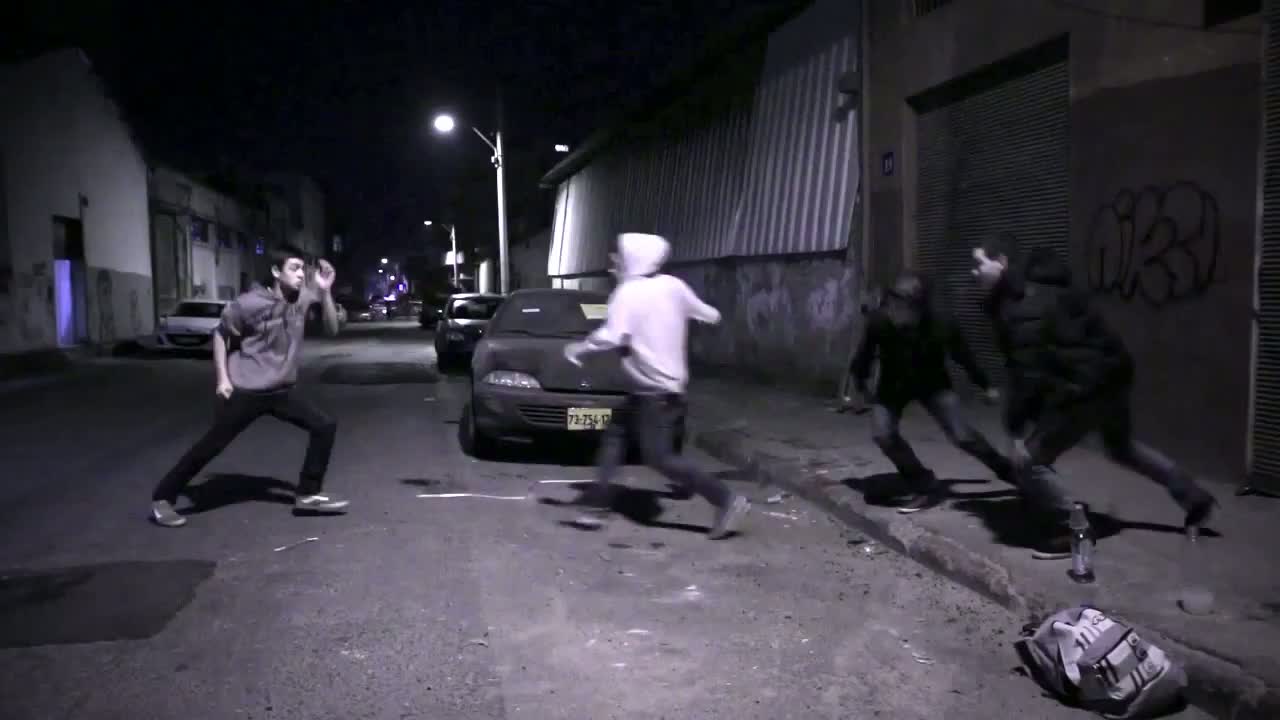
In this self defense guide, i will teach you several tips on becoming a better fighter. Keep in mind, i'm not training you for ring fighting or just beating the average punk on the street. I'm teaching you how to fight against people of any skill level be it average to highly trained attackers. Assuming that you've already trained in hand to hand combat, these are principles you need to keep in mind and you will become proficient in self defense.

* Be aware of your environment - If you aren't aware of your attackers or potential attackers and the environment you are in then you won't be able to properly defend yourself. You will be easily taken by surprise and lose opportunities to escape much less survive. Be mindful of your surroundings. 

* Strike first - It's very important to beat your opponent to the punch quite literally. If you check out my post "how to end street fights FAST" (http://everythingselfdefense.blogspot.com/2017/01/how-to-end-street-fights-fast.html). By landing the 1st strike accurately and without warning, you could end the fight or at least severely injure your attacker and give you more opportunities to strike him or her down. Remember it's about quality more than quantity in violent situations. This video will give more insights. 

* Strike in vital unguarded areas - You shouldn't blindly hit your opponent wherever. You should hit vital areas such as the eyes, nose, groin, jaw, neck, temples, solar plexus, ribs, sides of knee, thighs, shins, under the chin, back of the head, throat, knees, sternum, and so on. When you strike an attacker in one area, his or her reaction is to either defend or evade but this opens up an unguarded bodily area to attack. The same happens when your opponent attacks you and vice versa. Practice landing accurate quick shots in training so it will be second nature in combat.  

* Use improvised weapons - If you have weapons and you know how to use them, use them. Don't hold anything back. Adapt to the level of violence. The more lethal force is being used against you, the deadlier the weapons you will need. Use guns, knives, bats, chairs, sticks, brass knuckles, tactical lights, stones, broken glass, the list goes on. Weapons are great equalizers especially against trained fighters. This video will explain further in detail.

* Use the environment as a weapon - There are many tools in your environment that you could use to your advantage such as barriers (fences, cars, or walls) and other objects. You could slam your attacker on concrete or into a car. You could also throw dirt or sand into your attacker's eyes to blind him or her temporarily as you strike at full force and full speed. If you want more, read my post "how to use the environment as a weapon" (http://everythingselfdefense.blogspot.com/2016/12/how-to-use-environment-as-weapon.html). 

* End the threat quickly - The longer a fight goes on, the more danger you put yourself. You don't know if your attacker has a weapon or friends in waiting. Many people in martial arts learning self defense make the mistake of moving around like it's a fight. You need to put yourself in the mindset that if you don't end the threat as quickly as possible, there will be more threats coming your way. Be aggressive and constantly attack your opponent. Don't let your attacker breathe until the threat is over. Quickly shift from being on the defensive to the offensive or you might find yourself knocked out eventually. 

* Don't step back - When you step back, you are giving your opponent a psychological advantage. You need to exert dominance over your attacker, not submissiveness. If you keep moving back when your attacker is striking you, fear might take over and eventually you will get hit. This video explains the mechanics behind stepping back.

* Get in superior positions - Avoid staying in front of the direction of attack and get in superior positions to attack your opponent. For example if your attacker came charging in at you, move to the side and deliver an attack of your own. By understanding how to get in superior positions of advantage will put your opponent at a disadvantage. 

* Fight dirty - Remember that in the streets, there are no rules. Eye gouging, headbutts, biting, limb breaking, and other brutal tactics are useful in incapacitating an attacker.

* Pay attention to body language - One thing you should never do is give away your intention to attack. This is a common mistake i see people make. By tensing up your arms, clinching your fists, moving your fists around, and throwing jabs trying to figure out where to hit are giving away your moves. By doing this, your attacker can predict what you will do and he or she can counter-attack you. Here's a training tip i came up with to help you use body language to your advantage. Get in front of a mirror and practice striking without telegraphing your attacks. Make sure that your completely relaxed and your eyes aren't wandering around. Be sure to also have your hands completely still before you explosively strike quickly. Practice speed and timing. You could also trick your opponent into thinking you will hit him or her in one area only to hit in another area. 

* Have a strategy - If you have no strategy then you will get hurt or killed. Without knowing your enemy first and foremost, you cannot develop an effective strategy to defeat him or her. In order to have an effective strategy, you must think and respond quickly. If your facing someone who is superior than you in hand-to-hand combat for example then you need an equalizer such as weapons and injure him or her. 

* Adapt to every situation - This is probably the most important tip. If you don't know how to adapt to various situations, you won't survive. Adapting to the circumstances is one of the most fundamental keys to self defense. Adapting might require you to change your strategy of attack when the first did not succeed. What works in one set of situations will not work in a different set. Proper judgement will allow you to assess how to deal with them in self defense. 

* Use distractions - If you can distract your enemy in combat be it through fake attacks or other objects then you allow an opportunity to land a fatal blow.

* Be in the present moment - Don't focus on the outcome of the fight. Don't focus on past failures in self defense. If you focus on either one, you will lose period. Be in the present moment of the fight. Respond to your opponent's movements and allow mindfulness to rule. 

* Understand and control distance - By controlling the distance between you and your opponent, you are able to attack while avoiding your enemy's attacks. Learn how far your arms and legs can extend so you can use them effectively in combat. 

* Change the patterns and rhythm of attack - Everyone has his or her own way or rhythm of fighting. In order to be a skilled fighter, you must learn to recognize patterns and rhythms then change your own to catch your opponent by surprise. For example, you may notice your attacker likes to bob and weave as he or she throws upper cuts mixed with punches to the head each time you attack. You could strike to gauge a reaction and quickly deliver a kick to the groin or sides of knees. If you like to punch hard and fast in combination, you could suddenly pause briefly to surprise your opponent before you land a kick to the solar plexus or groin.              

By recognizing how to create opportunities to attack or escape a violent situation all together, you are better able to defend yourself. If you enjoyed this post, subscribe to my blog for updates, more advice, and exclusive content in the near future. I'm proud and excited to offer a FREE sample chapter of my E-book "Jeet Kune Do: How to build your own fighting system for self defense!" It's essentially a step-by-step guide on how to make your own self defense system suited to fit your own needs using Jeet Kune Do. If you would love to receive your FREE chapter of my e-book, click on the link below and share a post via. social media then it's yours for FREE! Be sure to also fill out the survey on the right and provide feedback on my blog. Leave questions, comments, and suggestions below.

Thursday, January 26, 2017

How to end street fights FAST

If you ever find yourself in a situation where someone urges you to engage in a street fight, there are several things you need to do in order to defend yourself. Why is it important for you to end street fights as fast as possible? Because your attacker might have a weapon or friends waiting for an ambush. You don't know how skilled or violent your attacker might be. Doesn't matter how much martial arts or self defense you know, there's also a strong possibility that you might get seriously injured or killed by an untrained fighter. Here is my guide to ending street fights fast assuming that your enemy is facing you.

1) Diffuse and avoid the situation - Many street fights begin with verbal arguments or attacks. You need to understand how to diffuse the situation from getting more violent. Don't provoke your enemy with threatening and taunting language. Remain calm and be respectful. If you can, leave the situation immediately.


2) Keep your distance - The dangers of being too close to an attacker is the risk of getting headbutted in the face or hit with a hook punch outside of your peripheral vision. You need to be able to see your attacker's body in front of you and be aware of others around you. Controlling the distance is important because you have to assume he could pull out a weapon any moment.

3) Strike first and without warning - I've noticed many martial arts schools and self defense instructors whether on social media, on the internet, or in schools teach you to get in your fighting stance if a street fight breaks then go into techniques or attacks. What are they missing? The element of surprise. Getting your opponent's guard down with distractions and body language. If you are near your opponent to land a surprise attack, why would you sacrifice that opportunity to get in a fighting stance as you move back? The longer you take to finish your opponent, the more dangerous it is for you. In order to end street fights fast, you need to change your mindset. It's not a sparring match or a sports fight. It's a matter of life and death.

How do you end street fights fast? Deception and using the element of surprise. Learn how to read your opponent's body language and get in a non-threatening posture. You will want to let your attacker know that you are not a threat but also put your hands up to defend yourself and reposition your legs to get into a fighting stance. This video gives a good illustration. As soon as you catch your attacker telegraphing his or her attack, you evade or block then BOOM! You land a direct hit.

4) Hit vital areas - Don't just blindly hit your attacker, make the 1st hit count and the 2nd hit count in case the 1st hit fails. If you hit someone hard enough in the jaw, temples, or sides of the neck then that's a guaranteed knock out. It doesn't matter how fast you are or how powerful you are in this situation. It's about how accurate your hits land on your opponent. Timing, accuracy, and proper response are critical to ending a street fight as fast as possible. Personally, i recommend hitting the side of the neck with a chop to knock out your opponent. This is safer than punching the jaw and risk breaking your hand in the process. If your opponent is dazed and still doesn't go down, you hit him or her again in a vital area to knock him or her out.


5) Have a back up plan - If you fail to end a street fight as quickly as possible with the first two hits then you need a back up plan. Kick your opponent in the sides of the knees and knock him or her off balance. The quicker you can end a fight either by knocking your enemy off balance, a knock out, or devastating blows to vital areas - the faster you can escape to safety.

In conclusion, this is a perfect demonstration of how to end a street fight fast. In this situation, an aggressive man approaches a street vendor looking for a fight. The street vendor is calm and keeps his distance not giving any intentions of fighting. The man throws a wild punch, the vendor moves back, closes the distance, and lands a knock out punch.If you enjoyed this post, subscribe to my blog for updates, more advice, and exclusive content in the near future. I'm proud and excited to offer a FREE sample chapter of my E-book "Jeet Kune Do: How to build your own fighting system for self defense!" It's essentially a step-by-step guide on how to make your own self defense system suited to fit your own needs using Jeet Kune Do. If you would love to receive your FREE chapter of my e-book, click on the link below and share a post via. social media then it's yours for FREE! Be sure to also fill out the survey on the right and provide feedback on my blog. Leave questions, comments, and suggestions below.

http://www.paywithapost.de/pay?id=7b715806-c78b-4bfd-badf-4242da2bf8f2

Saturday, January 21, 2017

How to skillfully use size and brute strength

You've probably heard martial artists or self defense instructors say "size doesn't matter..don't use brute force in a street fight.." This isn't true. Size and strength absolutely do matter! The strategy for dealing with a much larger and stronger attacker is different from dealing with someone who is your own size. If you are a large and built person but don't know what to make of your physical abilities in self defense, this guide is for you.

1) Know yourself - In order for you to put your strength and size to good use, you must understand who you are. What are you good at? Lifting weights? Taking a hit to give a hit? Packing a powerful punch? Grappling? What do your work outs consist of? What about nutrition? The more information you can glean from your body, the more you can put it in a self defense situation.

2) Understand the source of power - Many people have the misconception that strength equals power. Why is it that stronger and larger attackers lose to much smaller people? They don't know where their source of power comes from. In this example, a Jiu Jitsu black belt easily overpowered a body builder who was much stronger and larger than him. What's the catch? Redirecting the flow of energy. If you don't know where your source of power comes from and how to use strength to your advantage, you will lose a fight involving dangerous opponents. Where does your source of power come from? The ground, the core (center of mass around the torso area), and momentum. Simply lifting weights and building outer muscles won't make you fit to fight. To be a good striker for example, you must learn how body mechanics work and how to develop your inner muscles responsible for powerful hits (see helpful link below). All the muscles in the world will not help you in a street fight. Only when you understand your source of power do your muscles serve you well.

3) Develop your own fighting abilities - Some people like to think speed and skill is superior to strength. This isn't necessarily true. Two can play at that game including you. How do you develop your own fighting prowess for combat? Recognize your strengths and weaknesses. Are you fast? Slow? Do you have longer reach? Tire too easily? Some ideas i've come up with are training to time your accurate punches and pack alot of power in each one. If your size and strength makes you tire more, learn how to invest your energy wisely. You may want to use momentum, gravity, balance, and strength in your attack strategy. Learning wrestling or some striking art like boxing may be useful to you. It's also beneficial to understand your attacking range and your opponent's. Doesn't matter how fast or agile your attackers are, they will eventually have to get close to you and that gives you an opportunity to strike. You also have to be mindful of how your investing your energy. If you face a faster opponent, all you have to do is move just a little bit to where you won't get hit instead of trying to dodge every attack. One powerful punch combined with superior strength timed correctly can bring devastating consequences (broken bones, damaged organs, possibly death). You could also slam your attackers to the ground and nullify their attacking ability using momentum which also would cause damage. If someone tries to knock or throw you over, lower your center of gravity then attack. This video of a wrestler taking on multiple opponents is an inspiring example of how strength could be applied in combat.

If you enjoyed this post, subscribe to my blog for updates, more advice, and exclusive content in the near future. I'm proud and excited to offer a FREE sample chapter of my E-book "Jeet Kune Do: How to build your own fighting system for self defense!" It's essentially a step-by-step guide on how to make your own self defense system suited to fit your own needs using Jeet Kune Do. If you would love to receive your FREE chapter of my e-book, click on the link below and share a post via. social media then it's yours for FREE! Be sure to also fill out the survey on the right and provide feedback on my blog. Leave questions, comments, and suggestions below.

http://www.paywithapost.de/pay?id=7b715806-c78b-4bfd-badf-4242da2bf8f2

http://www.expertboxing.com/boxing-training/boxing-workouts/why-lifting-weights-wont-increase-punching-power

Friday, January 20, 2017

How to improve your Wing Chun


Whether you are struggling or excelling in Wing Chun, there's always room for improvement. This guide will give you several tips on how to improve as a Wing Chun practitioner for self defense by applying Wing Chun principles.

* Strike first - A big mistake Wing Chun practitioners make is waiting for an attack to happen. If you wait for an attack to happen, you might not have time to respond and it puts you on the defensive. By striking first, you control the flow and pace of the fight as your opponent is on the defensive. Make the first hit count especially if you plan on using Wing Chun for self defense. 

* Apply forward pressure - Another big mistake people make is not closing the gap and applying forward pressure. I've made this mistake myself where my sparring partner was throwing uppercuts, crosses, jabs, and realized Wing Chun's power comes from driving your body forward as you attack or defend. If you simply stand there deflecting and attacking your opponent without stepping forward, all your opponent has to do is either move forward to grapple you or back to avoid getting hit. Once you have the opportunity to attack, you keep stepping forward until your opponent is overwhelmed with attacks or falls over. 

In this example (ignore the rest), notice how the Wing Chun chain punches the Muay Thai fighter while stepping forward to drive the fighter back into a mirror. This is the concept of applying forward pressure.   


* Take your opponent off balance - Another common mistake is not taking your opponent off balance. As long as your opponent is still standing, you have not eliminated the threat effectively. Removing your opponent's balance is one of the principles in Wing Chun. If your opponent tries to do a kick, step forward to intercept it and cause your opponent to lose balance then deliver powerful blows to knock him or her over. If your opponent tries to do a high kick, tan sao or trap the leg and deliver a stomp kick to the side of the knee in the rear leg. The quicker you can take your opponent off balance, the quicker the fight will end.

* Keep your balance - The proper way to keep balancing is knowing how much pressure to apply to which foot. Improper application of energy leads to loss of balance. For example you should not put all of your weight in the rear foot and no power in your kicking foot. A solid structured alignment, footwork, and proper use of pressure are all essential in keeping your balance. 

* Steal your opponent's balance - One effective method of keeping your balance is by taking your opponent's. For example, when you are about to fall over and your opponent throws a straight punch - you could trap the hand while delivering a front kick of your own. 

* Don't mirror your opponent's centerline - If you mirror your opponent's centerline, you will have to face all of his or her limbs than if you fought on the outside. By moving to the outside or blindside, you will only have to deal with one arm and leg as you are in a better position to strike. If your opponent rushes in for a kick or punch for example, move in to the side and deliver a kick to the rear leg or trap the arm before you attack. 

* Don't retreat - A mistake Wing Chun practitioners make is falling back from an attack. You might create distance but this doesn't give you an advantageous position. Rather than move back, step to the side in order for you to get a superior position to attack while avoiding the line of your opponent's attack. For example, i'd step to the side and deliver a counter-attack to a charging opponent rather than move back then face the possibility of falling over. You retreat only when necessary to create space and even if you do, you don't lose contact. If say an opponent advances to seize an opportunity to attack me, i move back but deliver a straight punch in the process to create distance before i apply forward pressure.

* Control your opponent - There are many Wing Chun practitioners who allow their opponents to control them rather than the other way around. They lose structure, balance, and technique before it turns into a grappling contest. Controlling your opponent is one of the most fundamental principles in Wing Chun. If you are within range for example, use fook sao to bring your opponent's head forward while delivering a strike to the face. Grab your opponent by the hair or clothing for leverage. Control the elbows to nullify your opponent's striking ability then throw him or her to the ground. Control your opponent, don't let your opponent control you. 

* Go with the flow - Another fatal mistake Wing Chun practitioners make is fighting force with force. Wing Chun is about absorbing strength and using it against your opponent. If your opponent grabs your arm and pulls you forward, that's fine because he/she is bringing you into your attacking range quickly. If your opponent tries to pull back from your lap sao, help him or her fall over by letting go and delivering a kick to the groin.

* Watch your opponent's elbow and control it - The elbow moves slower than the fist. Therefore, keep your eyes on the elbow and you will predict what your opponent will do.

* Proper elbow alignment - Your hands should defend your upper body while your elbows should be aligned to defend your lower body. If your opponent tries to uppercut, you elbow strike the fists and cause them to break.

Practice these principles in your training and sparring sessions. If you enjoyed this post, subscribe to my blog for updates, more advice, and exclusive content in the near future. I'm proud and excited to offer a FREE sample chapter of my E-book "Jeet Kune Do: How to build your own fighting system for self defense!" It's essentially a step-by-step guide on how to make your own self defense system suited to fit your own needs using Jeet Kune Do. If you would love to receive your FREE chapter of my e-book, click on the link below and share a post via. social media then it's yours for FREE! Be sure to also fill out the survey on the right and provide feedback on my blog. Leave questions, comments, and suggestions below.

http://www.paywithapost.de/pay?id=7b715806-c78b-4bfd-badf-4242da2bf8f2

Saturday, December 17, 2016

Learn martial arts from watching animals

It's often been said in legend that martial artists developed their own styles from observing animals and rightfully so. Pay attention to different styles and you will notice the symbolic resemblance to a specific animal such as the tiger, praying mantis, snake, bear, White Crane, the list goes on. Why should you learn from wild animals? Because animals are the best martial artists. They have used violence well for survival and competition. Animals have many essential attributes for a skilled fighter such as speed, strength, power, deception, etc. By paying close attention to animal behavior and how they handle violent situations, you can integrate that into your self defense based trained.

Take a look at the above picture. The wolf is biting on the bottom wolf's muzzle which prevents the bottom wolf from biting. What's the idea behind this? Disable your attacker so he/she can't attack. I've seen many cats on youtube facing dogs much larger than they are and the dogs almost always end up winning. Why is that? The cats are more aggressive aside from agile and strike at the dog's vital areas. What's the lesson? It's not always the biggest who wins a fight, it's the one who takes the initiative and strikes first. I've seen cats get in a grappling fights and get in a better position to prevent from being struck while striking at vital areas. Some animals like peacocks win on intimidation and deception alone. There's many ideas and movements that you can apply from studying nature.

I hope that this post gave you some insights into how to improve your training.

If you enjoyed this post, subscribe to my blog for updates, more advice, and exclusive content in the near future. I'm proud and excited to offer a FREE sample chapter of my E-book "Jeet Kune Do: How to build your own fighting system for self defense!" It's essentially a step-by-step guide on how to make your own self defense system suited to fit your own needs using Jeet Kune Do. If you would love to receive your FREE chapter of my e-book, click on the link below and share a post via. social media then it's yours for FREE! Be sure to also fill out the survey on the right and provide feedback on my blog. Leave questions, comments, and suggestions below.

http://www.paywithapost.de/pay?id=7b715806-c78b-4bfd-badf-4242da2bf8f2

Tuesday, December 13, 2016

How to use the environment as a weapon


While using various melee weapons such as your fists or knives in self defense are good, the use of the environment will greatly improve your skills as a fighter. The reason why the military and other great war strategists were so successful was because they realized the importance of using the environment to their advantage. Here are several key principles you should know to become a better warrior whether facing one opponent or multiple opponents.

* Don't restrict yourself to close quarters combat - Don't assume that you always have to fight your opponent face to face. You can fight from a distance with various tools and weapons from many different positions. It is not an act of cowardice, only resourcefulness. 

* Use improvised weapons - Are there cars nearby? Use them as obstacles. Slam or push your opponent into them. Do you have a ball point pen? Stab your opponent in vital areas with it. Is there a window nearby? Break it and use the broken glass to stab your opponent. Bright lights? Flash them in your opponent's eyes as a distraction. Are you in a confined area? Push your opponent into the walls and restrict his/her movements. When faced with projectiles, you could find cover or concealment. There's many different ways you can use weapons to improve your chances of survival. Learn to see everything around you as a weapon. 

* Camouflage - Soldiers and snipers are skilled in blending in with the environment to ambush their enemies. You can also use it applying your knowledge of nature to strategically defeat say a group of armed attackers. Blend in with your surroundings until you become virtually invisible. 

Confuse your enemies - Attack at unpredictable patterns from various positions and conceal yourself in fog, water, buildings, trees, etc. Don't be confined to one predictable method of attack as the enemy can quickly figure you out. The more you stress and frustrate your enemies, the more chances you have of throwing them off guard.  

* Use traps - There's many ways you can use booby traps or other means of defeating your enemies such as luring them into dangerous animals or into hidden explosives. Drawing them out in the open, ambushing, and bating them are just some ways you could attack your enemy. 

If you enjoyed this post, subscribe to my blog for updates, more advice, and exclusive content in the near future. I'm proud and excited to offer a FREE sample chapter of my E-book "Jeet Kune Do: How to build your own fighting system for self defense!" It's essentially a step-by-step guide on how to make your own self defense system suited to fit your own needs using Jeet Kune Do. If you would love to receive your FREE chapter of my e-book, click on the link below and share a post via. social media then it's yours for FREE! Be sure to also fill out the survey on the right and provide feedback on my blog. Leave questions, comments, and suggestions below.
    

Wednesday, December 7, 2016

Don't wait for an opportunity to attack, create one


You've probably seen many fighters in Hollywood and street fights dance around trying to find the right moment to attack. In fact, one video of a Brazilian Jiu Jitsu fighter and a Jeet Kune Do fighter show the two simply standing there for almost the whole duration. This is one of the biggest Amateur mistakes you could make.

It looks good on camera in movies and in sports but it's not practical. If you want to become a better fighter especially in the field of self defense, learn to create opportunities to strike. An attacker cannot attack without leaving him or herself exposed to some degree. Just look at the above pic as an example. The aggressor is closing the distance to the guy in a defensive position backed against the wall. Where can the defender strike at the aggressor? How can the defender turn the situation around in his favor? 

Creating opportunities of attack through distractions, controlling distance, deflections, deception, and other ways as opposed to just looking for openings is where the real skill lies. You can dance around looking for an opportunity to attack from a safe distance but you also give that luxury to your opponent. Use the element of surprise and putting the pressure on your opponent are also crucial. Don't give your opponent the luxury of time to figure you out or a safe distance. Learn how to impose your will on your attackers with confidence. 

If you enjoyed this post, subscribe to my blog for updates, more advice, and exclusive content in the near future. I'm proud and excited to offer a FREE sample chapter of my E-book "Jeet Kune Do: How to build your own fighting system for self defense!" It's essentially a step-by-step guide on how to make your own self defense system suited to fit your own needs using Jeet Kune Do. If you would love to receive your FREE chapter of my e-book, click on the link below and share a post via. social media then it's yours for FREE! Be sure to also fill out the survey on the right and provide feedback on my blog. Leave questions, comments, and suggestions below.

http://www.paywithapost.de/pay?id=7b715806-c78b-4bfd-badf-4242da2bf8f2

Sunday, November 20, 2016

Should guns be used in martial arts?

After looking at the concept of Gun Fu, i came to realize martial artists could potentially be skilled in the use of firearms when they applied their training. Many traditional martial artists believe that the use of guns would be nothing but dishonorable because after all, martial arts is rooted in using body and mind as one. The reality is that when you think of martial arts in terms of principles, the art of using any weapon is a martial art.

Contrary to popular belief, it takes quick reflexes and bodily discipline to be a skilled gunman. Stance, balance, body positioning, speed, quick reflexes, efficiency, situational awarness, strategy, deadly accuracy, and other factors determine how well a gunman performs in combat.

Should guns be used in Martial Arts? Absolutely. If martial arts is to survive, it must adapt to the modern world in order to be effectively used in self defense. It doesn't take much skill to shoot a gun or swing a sword but when you combine martial arts with the use of weapons, you become a more skilled fighter. Martial arts such as Hojutsu Ryu exemplifies this.

The use of guns is not a coward's weapon. It is simply a tool that ought to be used in the hands of a warrior who embraces the traditions of martial arts but is not bound by them. What do you think? Should guns be used in the world of martial arts? If you enjoyed this post, subscribe to my blog for updates, more advice, and exclusive content in the near future. I'm proud and excited to offer a FREE sample chapter of my E-book "Jeet Kune Do: How to build your own fighting system for self defense!" It's essentially a step-by-step guide on how to make your own self defense system suited to fit your own needs using Jeet Kune Do. If you would love to receive your FREE chapter of my e-book, click on the link below and share a post via. social media then it's yours for FREE! Be sure to also fill out the survey on the right and provide feedback on my blog. Leave questions, comments, and suggestions below.

http://www.paywithapost.de/pay?id=7b715806-c78b-4bfd-badf-4242da2bf8f2