Pages

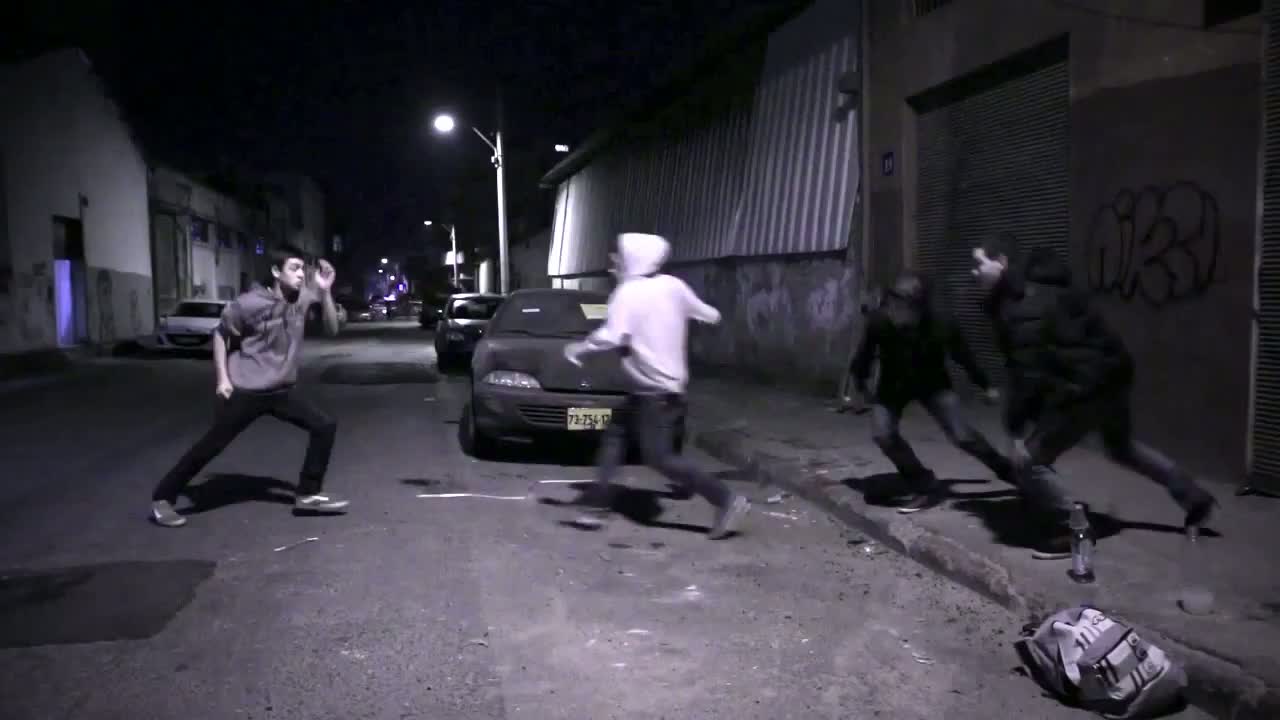
Showing posts with label street fight. Show all posts

Friday, April 7, 2017

Not all combat is the same for self defense!

One of the biggest misconceptions people have about self defense is assuming all or some forms of combat are the same. Instructors in traditional martial arts, MMA, police and military training, combat sports, etc. seem to lump one or all together in one category and call it self defense. This is not the reality. Not all forms of combat are equally much less best suited for self defense. Each form of combat was made for a specific purpose so the mindset and training will be built upon a specific goal. They are similar but not the same. I will go through several forms of combat and explain how they are different from self defense with educational videos.

* Traditional Martial arts - As I mentioned before in my blog post "why martial arts does not mean self defense" (http://everythingselfdefense.blogspot.com/2016/12/why-martial-arts-does-not-mean-self.html), martial arts' styles were created to suit the needs of a particular generation in time for many reasons (health and fitness, self defense, war, dance, etc.) Ninjutsu for example was designed to help ninjas complete their missions involving espionage and evasion of the enemy. They would use weapons such as katanas to engage their attackers. Other martial arts like Kendo aren't even used for self defense or any fighting. They are used more for building moral character via. Bushido. You will train in katas or "forms ", ancient techniques, weapons, hand to hand combat, etc. in the martial arts world. You might have to invest years in training to perfect your skills.

How is this different from more practical self defense? In the 21st century, alot has changed since the time of its creation. Alot of things that worked back then are now obsolete in the modern world. If you tried to use a katana on an unarmed attacker now, you will run into alot of problems with the law. Modern self defense addresses modern problems. No one will attack you with bo staffs, butterfly knives, katanas, and other ancient weapons that traditional martial arts train you in. No one is going to realistically throw everything in one punch as seen in martial arts demonstrations. Your not going to be able to magically know when you will be attacked. Your attackers will use modern weapons with modern day approaches. Much of the combat shown in traditional martial arts are done for the sake of the art or it's original purpose, not to defend yourself in the modern world.

* Combat sports - Some martial arts like Brazilian Jiu Jitsu and Muay Thai were designed for sport. Modern martial arts in the form of MMA train it's practitioners in multiple traditional martial arts within striking, kicking, and grappling ranges. The goal is to either cause an opponent to tap out or get knocked out. There are weight divisions, verbal taunts, rules, sportsmanship, alot of time to prepare, championships, alot of room to fight in the ring, judges, the list goes on.

The problem? The sports mindset is different from the world of self defense. In the real world, you risk breaking your fists in a street fight if you punch incorrectly or solid bone thus reducing your chances of effectively dealing with the next threat. That's why you see MMA fighters and sport based martial artists spar with gloves. The other issue is that you are training to fight someone on a similar skill level when it comes to sport. There's no weapons, no multiple attackers, no dirty fighting, no disadvantages in size, and no one trying to kill you in the ring. On the streets, there are no rules. Effective self defense should prepare you to respond to any situation. There's no "fighting fair" when your defending yourself. In fact, there shouldn't be any fighting at all. Your not going to survive every situation if you treat each one as a fist fight.Your goal should be to end the threat as quickly as possible by putting your attacker at a disadvantage usually through two ways 1) Incapacitation 2) Taking away mobility with or without the use of weapons. For example, if i'm faced with an attacker throwing punches and i have a sweater in one hand then i'm going to throw it in his face. This will provide a distraction for me to land a kick to the groin and another kick to knock him or off balance then run away. If i don't fight dirty then it's skill against skill and if my attacker is more skilled than me, i'm probably going to get hurt or killed. Even if schools in combat sports claim to teach self defense, they most likely won't teach you how to fight dirty or how to use weapons to end the threat quickly.

* Street-fighting - This is like sport except it's a consensual agreement for both parties to fight although there's no assurance that it will be fair. If your attacker hates the fact that you won a fist fight, he or she can shoot you dead in anger and humiliation as shown in this video example. Once you agree to meet someone for a street fight, you are no longer acting in self defense. In self defense, you should attempt to defuse your aggressor or avoid these situations all together for your safety.

* Combat in law enforcement - Military officials will train in hand-to-hand combat (such as martial arts) and weapons to kill or capture the enemy as quickly as possible. The police's main goal is to use weapons and hand-to-hand combat to subdue criminals. They are armed with an arsenal of weapons (handcuffs, guns, tasers, batons, pepper spray, the list goes on.) They are allowed to kill someone if that person has proven to be too great of a threat. Their greatest strength is teamwork and spend alot of time honing their skills together.

How is this different from self defense? You don't have the same advantages and authority as law enforcement does in self defense. Furthermore, your aim isn't to kill unless there is no other way to stop an attacker intending on killing you and you can justify it in court.

In conclusion, you have to know what your purpose is in self defense and abide by a process. You have to know how to make combat systems effective for you in self defense. I'm not confident that many people learning self defense understand the dynamics of real world violence because they are confused. The best thing you can do is understand the different types of combat to avoid confusion and learn how to defend yourself better.


If you enjoyed this post, subscribe to my blog for updates, more advice, and exclusive content in the near future. I'm proud and excited to offer a FREE sample chapter of my E-book "Jeet Kune Do: How to build your own fighting system for self defense!" It's essentially a step-by-step guide on how to make your own self defense system suited to fit your own needs using Jeet Kune Do. If you would love to receive your FREE chapter of my e-book, click on the link below and share a post via. social media then it's yours for FREE! Be sure to also fill out the survey on the right and provide feedback on my blog. Leave questions, comments, and suggestions below.

http://www.paywithapost.de/pay?id=7b715806-c78b-4bfd-badf-4242da2bf8f2
     

Wednesday, March 22, 2017

Why sparring IS NOT self defense

Many people believe that sparring helps them to develop hand-to-hand combat skills for use in the real world. They believe that the more you spar, the better you will be at defending yourself. I'm here to tell you that sparring alone will not make you better at self defense. Don't misunderstand me, i'm not saying that you won't learn any skills that could be used for self defense. I'm simply giving you many variables and considerations to take into account. Here are my list of reasons why the way most teach sparring is ineffective for self defense:

* Sparring doesn't prepare you for the unexpected - Think about it. You have two people on the mat with head gear and a bunch of other safety equipment on. Both know that they are about to fight and consent to it. In the real world, you don't know 100% that you'll be attacked. Your attacker won't tell you if he or she is going to attack and how. I've tested this myself with a sparring partner on multiple occasions. Coincidentally, he hit me without letting me know we were sparring. If that happened on the streets, i probably would've been knocked out. Sparring does not teach you how to deal with those situations.

* Sparring teaches street fighting - Once you put on your headgear and other safety equipment for sparring then prepare yourself for hand-to-hand combat, you are training for street-fighting. Why is it street fighting and not self defense? For one, sparring doesn't teach you how to avoid a potentially violent situation or diffuse it. Another reason you have to consider is that your attacker may not do those Karate kicks or Judo throws that your partner used in class. If you expect your attacker to just exchange punches only to find out you've been hit from behind by one of his buddies or attacked with a lethal weapon, all of your sparring lessons were just rendered useless. The last reason is that you aren't learning to neutralize the threat quickly enough. The longer the fight goes on, the more danger you put yourself in. Unfortunately, you will find many people claiming "self defense" be it on youtube or in person when they were street fights in reality because they gave their consent.

* Sparring has rules - Many forms of sparring include no hits to vulnerable areas. Sparring conditions you to only strike anywhere but those areas. That's a great hindrance to you and an advantage for your attacker who intends on seriously injuring or killing you. Another common practice is instilling "point systems." This is where you execute certain attacks or techniques to score points. When you have enough points, your opponent is considered defeated. This type of training is instilling false confidence be it with your fists or weapons because it completely ignores adrenaline rushes and pain tolerance. You might be surprised to find that no matter how many times you hit your attacker in the real world, he or she still won't go down. As a result, your confidence will start to break and chances are, you will give up or get hit. Some sparring sessions include making an opponent tap out. In reality, your attacker will do everything in his or her power to attack you. Once you let go of your submission hold, there's nothing preventing your attacker from landing a fatal blow. This video depicts one example where a man was being assaulted before others followed.

* Sparring neglects everything else in violence - Combat is much more complex than what sparring classes teach. There are adrenaline rushes, fight or flight response, weapons, multiple attackers, drugs, alcohol, stress, morals, psychology, the list goes on. If you are being bullied to the brink of insanity and your self esteem is being drained, do you really think you will be able to use what you learned in sparring against the bully? No. The bully already has a psychological advantage against you. If you freeze because of insecurity, the bully will take advantage of that and beat you up. If you aren't mentally prepared to hurt or kill your attacker then you will get hurt or killed. Thee aftermath of a violent confrontation (injuries, PTSD, prison, etc.) is also something to think about.

* Sparring gives false security - It's easy to fight when your wearing headgear, gloves, and other safety gear along with knowing that your partner isn't trying to kill you. In real life, you won't have this luxury. Your attacker will try to hurt and kill you. Your fist might break the moment you make contact with your attacker's jaw or cheekbone. Will sparring teach you how to handle an attacker trying to intimidate you? Will sparring condition you to cause real injury to another human being? Will sparring teach you how to execute eye gouges and other dirty fighting tactics properly? No. This is why sparring gives false confidence.

In conclusion, nothing you learn in self defense schools is guaranteed to save your life and this includes what i teach. You'll have a percentage of people who've misused hand-to-hand combat intended for self defense to street fight. You'll have a percentage of instructors who teach hand-to-hand combat but never had to use all of them in self defense. You'll have those who used them but the results were far different than expected. There's too many variables that you cannot account for all of them in self defense training. What's the best advice i can give you? Don't get into a violent situation. Focus more on avoiding or diffusing conflict before it starts.

 If you enjoyed this post, subscribe to my blog for updates, more advice, and exclusive content in the near future. I'm proud and excited to offer a FREE sample chapter of my E-book "Jeet Kune Do: How to build your own fighting system for self defense!" It's essentially a step-by-step guide on how to make your own self defense system suited to fit your own needs using Jeet Kune Do. If you would love to receive your FREE chapter of my e-book, click on the link below and share a post via. social media then it's yours for FREE! Be sure to also fill out the survey on the right and provide feedback on my blog. Leave questions, comments, and suggestions below.

http://www.paywithapost.de/pay?id=7b715806-c78b-4bfd-badf-4242da2bf8f2

Friday, March 17, 2017

Can one punch kill in a street fight?

We've all heard of the "one punch, one kill" phenomenon but can one punch kill in a street fight or is it just a myth?

Scientifically, yes one punch can kill someone. Many people get into street fights not realizing the brutality of what goes on internally. The impact of a punch can send the person's head on the concrete, create a brain hemorrhage, and death from blood loss. You could also tear a major artery at the base of the brain (AKA brain stem) as the head snaps back which leads to blood loss (see links below.)

National Geographic's "fight science" provides an explanation for the science behind a knock out punch. The impact of a punch can send someone's brain rippling in the skull and hits the back of the skull, causing trauma. It then hits the front of the skull, creating more brain trauma in a concussion. Neurotransmitters fire electrical circuits causing the loss of consciousness. Your body contains dissolved sodium, potassium, and calcium. Each time someone takes a hit to a nerve, potassium leaves and calcium rushes in which destabilizes the calcium balance. The brain tries to keep it all balanced but at the expense of energy. There comes a point when the brain tells the body to shut down to conserve energy and fix damaged neurons later.


Even if your attacker doesn't die, a punch can lead to permanent brain damage. Personality changes can occur and so can dementia among other changes. The brain isn't the only target that can cause death. A punch to any vital organ or bundle of nerves can cause death as well due to internal bleeding, blood loss, and irregular heartbeats. This video is just one case where one punch has killed a person.

This is exactly why you should not engage in any street fight unless it is for self defense! Even if it's sports fighting, you must be prepared to face the consequences it will have on your body.

www.oregonlive.com/portland/index.ssf/.../one-punch_killings_they_happen.html

www.popularmechanics.com/adventure/sports/.../boxing-knockout-sports-science/

If you enjoyed this post, subscribe to my blog for updates, more advice, and exclusive content in the near future. I'm proud and excited to offer a FREE sample chapter of my E-book "Jeet Kune Do: How to build your own fighting system for self defense!" It's essentially a step-by-step guide on how to make your own self defense system suited to fit your own needs using Jeet Kune Do. If you would love to receive your FREE chapter of my e-book, click on the link below and share a post via. social media then it's yours for FREE! Be sure to also fill out the survey on the right and provide feedback on my blog. Leave questions, comments, and suggestions below.

http://www.paywithapost.de/pay?id=7b715806-c78b-4bfd-badf-4242da2bf8f2

Tuesday, March 7, 2017

Tips on improving self defense grappling

In my previous post "grappling for self defense vs. grappling for UFC" (http://everythingselfdefense.blogspot.com/2017/01/grappling-for-self-defense-vs-grappling.html), i outlined the differences between grappling for self defense and grappling for sport. In this self defense guide, i will explain in further detail how to apply grappling in the streets.

* Know when grappling is applicable and when it isn't - Sometimes, you cannot win a street fight with grappling alone. You will need striking and kicking skills. There's many fights on youtube where the grappler tries to take it to the ground. While the grappler wins, he is still hit in the process and struggles to apply grappling holds well. You don't want to take a fight to the ground where your vision is limited and you are very vulnerable. This is an example of such a case where grappling failed. Understanding when grappling is useful and when it isn't is key in self defense.

* Embrace dirty fighting - Learn about all the illegal moves in grappling arts and use them to your advantage. Headbutts, biting, eye gouging, groin strikes, elbow strikes, throat grabs, bashing someone's head repeatedly against the concrete, weapons, etc. are all legal in a street fight. Use your environment to your advantage. Simplify your grappling techniques by incorporating these dirty fight tactics in your grappling skills. Raw Combat International gives useful grappling moves for self defense.

* Throw away unessentials - In order to effectively use grappling in self defense, forget about the sports mindset and making your opponent tap out. Discard grappling rules and anything that hinders you from learning grappling for self defense. Self defense is a matter of survival, not of competition.  

* Control your opponent - Controlling your opponent is very important in grappling. You will want to target certain areas such as the arms, legs, and the head to establish a firm hold on your opponent. Once your opponent is under control, you can choke or strike and do whatever you want. Make sure that the grappling holds you choose prevent your opponent from attacking you effectively.

* Use your opponent's momentum against him/her - Don't fight force against force. Absorb your opponent's force and use it against him or her. Let's suppose you are on the ground and your opponent is on a high mount trying to strike you. Feel the energy, redirect it, and allow it to carry your opponent over out of balance. If someone tries to choke you from behind, you could also use momentum to carry your opponent over and break free from the hold.

* Protect your balance - Balance is very important to avoid being taken to the ground. Lower your center of gravity, use momentum, sprawl and brawl, strike, etc. to keep your opponent from executing a successful takedown. Make sure that you have quick and mobile footwork to stay outside of someone trying to grapple with you.

* Set up a takedown - In order to be skilled at setting up a takedown, you need to trick your opponent and understand the range to do it. You will also want to use a takedown useful for self defense. You don't want to go to the ground with your attacker but you'll want to take your attacker down. For example, i like to grapple my opponent from a side position before i sweep him or her down. Rather than go down with my opponent as seen in sports, i release my hold the moment my attacker is falling over. I find these takedown techniques also useful for self defense.

* Be fully aware of your surroundings - Generally, you will want to learn grappling techniques that don't limit your vision. You will also want to scan your surroundings if you are on the ground to make sure there are no multiple attackers. For example, applying a rear naked chokehold works well in choking someone out but my vision is limited. I cannot check to see if my attacker is reaching for a weapon in his or her pockets. I am also vulnerable to strikes to the face. Applying a full nelson is a better grappling hold because 1) My attacker's arms are within my control and vision 2) It establishes full control over my attacker.

* Grapple from a dominant position - The best position to grapple an attacker is when he or she is in the prone position as shown in the picture below. This is where your attacker is at his or her most vulnerable and it's very difficult to resist. Grappling holds such as the boston crab prevent your attacker from reaching for a weapon and escaping. Attacking from a side position where your free to strike and grapple is effective because you only have to deal with his or her arms than the legs.  

* Have a strategy - If you are to use grappling effectively for self defense, you need a strategy. Perhaps you know your opponent is a superior striker so grappling would be useful in neutralizing his or her striking ability. Perhaps you need a human shield against multiple attackers so applying a grappling hold on one as you move around is effective. Grappling can be used to escape from an opponent mounting you on the ground.

If you enjoyed this post, subscribe to my blog for updates, more advice, and exclusive content in the near future. I'm proud and excited to offer a FREE sample chapter of my E-book "Jeet Kune Do: How to build your own fighting system for self defense!" It's essentially a step-by-step guide on how to make your own self defense system suited to fit your own needs using Jeet Kune Do. If you would love to receive your FREE chapter of my e-book, click on the link below and share a post via. social media then it's yours for FREE! Be sure to also fill out the survey on the right and provide feedback on my blog. Leave questions, comments, and suggestions below.

http://www.paywithapost.de/pay?id=7b715806-c78b-4bfd-badf-4242da2bf8f2

Tuesday, February 21, 2017

What is Everything Self Defense?

In this blog post, i will provide you with some background on who i am and why i started this blog.

Since i was a child, i was always interested in the subject of self defense. I've come up with plans on what to do if there was a home intruder and how i'd defend the family with improvised weapons. I was introduced to martial arts through films such as Bruce Lee's "Enter the Dragon", "Way of the Dragon", Jackie Chan's "drunken master", among other films. To top it off, my brother was a Karate student so he taught me a bit on Karate. Since then, i studied many different martial arts every now and then. One of the things that inspired me to learn hand to hand combat was watching two of my friends engage in a street fight with each other one night. It started when they agreed to duel each other so we all gathered around them in a church parking lot. Both agreed that whoever gets knocked down first is declared the loser of the fight. From the time the fight began, i was surprised to see how well both fought. They both seemed to have an understanding of how to street fight. Both landed several punches then retreated. Both landed many kicks to the midsection but they tensed their albs in order to absorb the impact. Finally, one of my friends fell over by accident after a kick and lost. I was eager to get in the fight but one of my other friends said "no he's too little."  

I've had a bunch of sparring sessions with friends and family. We'd engage in fist fights light contact sparring and such. With family, someone would almost always get hurt so we had to stop completely. With friends, i remember engaging in a duel using weapons. I had a small piece of paper shaped into a sword and he had a piece of metal serving as a switch. He cut my legs up a couple of times but i gave him several paper cuts on his hands and fingers. My mom was very upset on the aftermath of the fight. I've also had a sparring session with two of my friends in school where it was a two on one. I can remember slamming one into the chair and trying to attack the other one. My teacher came to break up the sparring session.

I've got into watching shows like "Samurai Jack", "24", and other films. Just seeing how well they adapted to every situation made a huge impact on how i saw not just martial arts but combat in general. I'd ask my older brother questions on how deal with a particular violent situation at the age of 13. I was already coming up with certain ways to defend myself. I didn't retaliate even after being hit by several kids in school. I didn't want the situation to escalate into further conflict and chose not to respond or to avoid the situation all together.

There's several more darker experiences leading me to the self defense world such as anger issues and family. I've never been in a street fight with friends or strangers because i didn't see the need for it. I've never had that deep of a problem where i needed to resort to violence against friends or strangers. I did have several fights break out between me and family. Violence was at one point a way of expressing my anger and frustrations. Sometimes, it was done out of self defense. When my older brother scared me, i can recall one incident where i attacked him by swinging wild punches and i had to be restrained. When i saw my mother beating my sister with a switch, i intervened by landing several kicks (one which split her lip in two). I received a beating in the process. I was also violent towards my abusive father. Bullying also had a negative effect on me growing up. Child abuse, bullying, and getting robbed all these dark experiences built rage up within me among other negative effects. That was the driving force in learning self defense.

I began learning and practicing Wing Chun in 2013 among other martial arts. I realized i had several deep insights in self defense and i wanted to share them with people which is why i started this blog. What makes this blog unique? It teaches simple self defense principles as opposed to techniques and demonstrations. I realized that many martial arts schools and some self defense schools have unrealistic training methods to dealing with violent situations in the street. This is because they don't seek to understand the criminal mindset. Another reason why i don't teach techniques is because what works best for one person may not work for another person. I'm against traditional standardized education because there's so many variables in combat that it's not possible to teach them all in one set of curriculum. I post links that help me personally but i encourage everyone to find the answers to their own questions using the principles i advise. I put a strong emphasis on open-mindedness and look for new ideas while challenging old ones.

What mainly sets this blog apart is the emphasis on dealing with every possible violent situation in self defense. While your average self defense school may teach basic self defense on the street, i inspire people to adapt to every possible situation. Whether it's your average street attacker regardless of size or skill, expected or unexpected attacks, multiple attackers, armed criminals, animals, active shooters, suicide bombers, etc. - strive to persevere your own life at your highest potential. I also tend to give advice on other topics such as situational awareness, conflict resolution, weapons, diffusion, verbal self defense, training, psychology, the list goes on. My goal is to teach people effective self defense by providing a few solutions to many problems. The purpose in all of my posts is to teach people to never surrender when it comes to saving their own lives.

I hope to reach my goals and provide you with insights on how to defend yourself to your uttermost potential.

If you enjoyed this post, subscribe to my blog for updates, more advice, and exclusive content in the near future. I'm proud and excited to offer a FREE sample chapter of my E-book "Jeet Kune Do: How to build your own fighting system for self defense!" It's essentially a step-by-step guide on how to make your own self defense system suited to fit your own needs using Jeet Kune Do. If you would love to receive your FREE chapter of my e-book, click on the link below and share a post via. social media then it's yours for FREE! Be sure to also fill out the survey on the right and provide feedback on my blog. Leave questions, comments, and suggestions below.

http://www.paywithapost.de/pay?id=7b715806-c78b-4bfd-badf-4242da2bf8f2

Sunday, February 19, 2017

Self defense against martial artists

As i've discussed in my older blog posts, you may come across martial artists who intend on hurting you. It's important that you learn how to defend yourself against martial art bullies. This self defense guide will give you some essential tips on evading or defeating a martial artist in a street fight. It's important to note that you should have some basic hand-to-hand combat skills. Otherwise, it will be much more difficult to take down a martial artist. With that in mind, here are several tips on defense against martial artists.

Fight with uttermost aggression - If you come across having to defend yourself by fighting a martial artist, you need to be as aggressive as possible. Attack at full force and speed. Chances are, most martial artists do not know how to deal with an aggressive and outright violent attacker. This is because they typically train in a calm and controlled environment against other compliant martial artists. If you can attack a martial artist with overwhelming force, you will eventually land a few hits and probably stress him or her out.

* Fight dirty - Many martial artists train with rules such as point systems or forbidden moves during sparring. Nine times out of ten, they won't know how to defend against dirty fighting tactics. In fact, they might even be taught to avoid them and that's their weakness. Be as brutal and as ruthless as you can be. Headbutt, eye gouge, bite, use improvised weapons, the environment, etc. If a martial artist puts you in an armbar, bite down on the calf muscles as hard as you can. Use dirt, sand, glass, and other means of blinding the martial artist as you attack. Do as much damage as you can.

* Learn how to deal with high kicks - One of the key factors in determining whether or not you survive an attack by a martial artist is taking advantage of high kicks. Kicking high takes alot of time and compromises an attacker's balance. When a martial artist kicks high, close the gap between you and your attacker then knock him or her balance. You could trap the leg and land a stomp kick to the rear leg. You could also evade the kick and counter-attack with a kick to the rear leg. There's several ways of dealing with high kicks. This video gives insights on dealing with high kicks.

* Take the martial artist off balance - The key in defeating a martial artist or any fighter is taking away balance. When faced with a Wing Chun fighter for example, he or she is vulnerable to takedowns and grappling. Once the martial artist is on the ground, his or her striking power is almost useless.

Practice these principles with a sparring partner. If you enjoyed this post, subscribe to my blog for updates, more advice, and exclusive content in the near future. I'm proud and excited to offer a FREE sample chapter of my E-book "Jeet Kune Do: How to build your own fighting system for self defense!" It's essentially a step-by-step guide on how to make your own self defense system suited to fit your own needs using Jeet Kune Do. If you would love to receive your FREE chapter of my e-book, click on the link below and share a post via. social media then it's yours for FREE! Be sure to also fill out the survey on the right and provide feedback on my blog. Leave questions, comments, and suggestions below.

Friday, February 3, 2017

How to fight shorter opponents

This self defense guide will teach you how to defend yourself against shorter opponents in a street fight.

* Use your reach to keep your distance - Do you have longer limbs than a shorter person? Keep your distance by landing a well timed punch or kick. Doesn't matter how agile or fast your shorter opponent might be. If you have longer limbs, your opponent can't reach you unless he or she closes the distance. This video teaches you how this concept works.


* Apply your weight on the shorter person - As a taller person, applying your weight on the shorter person gives you an advantage. You tire him/her out easier, nullify his/her attacks, and have the opportunity for a takedown. You also have the opportunity to strike at vulnerable areas from a more dominant position.

Practice sparring with a smaller person and be mindful of these principles. If you enjoyed this post, subscribe to my blog for updates, more advice, and exclusive content in the near future. I'm proud and excited to offer a FREE sample chapter of my E-book "Jeet Kune Do: How to build your own fighting system for self defense!" It's essentially a step-by-step guide on how to make your own self defense system suited to fit your own needs using Jeet Kune Do. If you would love to receive your FREE chapter of my e-book, click on the link below and share a post via. social media then it's yours for FREE! Be sure to also fill out the survey on the right and provide feedback on my blog. Leave questions, comments, and suggestions below.

Sunday, January 29, 2017

How to increase pain tolerance for fighting

When you are in a street fight for self defense, chances are you will get hit and it will hurt if you make a mistake. Whether you are afraid of getting hit or simply want to know how to handle the pain that comes with getting hit, this guide will teach you how to increase pain tolerance.

Before i start, let me dispel the myth that repeated exposure to pain does NOT increase pain tolerance! In fact, this only makes the pain worse since you've conditioned your mind to expect pain the next time you get hit with a particular object. The reason being is that painful stimuli causes your cells to be more responsive to that stimuli in the future (1). I feel terrible for the students in martial arts or other combat systems who are required to go through that type of ineffective training. That being said, how can you increase your pain tolerance in a healthier way?

Recognize there are two types of responses 1) Physiological - your nervous system receives the painful stimuli and transmits the signals to your brain. This level of pain is out of your control. 2) Psychological - you cannot control pain but you can control how you react to it. Your mindset influences your pain believe it or not. The key to tolerating pain is in your psyche more than it is in your body.

Here are several tips you can use to increase pain tolerance.

* Breathing techniques - Deep breathing allows for endorphins (your body's natural painkillers) to be released. Take a deep breath slowly and exhale as you concentrate on each breath.

* Look at the body part that's hurting - In a study done on those suffering from back pain, scientists studied how subjects seeing their back during surgery affected their pain tolerance. They found that watching their backs during surgery actually increased their level of pain tolerance. They don't know why but it works. If you have a visible injury on your body, simply look at the wound (2).

* Convince yourself that the pain is helping - In another study, scientists split volunteers into two groups. The first was led to believe the experiment would have a devastating effect on their arms. The second was told the procedure would strengthen their arms. The greater the pain, the more powerful the results would be.

* Imagine something horrendous and torturous - It would seem to make sense that thinking of a pleasant thought reduces pain. In reality, the opposite is true. Scientist conducted a study where they showed a list of pictures ranging from pleasant to unpleasant as they induced pain through cold pressor tests. They had to hold their hands in ice cold water for as long as possible. Scientists found volunteers who viewed unpleasant images had higher pain tolerance than those who viewed pleasant images.

* Exercise - There's a study done showing that those who work out end up releasing endorphins naturally and dull pain (3). Exercises provides many health benefits as long as you don't overwork yourself.

Here are training tips to increase pain tolerance. Start by eating spicy foods and as you eat, practice these mental strategies. Get into the habit of convincing yourself that eating spicy foods will help you become healthier or boost your pain tolerance in a fight. Imagine yourself being tortured in the most horrendous way to neutralize the pain experienced from eating spicy foods. Why does this work? There's a chemical found in chili pepper seeds known as capsacian which targets pain receptors in your tongue. When they bind together, it causes a burning sensation and gives you the illusion that you are feeling pain when there's no actual damage being done (4). Another method you could try is submerging your arms in ice cold water for a duration of time as you practice these strategies. Keep practicing until you've made these mental strategies a habit whenever you feel pain. When you get into an actual fight, your body will help you fight pain through adrenaline rushes and it's natural pain killers. Nevertheless, if you actually feel pain in a street fight, use that as a motivation to see your mistakes and find weaknesses in your opponent. Remember to use pain tolerance wisely. Don't start believing that you are invincible to pain all-together.

If you enjoyed this post, subscribe to my blog for updates, more advice, and exclusive content in the near future. I'm proud and excited to offer a FREE sample chapter of my E-book "Jeet Kune Do: How to build your own fighting system for self defense!" It's essentially a step-by-step guide on how to make your own self defense system suited to fit your own needs using Jeet Kune Do. If you would love to receive your FREE chapter of my e-book, click on the link below and share a post via. social media then it's yours for FREE! Be sure to also fill out the survey on the right and provide feedback on my blog. Leave questions, comments, and suggestions below.

http://www.paywithapost.de/pay?id=7b715806-c78b-4bfd-badf-4242da2bf8f2 1. https://en.wikipedia.org/wiki/Pain_tolerance#cite_note-Ikeda-7

2. http://www.sciencedirect.com/science/article/pii/S030439591300078X?np=y 

3. http://well.blogs.nytimes.com/2014/08/13/how-exercise-helps-us-tolerate-pain/ 

4. https://sciencewiththat.wordpress.com/2014/03/21/do-you-like-it-hot-spicy-food-and-your-pain-tolerance/

Thursday, January 26, 2017

How to end street fights FAST

If you ever find yourself in a situation where someone urges you to engage in a street fight, there are several things you need to do in order to defend yourself. Why is it important for you to end street fights as fast as possible? Because your attacker might have a weapon or friends waiting for an ambush. You don't know how skilled or violent your attacker might be. Doesn't matter how much martial arts or self defense you know, there's also a strong possibility that you might get seriously injured or killed by an untrained fighter. Here is my guide to ending street fights fast assuming that your enemy is facing you.

1) Diffuse and avoid the situation - Many street fights begin with verbal arguments or attacks. You need to understand how to diffuse the situation from getting more violent. Don't provoke your enemy with threatening and taunting language. Remain calm and be respectful. If you can, leave the situation immediately.


2) Keep your distance - The dangers of being too close to an attacker is the risk of getting headbutted in the face or hit with a hook punch outside of your peripheral vision. You need to be able to see your attacker's body in front of you and be aware of others around you. Controlling the distance is important because you have to assume he could pull out a weapon any moment.

3) Strike first and without warning - I've noticed many martial arts schools and self defense instructors whether on social media, on the internet, or in schools teach you to get in your fighting stance if a street fight breaks then go into techniques or attacks. What are they missing? The element of surprise. Getting your opponent's guard down with distractions and body language. If you are near your opponent to land a surprise attack, why would you sacrifice that opportunity to get in a fighting stance as you move back? The longer you take to finish your opponent, the more dangerous it is for you. In order to end street fights fast, you need to change your mindset. It's not a sparring match or a sports fight. It's a matter of life and death.

How do you end street fights fast? Deception and using the element of surprise. Learn how to read your opponent's body language and get in a non-threatening posture. You will want to let your attacker know that you are not a threat but also put your hands up to defend yourself and reposition your legs to get into a fighting stance. This video gives a good illustration. As soon as you catch your attacker telegraphing his or her attack, you evade or block then BOOM! You land a direct hit.

4) Hit vital areas - Don't just blindly hit your attacker, make the 1st hit count and the 2nd hit count in case the 1st hit fails. If you hit someone hard enough in the jaw, temples, or sides of the neck then that's a guaranteed knock out. It doesn't matter how fast you are or how powerful you are in this situation. It's about how accurate your hits land on your opponent. Timing, accuracy, and proper response are critical to ending a street fight as fast as possible. Personally, i recommend hitting the side of the neck with a chop to knock out your opponent. This is safer than punching the jaw and risk breaking your hand in the process. If your opponent is dazed and still doesn't go down, you hit him or her again in a vital area to knock him or her out.


5) Have a back up plan - If you fail to end a street fight as quickly as possible with the first two hits then you need a back up plan. Kick your opponent in the sides of the knees and knock him or her off balance. The quicker you can end a fight either by knocking your enemy off balance, a knock out, or devastating blows to vital areas - the faster you can escape to safety.

In conclusion, this is a perfect demonstration of how to end a street fight fast. In this situation, an aggressive man approaches a street vendor looking for a fight. The street vendor is calm and keeps his distance not giving any intentions of fighting. The man throws a wild punch, the vendor moves back, closes the distance, and lands a knock out punch.If you enjoyed this post, subscribe to my blog for updates, more advice, and exclusive content in the near future. I'm proud and excited to offer a FREE sample chapter of my E-book "Jeet Kune Do: How to build your own fighting system for self defense!" It's essentially a step-by-step guide on how to make your own self defense system suited to fit your own needs using Jeet Kune Do. If you would love to receive your FREE chapter of my e-book, click on the link below and share a post via. social media then it's yours for FREE! Be sure to also fill out the survey on the right and provide feedback on my blog. Leave questions, comments, and suggestions below.

http://www.paywithapost.de/pay?id=7b715806-c78b-4bfd-badf-4242da2bf8f2

Saturday, January 21, 2017

How to skillfully use size and brute strength

You've probably heard martial artists or self defense instructors say "size doesn't matter..don't use brute force in a street fight.." This isn't true. Size and strength absolutely do matter! The strategy for dealing with a much larger and stronger attacker is different from dealing with someone who is your own size. If you are a large and built person but don't know what to make of your physical abilities in self defense, this guide is for you.

1) Know yourself - In order for you to put your strength and size to good use, you must understand who you are. What are you good at? Lifting weights? Taking a hit to give a hit? Packing a powerful punch? Grappling? What do your work outs consist of? What about nutrition? The more information you can glean from your body, the more you can put it in a self defense situation.

2) Understand the source of power - Many people have the misconception that strength equals power. Why is it that stronger and larger attackers lose to much smaller people? They don't know where their source of power comes from. In this example, a Jiu Jitsu black belt easily overpowered a body builder who was much stronger and larger than him. What's the catch? Redirecting the flow of energy. If you don't know where your source of power comes from and how to use strength to your advantage, you will lose a fight involving dangerous opponents. Where does your source of power come from? The ground, the core (center of mass around the torso area), and momentum. Simply lifting weights and building outer muscles won't make you fit to fight. To be a good striker for example, you must learn how body mechanics work and how to develop your inner muscles responsible for powerful hits (see helpful link below). All the muscles in the world will not help you in a street fight. Only when you understand your source of power do your muscles serve you well.

3) Develop your own fighting abilities - Some people like to think speed and skill is superior to strength. This isn't necessarily true. Two can play at that game including you. How do you develop your own fighting prowess for combat? Recognize your strengths and weaknesses. Are you fast? Slow? Do you have longer reach? Tire too easily? Some ideas i've come up with are training to time your accurate punches and pack alot of power in each one. If your size and strength makes you tire more, learn how to invest your energy wisely. You may want to use momentum, gravity, balance, and strength in your attack strategy. Learning wrestling or some striking art like boxing may be useful to you. It's also beneficial to understand your attacking range and your opponent's. Doesn't matter how fast or agile your attackers are, they will eventually have to get close to you and that gives you an opportunity to strike. You also have to be mindful of how your investing your energy. If you face a faster opponent, all you have to do is move just a little bit to where you won't get hit instead of trying to dodge every attack. One powerful punch combined with superior strength timed correctly can bring devastating consequences (broken bones, damaged organs, possibly death). You could also slam your attackers to the ground and nullify their attacking ability using momentum which also would cause damage. If someone tries to knock or throw you over, lower your center of gravity then attack. This video of a wrestler taking on multiple opponents is an inspiring example of how strength could be applied in combat.

If you enjoyed this post, subscribe to my blog for updates, more advice, and exclusive content in the near future. I'm proud and excited to offer a FREE sample chapter of my E-book "Jeet Kune Do: How to build your own fighting system for self defense!" It's essentially a step-by-step guide on how to make your own self defense system suited to fit your own needs using Jeet Kune Do. If you would love to receive your FREE chapter of my e-book, click on the link below and share a post via. social media then it's yours for FREE! Be sure to also fill out the survey on the right and provide feedback on my blog. Leave questions, comments, and suggestions below.

http://www.paywithapost.de/pay?id=7b715806-c78b-4bfd-badf-4242da2bf8f2

http://www.expertboxing.com/boxing-training/boxing-workouts/why-lifting-weights-wont-increase-punching-power

Tuesday, January 17, 2017

Is Wing Chun trapping useless in self defense?

Some critics of Wing Chun trapping (where a fighter immobilizes the arms to execute a counter-attack) have said that trapping is useless in a street fight. Their reasoning is you won't have enough time to trap your attacker's hands or hand and attack under stress. If you do, you will likely get hit with the other hand. Is trapping useless? Yes and no.

Yes because as i've mentioned in my blog post "ineffective Wing Chun training for self defense", i've outlined several flaws with how Wing Chun sifus teach trapping. If your training with a Wing Chun guy who is also trapping and no pressure is being used then of course trapping will be useless in a street fight! All your attacker has to do is apply forward pressure and topple you over. How do you make trapping work? Efficiency, fighting on the blindside, and forward pressure. Rather than trying to face your enemy's centerline and trap the hands, you move to the outside to trap only one elbow as you attack. This is consistent with the Wing Chun principles "control your enemy's elbow" and "fight on the blindside." It's also easier to do. Why struggle to trap both hands when you can trap the elbow which moves much slower with less wasted energy?

From my experience, this method of trapping has worked for me against untrained sparring partners in a no holds barred setting. Against one sparring partner, i simply stepped in to nullify his or her kicking range and trapped only one arm (holding the elbow in place). I pushed him against the wall to keep him from moving at all as i attacked. He swung, i trapped his arm and followed up with a pretend arm break along with other attacks. With another sparring partner, i intercepted his forward movement with a stop kick then closed the gap and trapped his elbow following up with hammerfists to the back. I found that Master Wong was very helpful in giving insight on how to apply trapping in self defense. 

Remember that your goal is not to focus on trapping in self defense. Trapping should only be an instinctive response to your opponent's movements. Your primary aim should be simultaneous attack and defense. If the opportunity to trap presents itself, you feel your opponent's movements and respond accordingly. In conclusion, is trapping useless? It can be as useful or as useless as you make it.

Practice with a sparring partner with safety precautions.
If you enjoyed this post, subscribe to my blog for updates, more advice, and exclusive content in the near future. I'm proud and excited to offer a FREE sample chapter of my E-book "Jeet Kune Do: How to build your own fighting system for self defense!" It's essentially a step-by-step guide on how to make your own self defense system suited to fit your own needs using Jeet Kune Do. If you would love to receive your FREE chapter of my e-book, click on the link below and share a post via. social media then it's yours for FREE! Be sure to also fill out the survey on the right and provide feedback on my blog. Leave questions, comments, and suggestions below.

http://www.paywithapost.de/pay?id=7b715806-c78b-4bfd-badf-4242da2bf8f2

Thursday, December 29, 2016

How to do effective solo sparring


Whether you have access to a local self defense school or you don't, you must spar in your own time if you want to dramatically improve your performance. Why is solo sparring important? Helps you see where you need to improve in hand to hand combat. If you don't spar alone, you won't be able to excel in fighting as well as those who do. This is also be known as shadow boxing except for self defense, you don't solo spar to win a fight. You solo spar to be proficient for survival in self defense. Here's a step-by-step guide on how to effectively shadow box for self defense.

1) Have the proper mindset - Remember you are solo sparring for self defense. You are not sparring for a boxing match. You are not sparring for a UFC or a martial arts fight. You are not sparring to win a street fight. You are sparring for survival. Your mindset should be to eliminate the threat as quickly and effectively as possible then prepare yourself for the next threat if it exists. You are sparring to survive by any means necessary against every possible situation even the unexpected. Practice fighting dirty. Once you have the proper mindset then you will understand how to excel in self defense training. 

2) Have a goal - What are you trying to improve? Techniques? Footwork? Kicking? Speed? Power? Punching? Coordination? Dealing with weapons? Strategy? Don't try to do everything at once as it can be overwhelming. Focus on improving one at a time with a set schedule. Make sure that you assimilated what you've learned well in muscle memory during drills before you begin to solo spar. 

3) Have a set schedule - You should have a schedule to spar in many different situations for your solo sparring regimen. If you've read my other posts then you can apply the principles in solo sparring. These are the following situations you ought to spar with: 

* Hand to hand combat - Spar to be proficient against various types of attackers (faster, stronger, more resilient, more aggressive, more experienced, etc.) and learn how to adapt to each one.

* Multiple attackers - Practice your strategy against multiple attackers. Prioritize which attackers are most important first and eliminating them before the rest. Make sure that you are moving to positions where you can fight only one at a time. 

* Weapons - Practice disarming weapons and skillfully using them as well. Recognize when they are useful and when they aren't in certain situations. Learn when to avoid and when to engage certain armed attackers. 

* Use of the environment - Remember to use the environment as a weapon and be mindful that it can be used against you. Use dirt, sand, clothing, lights, and other objects as distractions. Practice sparring in many different types of environments such as uneven ground, in the dark or light, in confined spaces or wide open areas. Use whatever weapons you can improvise against your attackers when applicable. Use vehicles, trees, and other obstacles as shields against your attackers. 

4) Practice mental rehearsals - Part of stress inoculation are mental rehearsals which are used by the military and other professionals. The first step is to remain calm and relaxed. Clear your mind of all distractions. The next step is to imagine being in a dangerous stressful situation. Recreate the visuals, the sounds, and feelings as much as possible. Imagine yourself being attacked in various heated scenarios. How would you respond? Visualize yourself performing proper techniques, strategies, and movements. Resist the urge to lose focus and rationalize it by thinking "let's hope that never happens.." or you won't effectively train for self defense. From a psychological level, mental rehearsals strengthen neural pathways required to perform a certain set of skills under high stress. 

5) Gain feedback - Look in the mirror and make sure that you are performing everything correctly (good posture, footwork, proper techniques, movements, etc.) You can also film yourself and ask others for advice. By looking for improvement, you can hone your skills and correct your weaknesses. 

Finally practice warm ups and warm downs. Continue sparring by yourself and combining mental rehearsals with your physical movements then you will see dramatic increase in performance.If you enjoyed this post, subscribe to my blog for updates, more advice, and exclusive content in the near future. I'm proud and excited to offer a FREE sample chapter of my E-book "Jeet Kune Do: How to build your own fighting system for self defense!" It's essentially a step-by-step guide on how to make your own self defense system suited to fit your own needs using Jeet Kune Do. If you would love to receive your FREE chapter of my e-book, click on the link below and share a post via. social media then it's yours for FREE! Be sure to also fill out the survey on the right and provide feedback on my blog. Leave questions, comments, and suggestions below.

Friday, December 23, 2016

Ineffective Wing Chun training for self defense

Despite being a Wing Chun practitioner, i must be honest and admit that there are several ineffective training methods in Wing Chun that will get you hurt or killed in a street fight. They only work for health benefits, sparring with a Wing Chun partner, preserving tradition, etc. They don't transition well to self defense unless you adapt your training methods for that specific purpose. The list is as follows:

* Forms - Wing Chun usually begins with practicing forms. There's nothing wrong with forms except that your doing all sorts of movements and you have no idea how to apply them in combat. You probably won't even use most of the techniques from the Wing Chun forms in a street fight. Why not spar all out with a partner and apply the ones you will need instead? The only useful form that will help you is the Mook Yan Jong Wing Chun wooden dummy form. It will develop your reflexes, arm conditioning, understanding of angles, centerline, positions, power, speed, simultaneous attack and defense, etc.

* Trapping - Wing Chun practitioners teach the concept of trapping usually by getting a neutral stance and sparring with a partner in hand to hand combat. The goal is basically to feel your partner out for certain openings and create them by grabbing the arm or wrist as you attack at once. This training method of Wing Chun trapping only works provided that an opponent isn't exerting any pressure at all but how likely is that to happen in a street fight? If you try trapping an aggressive violent attacker who exerts forward pressure, you will be taken down quickly. Furthermore, the attacker could just pull away with the free hand and throw a haymaker or hook punch at you.

* Chi Sao - The same problem arises in Chi Sao as with trapping. Chi Sao's purpose is to feel your opponent's energy before you strike along with training sensitivity. A street fighter won't instigate a fight and say "here let me do my Chi Sao with you.." Chi Sao only works with a compliant partner not a noncompliant attacker on the street.

* Weapons training - Wing Chun weapons training relies on use of Wing Chun butterfly swords and poles. I suppose these would be effective for developing power and proper alignment but as far as self defense goes, they are useless unless you plan on carrying them wherever you go.

* Wing Chun sparring - This training is more effective than the others but it still has it's flaws. Your only sparring to beat a Wing Chun partner instead of the average street attacker. How likely is it for a Wing Chun practitioner to attack you on the street? Your average or above average person on the street will most likely not be compliant and attack you in the same fashion a Wing Chun practitioner would. Even when i knew almost nothing about martial arts in my teen years, i would not attack someone like Wing Chun practitioners do in a sparring session. I'd go for combos with wild attacks before i try a takedown, use improvised weapons, etc.

Now don't get me wrong, i'm not saying that all of these training methods are completely useless. It just depends on how you train them properly. Wing Chun sifus may argue "well these training methods aren't designed for combat, only for you to understand Wing Chun principles and concepts.." To this i respond, if that's the case then why not apply them in actual sparring? Why invest time practicing traditional training methods before you learn how to apply them in combat? These Wing Chun training methods only work for showing off or preserving tradition. How do you train trapping, chi sao, weapons, and forms for self defense? Through all out no holds barred sparring. Instead of forms, practice proper alignment and efficiency with a sparring partner using certain offensive or defensive techniques from Sil Lum Tao, Chum Kiu, or Biu Jee. Instead of trying to trap both arms, you trap only one from the outside and attack at once. Instead of trying to do Chi Sao and feel your opponent's energy before you go in, learn how to control it in sparring against a punch or grapple. Instead of sparring with just Wing Chun practitioners, practice with a variety of partners using different styles. Instead of learning how to use Wing Chun weapons, learn how to use and disarm modern weapons.

In conclusion, Wing Chun must adapt to the present day in order for it to be effective in self defense.If you enjoyed this post, subscribe to my blog for updates, more advice, and exclusive content in the near future. I'm proud and excited to offer a FREE sample chapter of my E-book "Jeet Kune Do: How to build your own fighting system for self defense!" It's essentially a step-by-step guide on how to make your own self defense system suited to fit your own needs using Jeet Kune Do. If you would love to receive your FREE chapter of my e-book, click on the link below and share a post via. social media then it's yours for FREE! Be sure to also fill out the survey on the right and provide feedback on my blog. Leave questions, comments, and suggestions below.

http://www.paywithapost.de/pay?id=7b715806-c78b-4bfd-badf-4242da2bf8f2